
Best Places to Visit in Kathmandu Valley
admin
28 November, 2025
The Kathmandu Valley is considered Nepal’s cultural center and lies right in the middle of the country. Packed with old temples, former royal homes, and busy lanes showing off deep roots from long ago. People checking out these places often bump into holy grounds, neighborhood bazaars, or peaceful views that stick around in memory after seeing Nepal up close.
Once you land, the vibe hits hard – messy but magnetic. Most visitors stay on Thamel’s busy roads, though there’s way beyond packed markets or famous temples here. Tiny lanes twist into old plazas where history hums through worn stone. Craftsmen still shape metal, carve wood, or press paper by hand, keeping skills alive without fanfare.
First-timers might feel swamped by how many spots there are to see in Kathmandu. Instead of just ticking boxes, try touring landmarks like Pashupatinath Temple or Boudhanath Stupa – both UNESCO sites that open doors to the area’s deep past.
While Patan Durbar Square and Bhaktapur Durbar Square draw crowds, quieter picks such as the Garden of Dreams show a more peaceful vibe. Skip the usual routes; wander through old lanes or busy local markets to catch real city life.
If you’re visiting Kathmandu just before hiking the Himalayas or want to dive into local culture, this place gives you more than most cities do. Every trip brings fresh surprises – maybe a quiet temple hidden down an alley, a lively celebration, or a peaceful spot on a ridge with views across town.
In this guide, we show top spots in Kathmandu Valley – mixing famous sites with quiet ones you might miss. If you plan well, you’ll see big-name sights along with secret places, so your trip feels alive with culture. Each stop adds flavor, turning the whole visit into something worth remembering.
UNESCO World Heritage Sites
The Kathmandu Valley offers unique cultural moments that few places match. Lots of visitors come aiming only for high-altitude hikes, but what they miss is how rich this region feels up close. While wandering around town and nearby spots, history comes alive through old crafts, legends, alongside everyday customs still practiced today.
You’ll see how old UNESCO spots still form the heart of most trips to Nepal. Take Pashupatinath or Boudhanath – these places stay popular for a solid reason. Swayambhunath and the royal palaces in Kathmandu, Patan, and Bhaktapur hold centuries of stories.
From stone writings to carved woodwork, each location shows deep roots. Tiered shrines stand tall, shaping what this area truly is. Back then, Malla rulers owned these temple grounds and palaces. Today, much of the detail comes from Newar makers who mixed Hindu and Buddhist styles without effort.
When you move through Kathmandu, Nepal, you start noticing the valley goes beyond well-known landmarks. Fresh districts, calm inner yards, ancient villages, yet hidden temples give a glimpse into everyday routines.
Instead of just rushing from one tourist spot to another, you catch moments where belief, celebrations, together with local bonds set the pace of life here. The longer you stay around, the clearer it gets – this place isn’t merely a starting point for mountain trips; it’s packed with tales, signs, along traditions still alive today.
This blend of holy sites, creative customs, and hometown tales makes Kathmandu Valley one of the best spots to wander – either before or after a hike. A place formed by ancient stories, carved by skilled hands, yet lived in daily through prayer, festivals, and making things right there. For anyone chasing more than surface views of Nepali life, starting here gives real meaning from day one.
Kathmandu Durbar Square
Kathmandu Durbar Square lies right in the heart of the ancient city – still standing as a top draw for visitors who love stories from the past and striking buildings. Walking inside, you’re surrounded by packed-together temples, open spaces, and former royal homes that housed both Malla and Shah rulers long ago.
That’s why this spot matters on any Nepal trip, particularly when you’re curious about how traditions and power shaped life here through time.
The square goes by many names – like Basantapur Durbar or Hanuman Dhoka – and each one tells a different part of its story. Though the oldest parts reach back to the Licchavi era, kings who came after made it bigger, stacking up temples and palace bits still standing now.
Walk through the open yards and you’ll spot carved woodwork, stone figures, along with rising rooftops typical of Newar craft.
You can start walking near the outer yards, where spots such as Kasthamandap, Kumari Ghar, along with the Shiva-Parvati Temple face noisy roads. Kumari Ghar matters more since it’s home to the Living Goddess, who shows up quickly by her ornate window – this brings in crowds.
Moving further inside, Hanuman Dhoka appears, plus the ancient palace spreads out ahead. Some chambers today act like museums, offering a close-up view of kings’ lives via everyday items, seats of power, arms, also pictures.
Popular spots around the plaza give it extra character. Rising high over nearby buildings, Taleju Temple stays closed most of the year – visitors can enter just one day annually. Nearby, Jagannath Temple grabs attention with finely carved wood supports on its roof.
In Nasal Chowk, old royal ceremonies happened again and again through the centuries. Figures such as Narsingha and Kal Bhairav stand out in open spaces, turning myths into visible forms. Together, sculpture and story shape places across Kathmandu that feel both ancient and alive.
When you walk around Kathmandu, Nepal, it’s clear why people love this plaza. The vibe changes as hours pass. Early on, residents head to small temples, lighting incense or bowing quietly.
Later, visitors stroll across wide yards, pause at craft tables, snapping pics of ancient wood mixed with rock and clay walls. Side paths – like Freak Street or the trail leading to Asan Market – bring extra flavor to the trip.
Kathmandu Durbar Square shines bright due to its old roots, packed temples, and ongoing customs – ranking high on any must-see list in the city. You’ll get a tight snapshot of royalty once held here, spiritual routines still alive today, alongside craft styles passed down through generations; so it’s no surprise this spot pulls every culture seeker wandering Nepal’s core.
Entry Fee
- For SAARC nationals: NPR 150
- For other tourists: NPR 1000
Kathmandu Luxury Tour – 4 days
The Kathmandu Valley is considered Nepal’s cultural center and lies right in the middle of the country. Packed with old temples, former royal homes, and busy lanes showing...
 4 Days
 Easy
Easy
Patan Durbar Square
Patan Durbar Square lies right in the middle of Lalitpur – yet it’s unlike anything else in the Kathmandu Valley. When exploring Kathmandu, Nepal, you’ll see how Patan feels different from nearby towns. Tight lanes, red-brick homes, along tiny open spaces keep the pulse of local craft alive. Craftsmen shaping metal or carving wood stick to old methods passed down through generations – so walking here is like stepping into history.
The square used to house the royal palace of the Malla rulers – today, it’s packed with top cultural spots across Kathmandu. Once inside, courtyards alongside palaces and shrines pull your eye from every angle. Every building points to peak Newar design, particularly back when Patan thrived as a hub for creativity and skilled craft under the Mallas.
A stroll across the square leads to Keshav Narayan Chowk – today home to a museum packed with ancient bronze pieces. Restored inner yards give a glimpse into how royalty once lived.
Just around the corner, Sundari Chowk shows off fine carvings in stone, timber, and metal; meanwhile, its sunken royal pool, Tusha Hiti, stands out as a top highlight in valley architecture. Together, these spots turn Patan into a must-see near Kathmandu for anyone curious about hands-on artistry.
The Krishna Temple grabs attention fast. Rising in the 1600s, it’s made of stone, shoots up with 21 towers among Nepal’s first Shikhara-style builds. While exploring Nepal spots, you’ll bump into Manga Hiti too, a stepped underground fountain showing off old water tech. This spot proves how smart city setups used to be.
Patan’s vibe spills past the royal courtyard. Around places like Khumbeshwor Mahadev, crowded local hubs come alive. Devotees brush shoulders with craftspeople shaping metal or wood. Weathered nunneries sit beside homes built centuries ago, alongside cramped studios buzzing with handwork. All these layers up, turning the lanes into a go-to spot for those chasing real glimpses of old Kathmandu, not staged ones.
Patan Durbar Square stands out – it’s packed with history, kept in great shape over time. Thanks to deep-rooted art forms combined with intact old buildings, it pulls people in fast. Religion hums through daily life here, while craft skills passed down generations show up in every carving.
Step into museums or pause by shrines – the vibe feels alive, layered. Peek inside workshops where metal artisans hammer details slowly, skillfully. Each corner adds texture – past mixing with now, without effort.
Entry Fee:
- For SAARC nationals: NPR 250
- For other tourists: NPR 1000
Bhaktapur Durbar Square
Bhaktapur Durbar Square ranks among the standout sights in Kathmandu Valley – showing off Newar craftsmanship, city planning, besides echoes of ancient royalty. Step inside, but instead of a crowded plaza, find a wide yard surrounded by old temples, splendid palaces, along stone figures from the 1200s up to the 1700s. Time seems to pause here; still, wandering through makes sense since each structure links naturally to the next.
The first detail you notice? The Palace with 55 Windows – a standout spot where carved wood frames display top-tier Newar skill. Just beside it, the Golden Gate leads inside the royal yard – its hammered metal designs rank among Nepal’s best traditional metalwork. Keep walking, then it clicks: this ancient plaza is why Bhaktapur stands out as a key cultural hub across Kathmandu.
Over by the central yard, open space opens up, filled with small holy spots, carved figures, besides old prayer houses, giving charm to the place. Look ahead – you’ll spot the Lion Entrance, a bold figure of King Bhupatindra Malla, along with the Batsala Shrine known for detailed rock art, plus a high-rising spire.
Above the shrine’s flat roof area swings the well-known Dog Bark Bell; it used to chime each evening, marking night rules back in the Malla days.
You keep walking around, spotting signs of the Malla era’s peak when creativity and buildings thrived across the valley’s trio of royal towns. In case you’re hunting for real spots in Kathmandu that skip packed attractions, Bhaktapur quickly turns into a top pick.
Since the city holds tight to its roots, you’ll see more of real Nepal here. Check out Pottery Square – see folks shaping clay right before your eyes, or head over to Dattatreya Square and Taumadhi Square, where shrines tower over slim red-brick alleys. Every corner gives you a fresh peek at historic Bhaktapur.
If you like sampling regional dishes when visiting Kathmandu, Nepal, skip nothing else but Juju Dhau – the well-known rich yogurt – or Bara, a common Newari bite. Since Bhaktapur is recognized for woodworking, metal artistry, and pottery, it’s ideal for checking out age-old crafting studios or picking up one-of-a-kind handcrafted keepsakes.
You might stroll over to Siddha Pokhari – Bhaktapur’s ancient pond – for a peaceful pause during your trip. Instead of just one sight, the Durbar Square packs palaces, temples, shrines, fountains, and revived plazas into one spot. Rather than rush through, you’re free to wander this old town slowly, seeing what catches your eye.
If you’re mapping out sights in Nepal, this spot stands as a key piece of Kathmandu’s culture. Every turn brings something real, showing how life and history shaped the valley over centuries. See it either before hitting the mountains or after coming down. It adds depth no matter when you go. For travelers craving an old town still alive with customs, this remains a top pick without question.
Entry Fee
- For SAARC nationals and Chinese Citizens: NPR 500
- For other tourists: NPR 2000
Pashupatinath Temple
Pashupatinath Temple sits right in the middle of Nepal’s holiest shrubs, holding tight to traditions that have lasted ages. Alongside the Bagmati River, it pulls in crowds of Hindu worshippers daily, turning it into a key stop for those curious about belief systems, old stories, or how rituals unfold.
Though only Hindus can enter the core shrine, others are free to watch from raised platforms on the east side. It is a perfect spot to see what happens near the water.
While walking around, it clicks – this spot’s a must-see in Kathmandu. Along the river, burning pyres reflect how Hindus view life and endings. Meanwhile, small temples and open yards nearby reveal centuries of building craft. When dusk hits, the Bagmati Aarati begins – singing, flickering lights – a moment that sticks with most travelers checking out Nepal.
As you move further into the maze-like grounds, tiny temples appear alongside stone Shiva symbols, while groups of holy men sit quietly under trees. Just close by, the Guhyeshwari shrine stands strong as a key goddess site, shifting the feel of your journey.
Travelers visiting Kathmandu, Nepal, curious about spiritual roots and history, will find Pashupatinath revealing real practices still alive today. Instead of staged shows, it gives raw glimpses into daily rituals passed down for generations.
While some sites feel frozen in time, this place pulses with ongoing devotion. Not far from the city’s bustle, tradition runs deep without pretense. So if you’re after authenticity over polish, this spot delivers quiet power.
Entry Fee
- Free for Indian citizens
- For other tourists: NPR 1000
Boudhanath Stupa
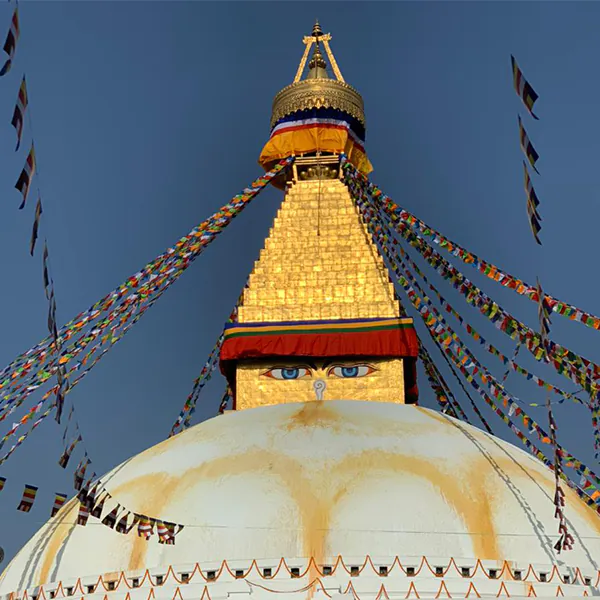
Boudhanath Stupa is among the boldest sights in Kathmandu Valley, towering on the city’s east edge with a wide white mound plus a gleaming gold tower. Right after stepping off the plane, you’ll spot this monument. It grabs attention fast, shaping how you see travel here from the start.
Constructed ages ago under the Licchavi rule, then enlarged over time, it’s now the biggest stupa across South Asia while still serving as a heartland for Tibetan Buddhist life.
As soon as you arrive, the vibe stands out compared to typical tourist spots in Kathmandu. Monks, visitors on pilgrimage, and people who live nearby walk slowly around the stupa, always going clockwise.
Metal prayer wheels sit along the looped trail while chants echo alongside everyday noises. Because of this mix, the place hits deeper than most sites when exploring Nepal. Also, it is perfect if you’re curious about real spiritual practice.
When you walk deeper, over 50 monasteries pop up near the stupa – each one runs different ceremonies, displays unique wall paintings, also holds classes. Side paths pack in stores selling thangkas, spots making butter lamps, plus places dishing out Tibetan coffee, which shapes the area’s vibe. Up on roofs, sightlines open wide: there’s the big stupa, along with crowds circling it nonstop.
Boudhanath holds major spiritual meaning, tied to centuries of tradition. It’s among Kathmandu’s key heritage spots. You might visit for dusk mantras, nearby temples, or peaceful terrace sights; either way, the monument gives a clear glimpse into how Buddhism lives here.
Entry Fee
For SAARC nationals: NPR 100
Other tourists: NPR 400
Garden of Dreams
The Garden of Dreams gives a quiet pause from Thamel’s nonstop energy, making it one of the chill spots in Kathmandu Valley. It used to belong to the Kaiser Mahal grounds. After being ignored for ages, it got fixed up and now works as a laid-back hideout for city wanderers. When you need a slow moment while traveling around Kathmandu, Nepal, this spot makes for a quick yet soothing stop.
Once you walk in, the traffic sounds disappear. Instead of busy streets, you find quiet paths lined with neo-classical buildings and fountains. Open grassy areas stretch out, making this spot stand apart from usual spots in Kathmandu. Pergolas and stone railings add charm – like something from Europe. You’ll see decorated pots scattered around, plus a pretty garden set below ground level.
There’s a small pond right at the center. Neat rows of flowers surround it. This makes the place perfect for strolling slowly or just sitting with a book. It’s also great if you want some peaceful time on your own.
The garden’s got a café plus an eatery tucked into the main building. Though meals might cost a bit, the vibe feels nice – perfect for a calm tea pause mid-Nepal trip. Inside, tiny displays reveal how this green space came back to life, giving your stroll a little backstory.
Built with elegant design yet calm vibes, this spot’s turned into a top pick among Kathmandu’s cultural gems. You could snap pics, hang out with pals, or just sit quietly – either way, it feels like a soft pause from the city’s rush, sticking in your mind after you wander around town.
Entry Fee
- For SAARC nationals: NPR 150
- For other tourists: NPR 400
Swayambhunath Stupa
Swayambhunath sits on a little hill just west of town, also counted among Kathmandu Valley’s standout spots. Heading up to the stupa, folks take sharp stone stairs or an easier path winding around the slope.
Meanwhile, the city sounds drop off while the scenery opens up. Once at the peak, nearly all of the valley unfolds beneath, turning this into a go-to lookout for travelers exploring Nepal.
People usually say it’s the Monkey Temple since troops of monkeys wander all over the place. Still, this spot isn’t just some throwaway name for visitors. In fact, it’s among the earliest temples in Kathmandu, tied to old tales of a sacred lotus rising from a lake’s center.
For hundreds of years, both Buddhists and Hindus came here together. Because of that, it’s one of the city’s deepest cultural landmarks.
When you walk around the top area, prayer wheels pop up along with tiny chaityas, old statues, or tucked-away shrines honoring gods from two paths. A massive gold vajra stands at the east gate, whereas a big Sakyamuni figure rests on the west edge. Close by, monastic spots show handmade artwork plus peaceful nooks where followers meet each morning to pray.
Swayambhunath mixes daily life, old stories, and wide-open views. So, it’s one of the key spots to see in Kathmandu. For anyone chasing the soul of the valley during their trip to Nepal’s capital, this temple on a hill is worth stopping by.
Entry Fee
- For SAARC nationals: NPR 50
- For other tourists: NPR 200
Changu Narayan Temple
Changu Narayan Temple sits atop a little hill near Bhaktapur, roughly 12 kilometers from Kathmandu. It’s among the city’s earliest shrines and is linked closely to worship of Vishnu, called Narayan here by locals.
Folks visit all year round, though crowds grow heavy around Harishayani and Haribodhini Ekadashi festivals. Recognized by UNESCO, this spot blends deep belief with ancient craftsmanship. Because of that mix, travelers into heritage spots or old-world charm won’t want to skip it.
The temple’s design comes from the Licchhavi time, featuring a double-layered pagoda top, detailed wooden art, and plenty of carved stone figures. Inside its yard lie some of Nepal’s earliest writings, like a pillar dated 464 CE, alongside breathtaking images of Vishnu, such as the ten-faced Vishnu-Dasavatara.
Near the gate stands a Garuda figure, known as Vishnu’s divine vehicle. Tiny temples dedicated to Shiva, Durga, Laxmi Narayan, or Kileshwar sit nearby, showing how various Hindu groups once shared space.
Travelers heading to Changu Narayan usually take a taxi from Bhaktapur or hop on a local bus. If you’re into walking, there’s a nice trail linking Nagarkot; it’s doable in one morning or afternoon.
Once there, the nearby village shows how Newari folks live in simple homes, stone paths, and hand-carved windows. From the top of the hill, you can see far across the whole valley, especially at sunrise when mist floats above the fields.
A trip to Changu Narayan mixes old tales, quiet devotion, and fine craftsmanship, turning it into a standout spot near Kathmandu. Exploring the valley for culture, pictures, or faith? This temple belongs on your list.
Entry Fee
- For SAARC nationals: NPR 100
- For other tourists: NPR 400
Shivapuri Hills Hike
Shivapuri Hills lie above the city, giving quick access to wild green spaces inside Kathmandu’s rim. The starting point? Just a brief ride from Budhanilkantha, so it suits folks chasing clean breezes, peaceful woods, or ridge panoramas close by. Want movement during your Nepal trip? This path stands out as a top pick near town.
The trek starts in Budhanilkantha, known for a holy temple where a big stone figure of Vishnu lies submerged in water. After that, you step into Shivapuri Nagarjun National Park, walking along a quiet trail shaded by pine, oak, or rhododendron trees. While gaining altitude, city sounds disappear while views stretch wider around you. This route’s popular among folks who enjoy greenery near Kathmandu.
You can get to the top using either the steep stone path via Deurali or the easier track looping toward Nagi Gompa – a peaceful monastery with views over the valley. While one’s quicker, the other takes you past quieter spots. Each way arrives at Bagdwar, where the Bagmati River begins, then climbs upward to Shivapuri’s peak at 2,732 meters.
From up top, you can see the Langtang and Ganesh Himal mountains spread out ahead, while the Kathmandu Valley sits distant down low. Since it’s got green forests, quiet temples, along with an easy trek that takes just one day, the Shivapuri path stays a favorite spot near Kathmandu – perfect for those wanting calm woods plus unique local landmarks.
Entry Fee
- For SAARC nationals: NPR 600
- For other tourists: NPR 1000
Hidden gems: local neighborhoods, traditional markets
• Asan Bazaar and Indra Chowk – these crowded hubs stay central to everyday Kathmandu. At Asan, you’ll find spices, fabrics, metal goods, and snacks from stalls. Go at dawn for a raw slice of local rhythm. Indra Chowk mixes old shrines with packed stores, tangled alleys, linking belief, commerce, and community pulse.
• Thamel’s narrow lanes sneak past crowded stores, peek behind, and you’ll find quiet cafés. Local joints serve home-cooked bites instead of fancy menus. Tiny art spots show handmade pieces, not mass-market junk. Old Newari houses sit hidden, shielded by busy storefronts.
• Tiny yards, plus aged monastery spots in overlooked neighborhoods – they show everyday living, calm faith vibes, busy tourist zones. These places give a peek at classic buildings, real culture, without the noise. Hidden corners where time feels slower, yet full of meaning. No crowds, just honest moments tucked behind old walls.
• Those spots in the valley show more of daily life in Kathmandu, away from tourist sites – perfect when you’re curious how folks eat, worship, or sell things now.
Cultural moments
Local festivals, handmade art, or folk music – bring people together through shared stories instead of flashy trends.
• Festivals bring old spots to life – with dancing masks, carts rolling through streets, also shared traditions popping up town-wide. Shops light up alongside backroads. Spots near Asan or Indra Chowk buzz loudly, filled with bright vibes when celebrations hit.
• Old skills live on – like pottery made in quiet villages near Bhaptapur, cloth woven by hand, metalwork with brass or copper, and also carving done in wooden pieces close to ancient streets. These trades keep going, usually right where few travelers ever step.
• Spiritual spots tucked in the hills – Away from big temples and stupas, tiny gompas, along with aged shrine-yards, give calm corners for quiet thought, community practices, or handmade crafts.
If you plan right, you’ll see real customs along with daily handwork – both part of what makes Kathmandu unique.
Tips for visitors: transport, entry fees, best times to visit
| Tip Area | What to Know |
| Transport | Use taxis, local buses, or rickshaws to move between neighborhoods. In the case of areas that are considered hidden gems or for hill escapes, a hired cab or private ride gives flexibility.
|
| Modest Entry Fees & Access | Some heritage sites or monuments have small entry charges, while local markets, alleys, and monasteries are often free.
|
| Dress & Behavior | Dress modestly while visiting temples and monasteries. Respect local customs and rituals.
|
| Best Time to Visit | For clear skies and festival atmosphere, late September–November and March–May are ideal. The monsoon period, between June and August, colours these hills in verdant hues but is disruptive due to rain. Cold, quiet winters also offer low-crowd visits if you’re okay with cooler weather.
|
| Morning hours preferred | Whether for local markets-Asan Bazaar, for instance, heritage courtyards, early morning hours provide the best light, least crowds, and most authentic feel.
|
3-day itinerary for Kathmandu Valley
| Day 1 | Visit historic monuments, major temples, or stupas.
Get a feel of the local bazaars: Asan & Indra Chowk Explore Thamel: dinner, cafes, local music
|
| Day 2 | Explore hidden neighborhoods and visit smaller monasteries or courtyards.
Browse craftsmen’s workshops; buy handicrafts. If timing permits, attend a local festival/cultural event.
|
| Day 3 (optional) | Go on a short hike, or visit quiet villages/heritage towns surrounding the city
See countryside temples, rural markets, or artisan villages Return to the city-relax at a rooftop café, or enjoy sunset views
|
This plan balances major sites with cultural immersion, giving a mix of history, tradition, and real-life experiences.
Conclusion & Call to Action
Kathmandu Valley blends ancient temples, pulsating markets, spiritual shrines, and everyday life in a way that few other places in the world can match. You may see grandeur if you limit yourself to the main attractions, but if you walk down the narrow alleys, venture into small local markets, observe artisans at work, or participate in a small festival, you will catch glimpses of the living heart of Nepal.
Ready to plan your Kathmandu trip? Here’s a guide to help you mix heritage, hidden gems, and local life for a rich, layered experience.
Social Media Caption Suggestions
- Explore Kathmandu Valley’s top cultural sites and hidden gems!
- From Pashupatinath to Bhaktapur: the ultimate Kathmandu Valley travel guide.
- Discover Nepal’s rich heritage in the heart of Kathmandu.
- Plan your sightseeing trip in Kathmandu Valley with our top recommendations.
- Temples, palaces, and markets: explore the best of Kathmandu Valley.
FAQ’s
Q1. Which UNESCO sites should I see?
Key attractions of the Kathmandu Valley await at the Durbar Squares of Kathmandu, Patan, and Bhaktapur, Boudhanath and Swayambhunath stupas, Pashupatinath, and the temple of Changu Narayan.
Q2. How many days are enough to explore?
2–3 days is ideal to cover the main places to visit in Kathmandu. More time lets you explore hidden gems and small monasteries.
Q3. Is it safe to walk around?
Yes. Popular cultural sites in Kathmandu are safe. Hire a guide for remote areas.
Q4. Best time to visit?
Spring – March to May – and autumn – September to November – are the best times to travel to Kathmandu, Nepal.
Q5. Are there entry fees for monuments?
Yes, there are fees to enter most heritage sites. The street markets and neighborhoods are free.


