
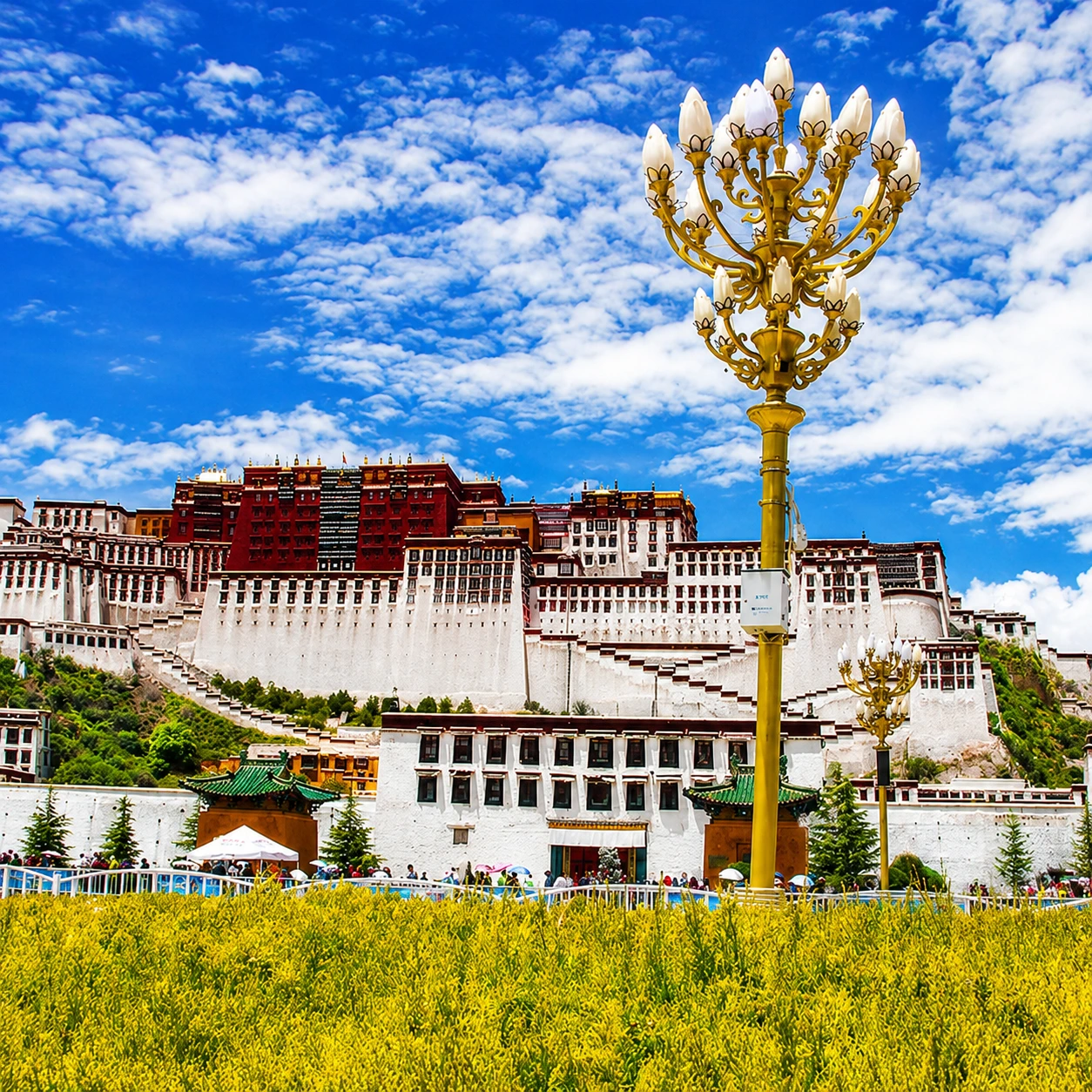
Tibet and Lhasa: The Spiritual Heart of the Himalayas
Greenhub
18 June, 2026
Tibet has a way of staying with you long after you’ve left. Perched high on the world’s highest plateau and ringed by some of its tallest peaks, it carries a sense of stillness and permanence that’s hard to find anywhere else. If you’re drawn to places with depth — layers of history, living tradition, and room for quiet reflection — Tibet is one of the few destinations that truly delivers.
At the center of it all is Lhasa, a city built around centuries of Buddhist practice. Golden rooftops catch the light, prayer flags move in the wind, and locals walk devotional circuits around sacred sites as they have for generations. Spend a day here and you start to feel like belief, history, and daily life aren’t separate things — they’re woven into the same fabric.
Beyond the Landmarks: Tibet’s Hidden Corners
The Potala Palace and Jokhang Temple get most of the attention, and rightly so. But some of the most memorable moments in Lhasa happen away from the main sights.
The old lanes around Barkhor Street are a good place to start. Narrow alleys, whitewashed homes, fluttering banners overhead — it’s a part of the city that feels lived-in rather than staged. Go at dawn, when locals are just beginning their morning routines and market stalls are still setting up.
The neighborhood markets are worth a wander too. You’ll find dried yak cheese, butter tea supplies, prayer beads, and handmade incense — the small, practical items of daily life rather than souvenirs. Barkhor Market draws the crowds, but the smaller local markets tucked into side streets offer a slower, more genuine look at how people actually shop and live.
The lesser-known monasteries around Lhasa are another reward for travelers willing to slow down. Away from the busiest tourist circuits, these are places where monks quietly go about study and reflection. Some remain closed to visitors, but others welcome respectful guests — offering a glimpse of Tibetan Buddhist life as it’s actually practiced, not as it’s performed for tour groups.
Culture That’s Still Very Much Alive
Tibet’s culture isn’t something you observe from a distance — it shows up everywhere, if you’re paying attention.
If your visit lines up with a festival, you’re in for something special. Losar, the Tibetan New Year, and Shoton, the Yogurt Festival, both bring chanting, masked dances, traditional instruments, and streets full of color. These aren’t performances for visitors — they’re the real thing, and being there while they happen is one of the best ways to understand how Tibetan identity continues to be expressed today.
The same goes for Tibetan crafts. Thangka painting, hand-knotted rugs, and metalwork are skills passed down within families over generations. Watching an artisan at work — the patience, the precision — tells you more about the culture than any museum placard could.
And then there’s the everyday religious life that runs quietly under all of it: elders touching their foreheads to temple steps, young monks debating philosophy in monastery courtyards. These small, ordinary moments are often the ones that stay with travelers the longest.
The Sites That Define Lhasa
Potala Palace
It is Tibet’s most recognizable landmark for good reason. Once the Dalai Lama’s winter residence, it’s now a UNESCO World Heritage Site — part palace, part sacred temple. Inside are prayer rooms, centuries-old murals, and religious treasures that trace the relationship between spiritual and political power in Tibetan history. Take your time here; the climb up its stairways rewards you with sweeping views over Lhasa as well as a real sense of what the building represents.
Jokhang Temple
It is considered the holiest site in Tibetan Buddhism. Pilgrims travel from across the plateau to worship here, some prostrating repeatedly at the entrance as an act of devotion. Inside, the air is thick with incense and the low murmur of chanting monks — it’s one of those spaces that seems to slow time down. The Barkhor circuit that wraps around the temple is worth walking too, both as a sacred pilgrimage route and a lively marketplace.
Sera Monastery
It offers something completely different: the monk debates. Every afternoon, monks gather in an open courtyard to argue points of Buddhist philosophy — complete with dramatic hand claps and sharp gestures. You don’t need to understand the words to feel the intensity and discipline behind it. It’s one of the most memorable things you can witness in Lhasa.
Getting There, and Getting Ready
A visit to Tibet takes a bit more planning than most trips. Every foreign visitor needs a Tibet Travel Permit, arranged through an authorized agency, independent travel isn’t an option here, and neither is arranging the permit yourself.
Timing matters too.
The best window to visit runs from April through October, when mountain routes are open and the weather cooperates. Spring and autumn bring clearer skies and smaller crowds; summer brings festivals and green valleys.
Altitude is worth respecting.
Lhasa sits at roughly 3,650 meters, high enough that most visitors need a day to adjust. Pace yourself, drink plenty of water, and don’t schedule anything demanding on day one. Many travelers choose to enter Tibet overland from Nepal via the Kerung border, which allows for a gradual climb in elevation rather than the sudden jump you get by flying straight into Lhasa.
One more practical note: popular sites like the Potala Palace cap daily visitor numbers, so it’s worth booking ahead and arriving early if you want to explore without the crowds.
Final Thoughts
Tibet isn’t a place you simply check off a list. The monasteries, the markets, the mountains — they all add up to something that’s less about sightseeing and more about slowing down and paying attention. Lhasa, in particular, isn’t only about what you see; it’s about noticing how people there live with calm, belief, and balance woven into daily routine.
With the right permits sorted, the right season chosen, and a little patience for the altitude, a trip to Tibet can be one of the most grounding journeys the Himalayas have to offer.


