

Tibet Travel Guide
admin
26 December, 2025
Introduction: Tibet and Lhasa – The Spiritual Heart of the Himalayas
Tibet isn’t only a place you visit, it sticks around in your mind way past departure. Sitting up high on the plateau, boxed in by the planet’s biggest peaks, it gives off vibes of eternity, quiet meaning, and old ways still alive. If what you’re after is depth, culture mixed with stories from the past and moments to think inside yourself as not many spots out there feel quite like this remote region.
Lhasa sits right in the middle of Tibet, this city breathes Buddhist tradition. Known as “Land of the Gods,” it greets travelers with shiny temple tops, colorful cloths dancing on breezes, holy men reciting prayers deep inside old temples, also locals circling holy spots on devotional walks. Walking through Lhasa feels like entering a real-life exhibit where belief, stories from long ago, yet everyday routines fit together without effort.
Not just popular sites but hidden corners too, tied with everyday customs and practical tips, everything fits together when exploring Lhasa up close. Experience Tibet slowly, fully, piece by piece, guided by real insights instead of hype.
Hidden Gems of Tibet: Beyond the Famous Landmarks
Even if well-known sites like the Potala Palace or Jokhashi Temple attract lots of people, taking it slow around Tibet reveals unexpected moments. Off-the-radar places let you feel closer to everyday rhythms, where customs live quietly, where moments stick without flash.
Local Neighborhoods of Old Lhasa
Strolling around the historic Tibetan lanes by Barkhor Street shows a part of Lhasa most tourists miss. Tiny paths, lime-coated homes, colorful banners fluttering on rooftops, these blend into a vibe that just seems real. Dawn’s the best time, since folks start morning routines while stalls warm up one after another.
Traditional Tibetan Markets
Local spots in Lhasa give a real look at how Tibetans live each day. You’ll find things like dried yak cheese or supplies for butter tea, along with prayer beads and home-made incense, items tied to old customs. While Barkhor Market draws the biggest crowds, tiny area markets let you browse without the rush. Each place holds its own flavor, showing life beyond tourist views.
Lesser-Known Monasteries
Besides the big monasteries, Lhasa has quieter spots nearby where monks focus on learning and reflection, staying clear of busy areas. While some remain secluded, others let travelers stop by, so long as they’re respectful and genuinely interested. Instead of just seeing sights, you get a real look at how Tibetan Buddhists live when tourists aren’t around.
Cultural Experiences in Tibet
Tibet’s culture is one of its biggest strengths. Shaped by deep beliefs, creative expression, lively celebrations, also tight bonds that have lasted ages.
Tibetan Festivals
If your visit matches up with a local celebration, you’ll catch something unique. When festivals like Losar, Tibet’s New Year or the Shoton event roll through town, expect chanting rituals, dancers in masks, tunes from old instruments, along with bright folk outfits lining the roads. Each gathering gives a raw look at how Tibetan culture stays alive today.
Traditional Arts and Crafts
Tibetan craft carries deep meaning. Thangka art, handmade rugs, metal figures, each shaped by skills taught from parent to child. Watching makers at work or into their workshops lets people sense the effort and attention behind each piece.
Daily Religious Life
Religion guides daily life all through Tibet. Not just elders touching foreheads to temple steps, but also young monks debating inside courtyards, belief flows into every corner. Seeing these moments? That’s one of the rawest paths to truly sensing Tibetan identity.
Iconic Spiritual and Historical Sites in Lhasa
Potala Palace: A Symbol of Tibetan Identity
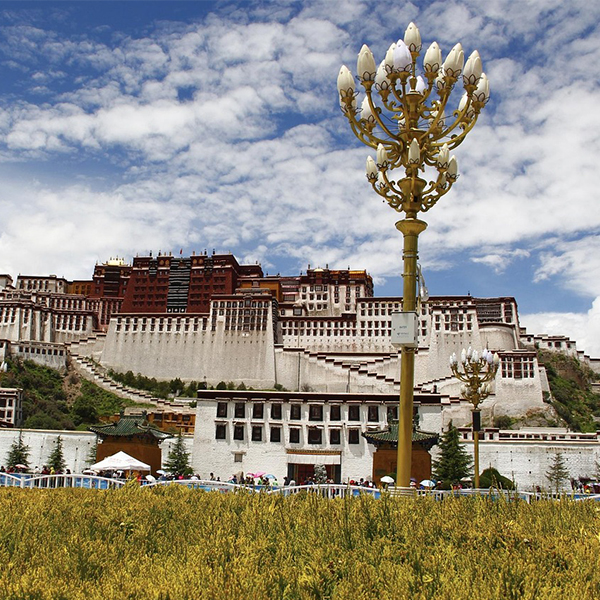
Rising above Lhasa, the Potala Palace is Tibet’s most famous landmark. Once the winter residence of the Dalai Lama, today it’s guarded by UNESCO, part palace, part sacred temple. Within its walls, you’ll discover prayer rooms, old painted scenes on walls, along with spiritual treasures showing how religion and power shaped Tibet.
To really get the Potala Palace, slow down. As you climb the stairs, you’ll see amazing sights of Lhasa, this also opens up Tibet’s inner world.
Jokhang Temple: The Holiest Site in Tibet
The Jokhab Temple holds top importance in Tibetan Buddhist belief. People journey far just to worship here, some even stretch out flat on the ground again and again near the door. Inside, the air’s thick with worship – smoke curls around quiet chants from robed figures. Monks murmur deep tones, filling the space with a hush that sticks. The atmosphere pulls you down into stillness, slow and steady like breath at dawn.
Strolling the Barkhor path near Jokhang Temple lets travelers walk alongside locals who follow an ancient practice showing deep respect, quiet strength, or inner belief.
Sera Monastery and Monk Debates
Watching monks argue at Sera Monastery? That’s one of Lhasa’s top highlights. These sessions happen each afternoon right in the open yard – loud, full of hand slaps, sharp moves, yet super focused. Though you might not catch every word, their passion and control really stick with you.
Explore Nepal and Tibet Tour – 12 Days
Introduction: Tibet and Lhasa – The Spiritual Heart of the Himalayas Tibet isn’t only a place you visit, it sticks around in your mind way past departure. Sitting...
 12 Days
 Moderate
Nepal-Tibet Himalayan Journey | 12 Days of Culture, Nature, and Spiritual Discovery
Some trips show you pretty spots while others shift your whole outlook without saying a word. Take this 12-day trek through Nepal and Tibet, it’s one of those quiet changers. You get Nepal’s vivid traditions, soft hills, plus friendly hosts, blended with Tibet’s deep spiritual roots and age-old monasteries. Instead of rushing, it flows slow from busy Kathmandu to peaceful Pokhara, ending in holy Lhasa giving folks space to soak up customs and height alike.
This journey fits those wanting genuine moments rather than racing past landmarks, think old temples, towering mountains, holy places, mixed with time spent beside local folks. Not your typical trek, it’s a well-paced adventure across the Himalayas, carefully shaped to feel complete, personal, and true from beginning to end.
| Day | Itinerary |
| Day 01: Arrive in Kathmandu | Your trip kicks off in Kathmandu, Nepal’s lively heart where culture meets energy. Once you land at Tribhuvan International Airport, someone from Prime Holidays Travels and Tours will greet you, friendly and ready to help get you to your hotel.
The rest of the day stays low-key. After a tiring journey, maybe unwind at your hotel or take a casual stroll around the lively neighborhood nearby. The city pulses with energy, bright prayer banners flutter overhead, scents of burning incense float down narrow lanes, yet shrines, shops, and little coffee spots show up on every corner. Overnight in Kathmandu. |
| Day 02: Kathmandu Heritage Tour | If you’re up for kicking off your morning with a unique twist, try the Everest aerial tour though it’s optional. Instead of hiking, hop on this hour-long ride that flies near Mount Everest along with other towering peaks nearby, it’s like seeing Nepal’s rooftop from above. Later on, you’ll explore Kathmandu Valley’s top historic spots with a guide leading the way. Starting off at Swayambhunath Stupa, often called the Monkey Templ. It sits high on a hill, watching over the whole valley below. One of Nepal’s most ancient Buddhist spots, this place gives you wide-open sights along with a quiet feeling inside. Buddha’s famous eyes watch from every side.
Then comes Kathmandu Durbar Square, the old town’s central hub. Once a royal residence, this site holds detailed carvings, open yards, along with sculptures showing Nepal’s ancient design skills and Newari work. The trip heads on to Pashupatinath Temple, a key sacred site for Hindus globally. Found beside the Bagmati River, this temple area gives a raw look at age-old Hindu practices through real moments of worship. Your last stop’s Boudhanath Stupa, huge, peaceful, one of the biggest around the world, also a heartland for Tibetan Buddhist life in Nepal. Monasteries and spinning prayer wheels wrap around it, giving off calm vibes, particularly when monks or travelers walk slowly round it, focused, silent. Overnight in Kathmandu. |
| Day 03: Drive to Pokhara | Once you’ve eaten, head out toward Pokhara through winding roads that reveal Nepal’s varied terrain. Hills stretch wide, dotted with step-like fields, while streams cut across the view, each turn brings something new. Tiny settlements pop up along the way, breaking the rhythm of green with clusters of homes. The scenery shifts constantly, never quite repeating itself.
Finding your way to Pokhara means things start feeling calmer. This lakeside spot, often called Nepal’s own little water town rests quietly under the towering Annapurna range. A peaceful trip across Fewa Lake gives a clear look at the rolling hills and famous Mt. Fishtail mirrored in still water. As day winds down, walking by the shore brings cool breezes, quiet moments, along with distant peaks. Overnight in Pokhara. |
| Day 04: Pokhara Sightseeing | Ahead of dawn, you’re heading to Sarangkot; there, the sun peeks over Annapurna and Dhaulagiri like a quiet spark. When that first glow hits the snowy tops, everything shifts into golden-pink hues, slow and soft. Once you’ve eaten, the trip around town kicks off. First up’s Davis Falls, this wild cascade plunges right into a hidden passage below ground. Close by lies Gupteshwor Mahadev Cave, a holy site honoring Shiva, famous for its odd-shaped stones and deep meaning to locals.
The trip heads on to Mahendra Cave, a rocky tunnel full of hanging bats, with sharp stone drops from above and spikes rising up below. Then you swing by the Seti River Gorge, where the milky-white river cuts deep through the city, forming a narrow and mysterious canyon. Overnight in Pokhara. |
| Day 05: Pokhara to Kathmandu | Once you’ve eaten, head back to Kathmandu while taking in the views around you. When you get there, go to your hotel, then spend time wandering through Thamel, a lively area packed with food spots and stores. You can look at handmade goods, grab a drink somewhere cozy, or just relax and watch the world go by.
In the evening, you’ll enjoy a classic Nepali meal alongside lively cultural dances. These acts highlight regional tunes and rhythms across Nepal, giving a joyful peek into local traditions. Each performance brings its own flavor, making the night feel alive and unique. Overnight in Kathmandu. |
| Day 06: Kathmandu to Lhasa (3,650m) | Today marks a highlight of the journey as you fly from Kathmandu to Lhasa. If skies is clear, you’ll spot endless white-tipped mountains below during the trip. Views roll out wide when clouds stay away.
Once you land at Gonggar Airport, a ride takes you to Lhasa, roughly sixty minutes by road. After that, the day stays open so you can get used to the elevation slowly. Your body needs time to catch up with the high altitude, so the rest of the day is kept free for acclimatization. Stay back at the hotel if you like, or maybe stroll around close by instead. Overnight in Lhasa. |
| Day 07-08: Lhasa Full Sightseeing | In the coming 48 hours, you dive into Tibet’s soul, its beliefs and traditions. For starters, check out the amazing Potala Palace – this was where the Dalai Lama stayed when winter hit. Sitting high above Lhasa, it looms large without hesitation. Massive in size, this place stuns you with how it’s built, showing strong pride in Tibetan identity. You’ll head next to Jokhang Temple, the holiest site in Tibet. Folks travel from every corner of the highlands just to worship there, touch their foreheads to the ground, or walk around it with deep respect. Out here, the Barkhor Bazaar hums with energy, part sacred path, part lively marketplace where handmade goods meet everyday hustle.
The trip heads on to Drepung Monastery, once the biggest in the world as well as Sera, known for monks arguing out loud in the open yard. Then there’s Norbulingka Palace, where the Dalai Lama used to stay during warmer months, tucked inside calm green spaces. Spending nights in Lhasa. |
| Day 09: Ganden Monastery and Drak Yerpa Cave | On this trip, you’ll head out past town into deeper parts of Tibet where sacred spots lie. Perched high along a rocky ridge, Ganden Monastery stands as the main hub for Gelug Buddhist teachings, quiet, vast, full of calm. Instead of crowds, there’s space to breathe; rather than noise, just wind and silence.
Later on, head to Drak Yerpa Cave – a quiet spot where old Tibetan teachers used to meditate. With its rocky hollows and wild terrain, the place feels calm yet intense. You head back to Lhasa at night to rest up. |
| Day 10: Lhasa to Kathmandu | Once you’ve eaten, you’ll head back to Kathmandu by air. The hours after that are yours, chill out, check out places again, or grab some quick souvenirs. This break gives you space before diving into the trip’s closing cultural stretch. Overnight in Kathmandu. |
| Day 11: Bhaktapur and Patan Durbar Squares | Right now we’re checking out two awesome old towns in Nepal. While Patan Durbar Square’s called the hub of delicate art forms, it’s packed with graceful shrines, royal yards, and stunning metal and rock carvings. You’ll head next to Bhaktapur Durbar Square, a well-kept spot listed by UNESCO. Key sights? The Golden Gate stands out, alongside the 55-Window Palace, and centuries-old temples showing off Newari heritage through time.
In the evening, travelers come together for a goodbye meal filled with lively Nepali tunes and dancing, it’s just right to wrap up this mountain adventure. Overnight in Kathmandu. |
| Day 12: Departure | Once you’ve eaten, we’ll head to the airport for your next flight. Leaving behind, you take moments from quiet temples, early light on peaks, old towns carved by time, also the uncommon chance to move across two deep-rooted Himalayan zones.
Thanks for choosing Prime Holidays Travels and Tours. Have a safe trip, maybe we’ll see you down the road on your next big adventure. |
Practical Tips for Visiting Tibet in 2026
Tibet Travel Permit
All foreigners going to Tibet have to get a special entry pass. You can’t sort this out on your own, it needs to be done by an authorized travel agency. Independent trips aren’t allowed under any circumstances. Our team at Prime Holidays takes care of every detail, so you don’t have to worry about paperwork or delays.
Best Time to Visit Tibet
The ideal months to see Tibet run from April through October, weather’s better then, also travel routes stay open. Summer brings lively festivals plus green valleys, on the flip side, spring and fall give you sunny views along with more personal space.
Transportation in Lhasa
Getting around Tibet mostly means using private cars booked via travel agencies. Around Lhasa, strolling on foot works well for checking out historic districts, however, hiring a guide with transport helps when visiting temples or nearby sites.
Entry Fees and Sightseeing Tips
Major spots such as the Potala Palace cap how many people come each day so book ahead or you might miss out. Get there right when it opens, fewer people around means extra room to check things out.
Altitude Awareness
Lhasa’s up high, which means visitors need to take it easy at first. Drink plenty of water while taking things slow, this combo cuts down on altitude issues. Resting the initial day works well since your body starts adjusting right away.
FAQs About Visiting Tibet
Do I need a permit to visit Tibet?
Yes, every visitor from abroad needs a Tibet permit, got to sort that out before heading there.
Is Tibet safe for tourists?
Yes, tourists can visit Tibet without issues if they go through an authorized guide company.
Can I travel independently in Tibet?
On your own trips aren’t permitted. You need to book via approved operators instead. Every visitor from abroad needs a certified guide along with set-up transportation.
When’s the ideal moment to travel to Tibet?
From April through October’s when visiting spots works best.
Should you take a bus or fly when going from Nepal to Tibet?
A road journey via the Kerung border is the most popular option. This way, you climb higher slowly while soaking in epic mountain views. Head straight to Lhasa by air, sure, it’s quicker but your body gets fewer chances to adjust.
What’s the best number of days for a trip to Nepal and Tibet?
Around eight or nine days works best. That gives you enough time to cross borders, get used to the altitude, also explore Lhasa well. If your trip’s shorter, it might end up feeling hurried plus tough on the body.
Is it simple to visit Nepal and Tibet on a single journey?
Yes, Nepal’s a solid starting point for Tibet trips. In Kathmandu, you’ll find everything needed to get ready, gear, guides, info. Because Nepali and Tibetan Buddhism share deep roots, the shift from one culture to the next feels natural, almost effortless.
Do I need different visas or permits?
Right. Visitors require a China visa along with a Tibet permit. If crossing into Tibet from Nepal, the visa setup works another way – this’s sorted via a licensed travel agency instead.
Could you feel sick from high elevations during a trip through Nepal and Tibet?
Flying high can hit hard. Going slow up the trail, mixing climb days with chill ones and drinking plenty of water cuts danger fast. The path from Nepal through Kerung into Lhasa? Built so your body adapts step by step.
Can beginners handle this trip if they’ve never been up high before?
Yeah, if you take it slow. A nine-day trip works well for newcomers, just stick to advice and give yourself days to settle in.
Why 6 Days Is Not Recommended for a Nepal-Tibet Tour
Though six days might suit visits just to Lhasa, it’s too tight when mixing Nepal with Tibet. Just crossing the border eats up hours, besides, jumping straight from Kathmandu to Lhasa risks altitude issues that make things harder and less fun. Going slow means fewer health worries, better rest, plus more moments worth remembering. No, six days isn’t enough because of border checks, long drives, or time needed to adjust. Go for at least eight or nine days, it’s way better.
Is traveling from Nepal to Tibet by road safe?
Yes. The route via Kerung gets picked a lot since it goes up gradually.
Can newcomers handle the thin air up high?
Yes, if you take it slow and add breaks now and then. The path from Nepal into Tibet’s built around helping your body adjust.
Conclusion: Plan Your Tibet Journey with Confidence
Tibet reaches deep into your heart – Old temples, ancient halls, every spot gives you a piece of truth.Quiet monasteries mix with lively markets, making each day feel different yet full. Lhasa isn’t only about what you see, it’s how the people live with calm, belief, or balance.
A solid plan, clever tips, along with local insight, turns a Tibet journey into something calm and worthwhile. Prime Holidays takes care of documents, maps out your path while customizing experiences – making your 2026 visit run easy and stay unforgettable.
Table of Contents


