

Difficulty
Moderate

Duration
2-16

Duration
8 Days

Accommodation
Hotel,Teahouse

Best Time
Mar - May, Sep - Nov

Max Alt
3,880m (12,730ft)

The Everest View Trek is a great pick for anyone who wants a solid Himalayan experience without needing weeks to do it. This trek is for anyone who wants the Everest experience without the brutal uphill grind. It’s much more manageable than the full Everest base camp route. As you walk the old Khumbu trails, you’ll be amazed at how close the massive peaks actually feel. It’s a pretty incredible perspective to have right from the path. Not distant at all, this one drops you right inside.
You feel the cold just looking. It sneaks up on you, that feeling, found in quiet moments, walking narrow lanes between old houses, maybe sitting awhile where tea steams in chipped cups. Take all the time you need, rushing isn’t part of this. Foot by foot, quiet holds on as wind slips between branches.Conversations grow naturally, one pause at a time, with each person you cross paths with along the way. Its gentle ascent makes it one of the best treks for beginners. Time in Namche lets your body adjust, step by step.
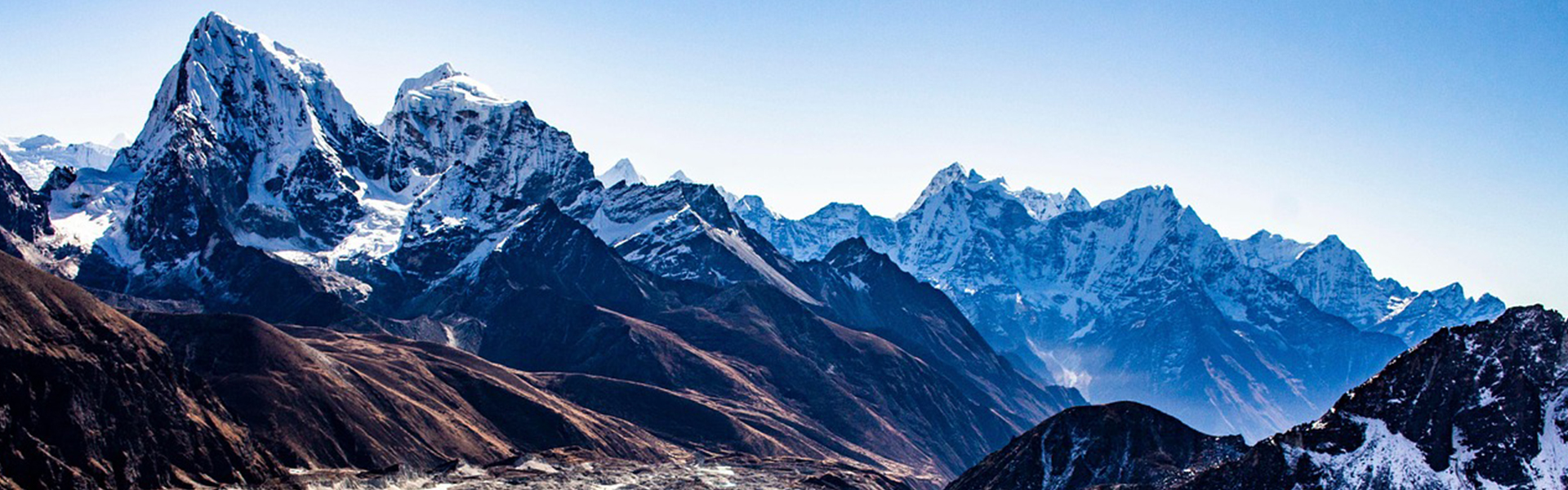
Peaks like Everest, Ama Dablam, Lhotse, and Thamserku rise into view, clear and close. Many find their moment on the trail to the Everest View Hotel, where the mountain stands full-frame, no weeks of walking required. This trail is a great fit if you’re just starting out or trying to keep the kids moving. Some pick it as a relaxed taste of Himalayan trails before chasing longer hikes later.
This trip is more about the experience than the ego. You start right at the heart of things in Lukla, once the flight lands, you’re off onto the trails, finding your own rhythm on the uneven ground. Instead of racing toward summits, each step unfolds through corridors of stone and sky shared with those bound for base camp. Even though they’re aiming for the bigger peaks, this route bends gently, keeping breath steady and horizons wide. Time feels different when you’re hiking. Your world narrows down to the dirt under your feet and the summits off in the distance that never seem to get any closer no matter how much you walk.
Flying from Kathmandu to Lukla puts you right in the middle of the mountains. You get incredible views of the ridges and summits before you’ve even stepped onto the trail. Passing through Phakding, then climbing toward Namche Bazaar, rhythm settles into step with village mornings, smoke curling from stone homes, brass prayer wheels spinning under fingertips. The path is lined with Mani stones carved with old Buddhist mantras. Walking past them, you really get a sense of the deep spiritual roots of this place. Monasteries perch on edges, quiet, holding stories taller than the ridges they overlook.
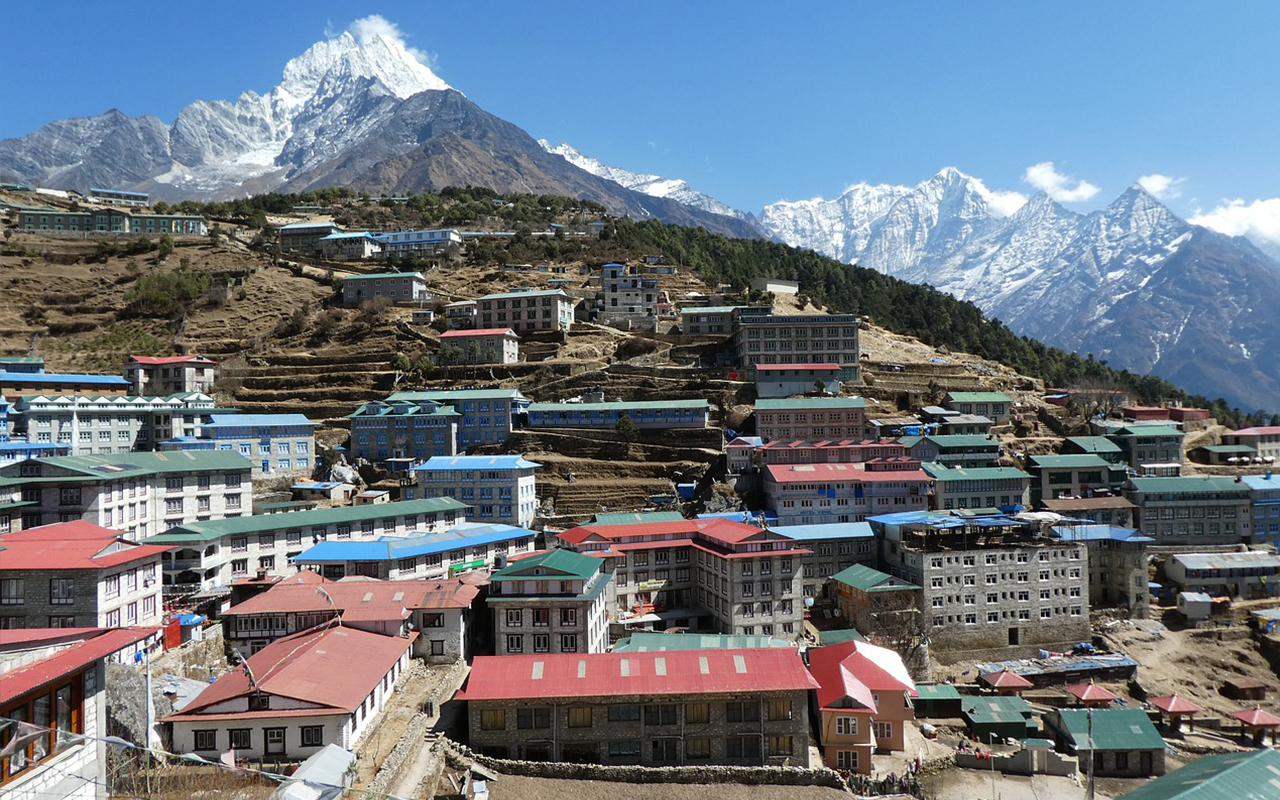
Namche Bazaar is really the heart of the whole trip. This bustling heart of Khumbu hums with life, lodges offer a cozy spot to rest and get off your feet for the night, vens warm crisp bread each morning, small museums hold stories in wood and glass. Pausing here for two nights eases the altitude’s grip, lets rhythm sync slowly. While air thins up high, movement below stays unhurried, time stretches just enough to wander nearby trails.
The walk up to Syangboche and on to the Everest View Hotel shapes a quiet kind of highlight. Peaks like Everest, Lhotse, and Ama Dablam unfold across the sky, sharp, still, impossible to forget. These sights come without chasing altitude records, so breathing stays easier, rhythm steadier, experience richer.
Travelers chasing ease, views, and a taste of local life might find the Everest View Trek fits just right among Nepal’s shorter routes.
The Everest View Trek unfolds through the high folds of northeastern Nepal, tucked inside the Khumbu zone near towering peaks. This path wanders beneath the rim of Sagarmatha National Park, where thin air meets ancient rock. Crafted for steady pacing, it trades steep climbs for broad vistas. As you hike, the mountain faces look huge but somehow peaceful from far away. These paths are calm and tucked away, so you never feel rushed or crowded.
Day one begins in Kathmandu. Touching down at Tribhuvan International Airport, a team member greets you as transport waits nearby, sized just right for your group. Ride straight to the hotel without delay. Once checked in, unwind if you like, or step outside, stretch your legs through nearby streets, absorbing the city’s rhythm firsthand.
In the evening, we’ll gather for a quick chat on the trek ahead. The guide will walk through the path, how many hours each day involve moving, what to expect with elevation shifts, also ways to stay safe along the way. Questions left unanswered? That’s when you can bring them up.
Overnight at a 3-star hotel in Kathmandu.
Morning kicks off exploring key spiritual sites across Kathmandu Valley, each stop handpicked for depth, not distance. Traveling by car keeps things easy. It cuts down the travel time and spares you from a long, tiring trek on the pavement.
You’ll step into Kathmandu Durbar Square, a former royal enclave turned open-air showcase of intricate Newari design. Heading onward, the path leads to Swayambhunath, perched high, often called the Monkey Temple where the valley unfolds beneath you in every direction.
Just beyond lies Pashupatinath, Nepal’s holiest Hindu shrine, set along the slow curve of the Bagmati River. After that comes Boudhanath, home to one of Earth’s grandest Buddhist stupas, a living heart of Tibetan practice.
In the afternoon, get ready for the trail, go through your gear, finish loading the pack, while glancing over the Lukla departure info.
Overnight at a 3-star hotel in Kathmandu.
Before sunrise, head to the airport for a flight toward Lukla. As you fly over the shifting landscape, the plane drops toward a tiny runway cut right into the mountain. You can see small villages tucked between the ridges and mist hanging over the hills. The landing is quick and intense, one second you’re over the edge, and the next, you’re on the ground.
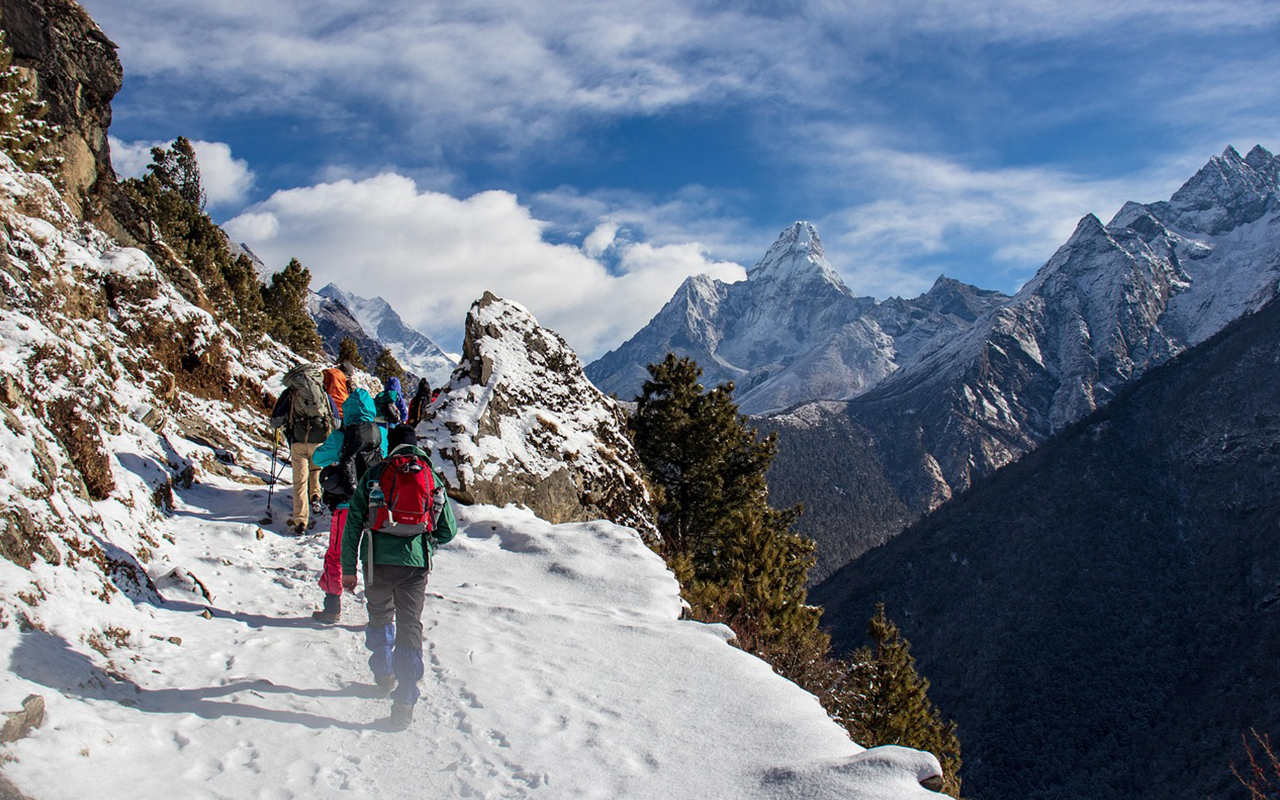
The trek begins with a gentle descent to Phakding. The route winds past Sherpa homes and bright prayer flags, following the sound of the river. You’ll cross a few high footbridges and pass ancient carvings in the rock. It’s all about finding a good rhythm on the trail and soaking in the views of the pines and the open sky.
This short walk is just to keep your legs loose. It’s enough to get your heart rate up in the thin air, which is exactly what your body needs to start adjusting to the height. We’ll be staying the night at a local teahouse in Phakding.
You’re going to see some of the best scenery of the entire trek today. The route stays near the river before crossing a series of prayer-flag-covered bridges. At Monjo, you officially enter Sagarmatha National Park and the path turns uphill, taking you higher into the pine forests.
The climb toward Namche Bazaar keeps a slow rhythm, steady on the legs, tough on the breath, yet never rushed. When skies pull back and light spills across the peaks, Everest might show itself, just for a moment, like a secret whispered ahead of arrival.
Namche Bazaar rests within a bowl-shaped hollow, hugged by towering peaks, serving as the area’s biggest village.
Overnight at a teahouse in Namche Bazaar.
Today is all about getting used to the thinner air. It might feel like a slow day, but letting your body adjust now makes the rest of the trek feel a whole lot easier. Following breakfast, head up toward Syangboche, path gentle, scenery wide. Mountains unfold around every turn, air thinning slow.
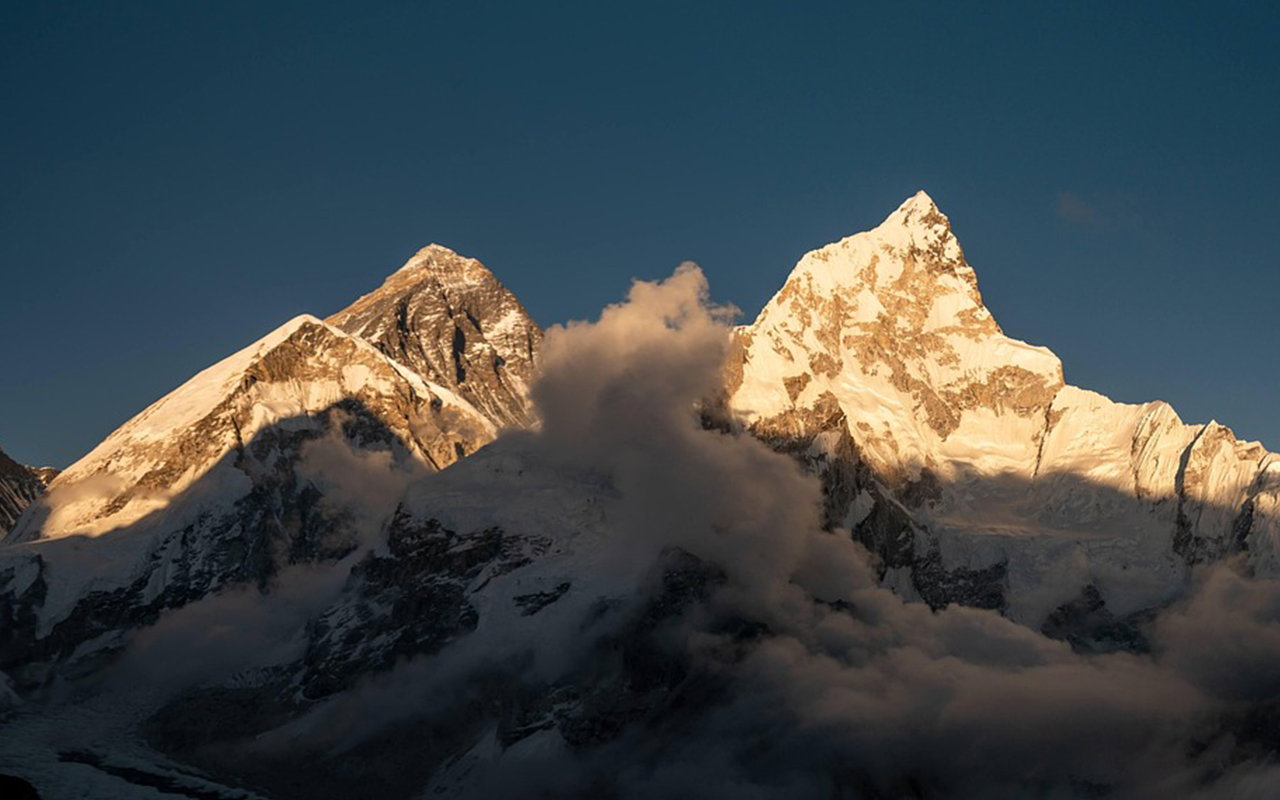
The real moment? Lunch at the Everest View Hotel sits high near 3,880 meters. When skies are clear, Everest shows up sharp, along with Lhotse, Ama Dablam, and a few quieter giants hanging in the distance.
After spending time enjoying the scenery, you descend back to Namche Bazaar at a relaxed pace. Overnight at a teahouse in Namche Bazaar.
The trip back traces the earlier path through the valley once more. Moving downhill feels lighter on your breath, so sights seen before now unfold with subtle shifts in view.
Once you arrive in Lukla, moments unfold slowly, settle into lodges, unwind beside fellow trekkers under a fading sky, thoughts drifting back along the path already traveled.
Overnight at a lodge in Lukla.
An early flight carries you to Kathmandu as daylight spreads across the sky. With hours left unclaimed, time unfolds slowly, rest tugs at your shoulders, or perhaps wandering into markets calls louder. Thamel waits, humming with rhythm, full of quiet corners and sudden turns. You finally get a warm plate of food in a cozy, familiar spot. There’s no rush to finish, you just sit back and enjoy the meal because the timing feels exactly right.
Overnight at a 3-star hotel in Kathmandu.
Your flight timing means a private car will take you to the airport, smooth move for what comes next.

Note:
If you have a private group and prefer a personalized experience, we can organize a custom trip tailored to your requirements and group size, running it any day you choose.
The Everest View Trek unfolds through the high folds of northeastern Nepal, tucked inside the Khumbu zone near towering peaks. This path wanders beneath the rim of Sagarmatha National Park, where thin air meets ancient rock. Crafted for steady pacing, it trades steep climbs for broad vistas. As you hike, the mountain faces look huge but somehow peaceful from far away. These paths are calm and tucked away, so you never feel rushed or crowded.
Duration: 8 Days
Reaching up to 3,880 meters at the Everest View Hotel, this journey unfolds through the Khumbu area. Beginning and ending in Kathmandu, the path leans gentle but keeps you engaged. Travel from Lukla back to Lukla includes all meals, while time in the city covers just room and breakfast. A modest three-star stay waits in Kathmandu along the trail, teahouses offer rest with local charm
This journey fits those chasing crisp peaks on the horizon, moments steeped in local ways, yet guided smoothly by people who know the land like their own breath.
The Everest View Trek feels lighter on the legs compared to the journey to base camp. Though reaching base camp demands nearly fourteen days and climbs into thin air, the view-focused route leans into landscapes and village encounters. Each turn offers glimpses of peaks without pushing endurance too far.
This works well for travelers short on time or anyone leaning toward an easier start with high-altitude hikes. A breath from the high Himalayas meets you without grueling climbs. When you move slow, there is space to settle in. Fires glow by nightfall inside small wooden huts, ready for rest. Mountain trails feel safer when guided by people who know every turn. Up-close views of towering peaks come alongside moments in quiet villages. The path moves naturally across Nepal’s elevated landscapes, shaped by experience.
Difficulty
Moderate
Duration
2-16
Duration
8 Days
Accommodation
Hotel,Teahouse
Best Time
Mar - May, Sep - Nov
Max Alt
3,880m (12,730ft)
General
One just need decent stamina. It’s manageable if you’re fairly active, though not effortless.
Absolutely, Namche offers sharp views, while the Everest View Hotel delivers crisp sightings when skies stay open.
Temperatures shift with the seasons, When it’s cold out, the nights usually stay below zero.
The plan builds in time to adjust, helping lower the chances of altitude issues.
 Permits
All necessary trekking permits for the Everest area come included, entry into Sagarmatha National Park and Khumbu zone depends just as much. They’re essential for getting into the national park, and having them ready means you can just keep moving.
 Guides & Support Staff
The journey moves under the lead of a local guide, fluent in English and certified by authorities, familiar with Everest’s trails. Luggage travels easier thanks to a dedicated porter, each assigned to support two walkers along the path.
This setup lets you stroll at ease with just a small pack on your back meanwhile, your bigger bag stays secure so you don’t have to worry about it.
 Accommodation and Facilities
A place to stay in Kathmandu means a cozy 3-star hotel, breakfast included each morning. Rooms are private, come with their own bathroom, plus solid service you can count on. Located near the city’s heart, so getting around feels simple, almost natural. It’s low-key, but the comfort is definitely there.
On the trail, lodging means basic teahouses run by villagers. These spots aren’t fancy, just tidy spaces with two single beds and common rooms where meals unfold alongside others. The journey starts and ends in Lukla, with every bite covered daily: morning food, midday and evening meal, all part of moving forward step by step.
 Food and Drinks
Meals usually feature homegrown flavors, dal bhat makes a regular appearance alongside global picks like noodles or pasta. You’ll also find rice, soups, eggs, and whatever veggies are in season right now. Everything’s cooked fresh each day. Your guide is there to help you find the best trail food when you need it.
 Weather & Seasons
The most favorable times to trek to Everest View are spring, specifically March through May and the stretch from September to November. In these periods, skies tend to hold steady, neither too hot nor too cold. Clear visibility often wraps around the peaks, offering clean lines of sight. Instead of harsh weather, expect a balance in climate that moves at an easy pace.
Spring paints the rhododendrons into bloom while days stretch out, slow and golden. When autumn arrives, it carries cool breaths behind fading rains, sharpening every distant peak.
Winter hikes can get seriously cold, particularly at dawn and dusk. Clouds roll in heavy during monsoon, bringing downpours that mess with travel plans and clear views.
 Health & Safety
The Everest View Trek feels manageable for most people, somewhere between light and moderately challenging. Each day unfolds with 3 to 6 hours on foot, moving steadily upward without sudden climbs. You won’t need special climbing know-how, just steady legs and a calm pace.
A basic level of fitness works well here, prepare by walking often or doing gentle movement regularly ahead of time. Spending a full day resting in Namche gives your body space to adjust, which quietly lowers chances of struggling with thin air.
Your guide keeps an eye on how you’re doing during the hike, adjusting speed to keep things steady.
 Transportation & Flight
The package covers flights from Kathmandu to Lukla and back. These routes are handled by seasoned pilots familiar with high-altitude terrain, though schedules may shift depending on the weather.
Private vehicles handle transfers and city tours in Kathmandu, sized to fit the group while keeps things smooth, gives room to move. We keep things laid back so you’re never rushed. We also make sure the vehicle fits the group size perfectly, so the ride is always comfortable and steady.