

Difficulty
Moderate

Duration
2-16 People

Duration
14 Days

Accommodation
Hotel,Teahouse

Best Time
Mar - May, Sep - Nov

Max Alt
5,360m (17,585ft)

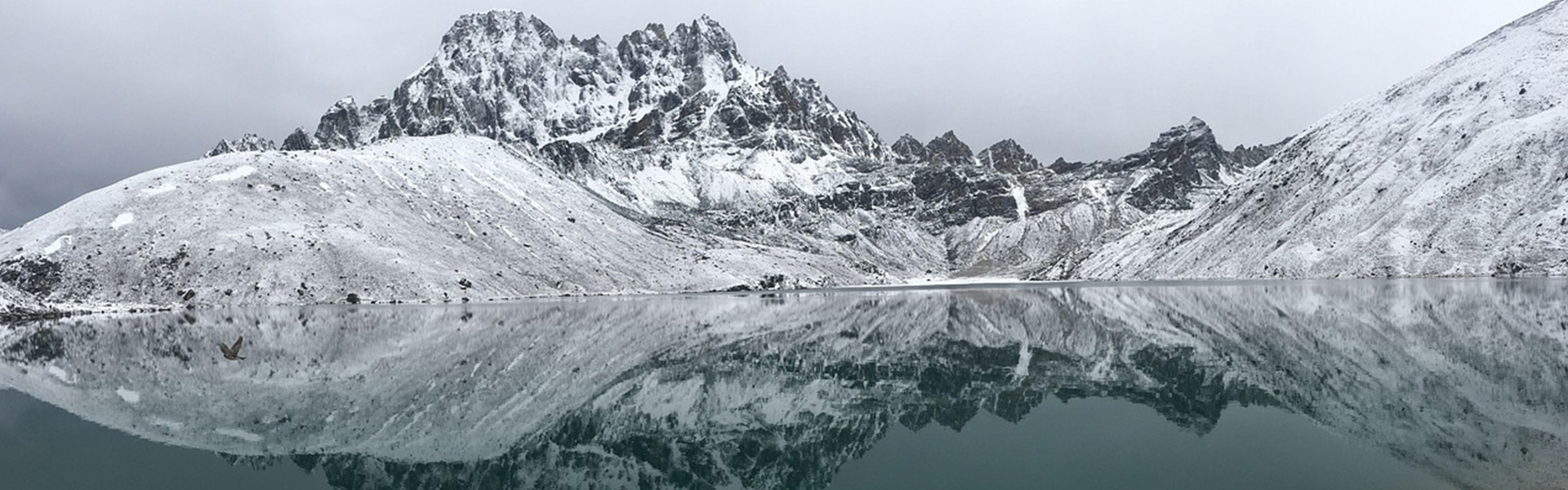
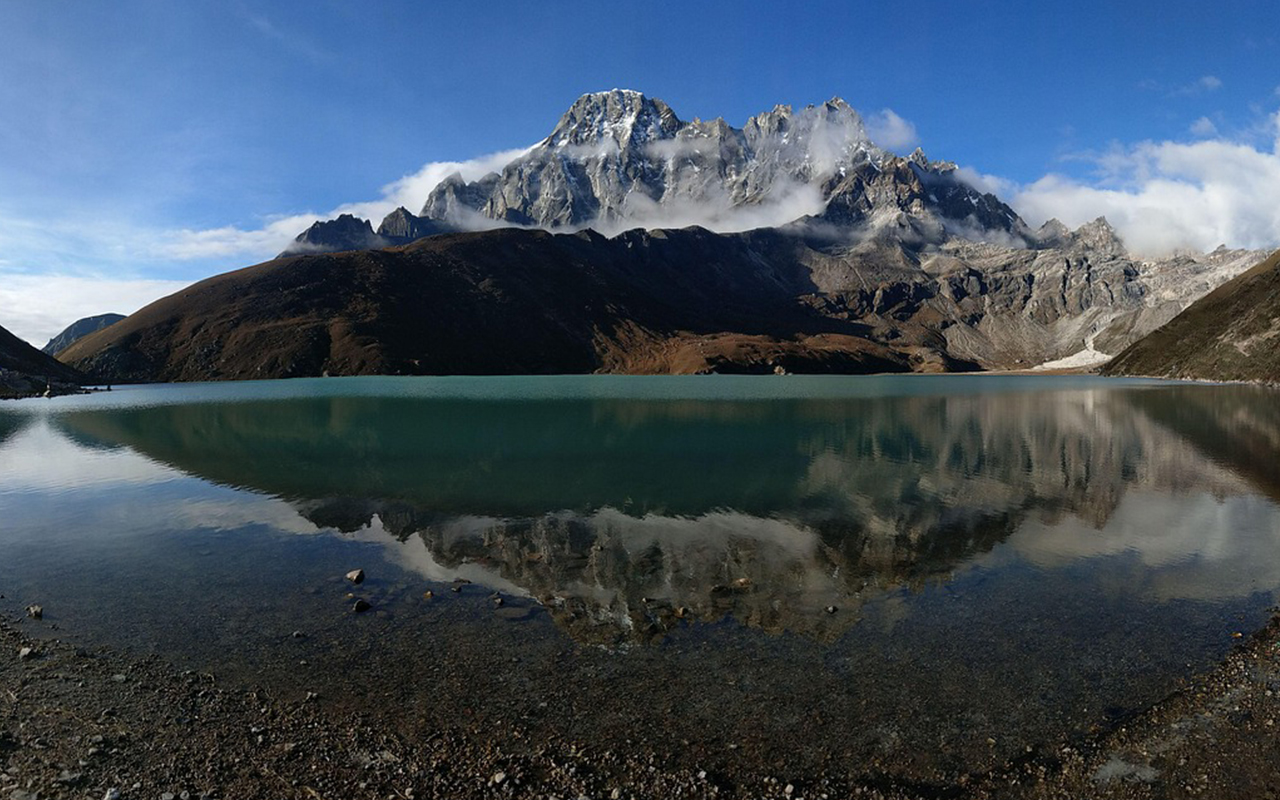
The Gokyo Lake Trek takes you deep into the Everest region through serene Sherpa settlements, valleys and toward some of the world’s highest freshwater lakes. As you proceed further up the Dudh Koshi and Khumbu valleys, the trail turns gradually wider eventually guiding you into the breathtaking Gokyo Valley, which is home to a series of crystal-clear blue-green lakes. These sacred lakes lie between 4,700 and 5,000 meters above sea level and hold great spiritual significance for both Hindus and Buddhists.
Throughout the trek, the surrounding scenery is always changing. You will walk alongside icy mountain rivers and cross over rocky glacier trails. As the height increases the full vista of huge Himalayan peaks unfolds into breathtaking and ever-changing landscapes. This makes the trek exciting from start to finish.
With every step, the panorama becomes more breathtaking. Eventually, you’ll get views of four giant mountains over 8,000 meters: Everest, Cho Oyu, Makalu, and Lhotse. You will have a clear view of a huge glacier Ngozumpa Glacier lying at the base of the high peaks.
It is here that the adventure continues after proper exploration in the Gokyo Valley and its upper lakes, across the high and challenging Cho La Pass.
From here, the trail descends into the famous Khumbu Valley, leading you toward the legendary Everest Base Camp route. Taking you on a beautiful blend of culture, adventure, and breathtaking scenery, this would be a quieter yet equally rewarding alternative to the classic Everest Base Camp trek.
The Gokyo Trek is outstanding with its perfect combination of Himalayan beauty, cultural richness, and peaceful trails. These treks lie within the Everest region and is an alternative to the busy Everest Base Camp trek. The path branches from Khumjung and then slowly takes you toward the highest freshwater lakes in the area.As you walk, cross thrilling suspension bridges and pass through charming traditional villages, each offering a glimpse of authentic mountain life.
Continuing your journey will take you to the viewpoint of Gokyo Ri at 5,360 meters, which gives an astonishing panorama of the surrounding mountains and the six famous Gokyo Lakes: Gokyo Tsho, Thonank Tsho, Kyjumba Tsho, Ngozumba Tsho, Tanjung Tsho, and Gyamzumpa Tsho. You will be staying at third Gokyo Lake with number of lodges options, at an altitude of 4,790 m, making the trek more comfortable.
Additionally, if you’d like to continue toward Everest Base Camp, you can do so easily by crossing the adventurous Cho La Pass (5,420 m) that links the Gokyo Valley to the main Khumbu route.
Once you reach Kathmandu, you will be greeted by our team and transferred to your respective hotels. You check in and can either rest or take a stroll along the vibrant streets lined with cafes and handicraft shops in Thamel. In the evening, your guide will go over the trek plan and answer questions that you might have.

Activity: Arrival

Max. Altitude: 1,350m/4,429ft. (Kathmandu)

Accommodation: Hotel
The Civil Aviation Authority of Nepal (CAAN) has mandated all flights to Lukla to be taken from Ramechap instead of Kathmandu during peak trekking season so every traveler during peak season Spring (March – May) & Autumn (September – November) are expected to take a 6 hours’ drive to Manthali and then catch a flight from Ramechap which just takes around 25 minutes.
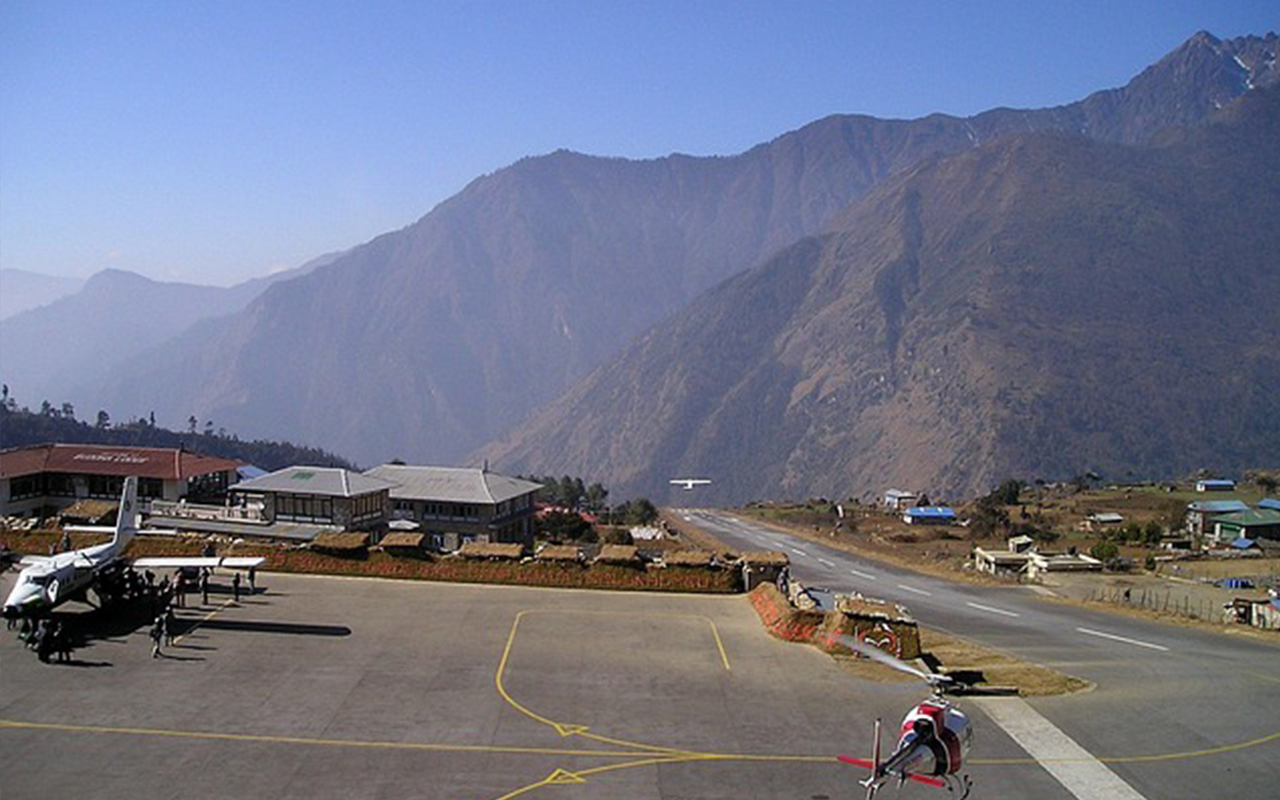
The cold wind hits you as you reach Lukla. We can stop by to have short tea/coffee break there in one of the hotels. Then after you begin an easy walk toward Phakding. The trail follows the Dudh Kosi River, crosses suspension bridges and passes by prayer wheels and small Sherpa settlements. Later in the afternoon, after 3 to 4 hours of walking, you reach Phakding depending on your pace, savor with a warm meal and then have a chitchat with the hotel owner just to know the climate and mountain lifestyle.
Activity: Drive,Trek
Max. Altitude: 2,651m/8,698ft. (Phakding )

Meal: Breakfast, Lunch & Dinner
Accommodation: Hotel
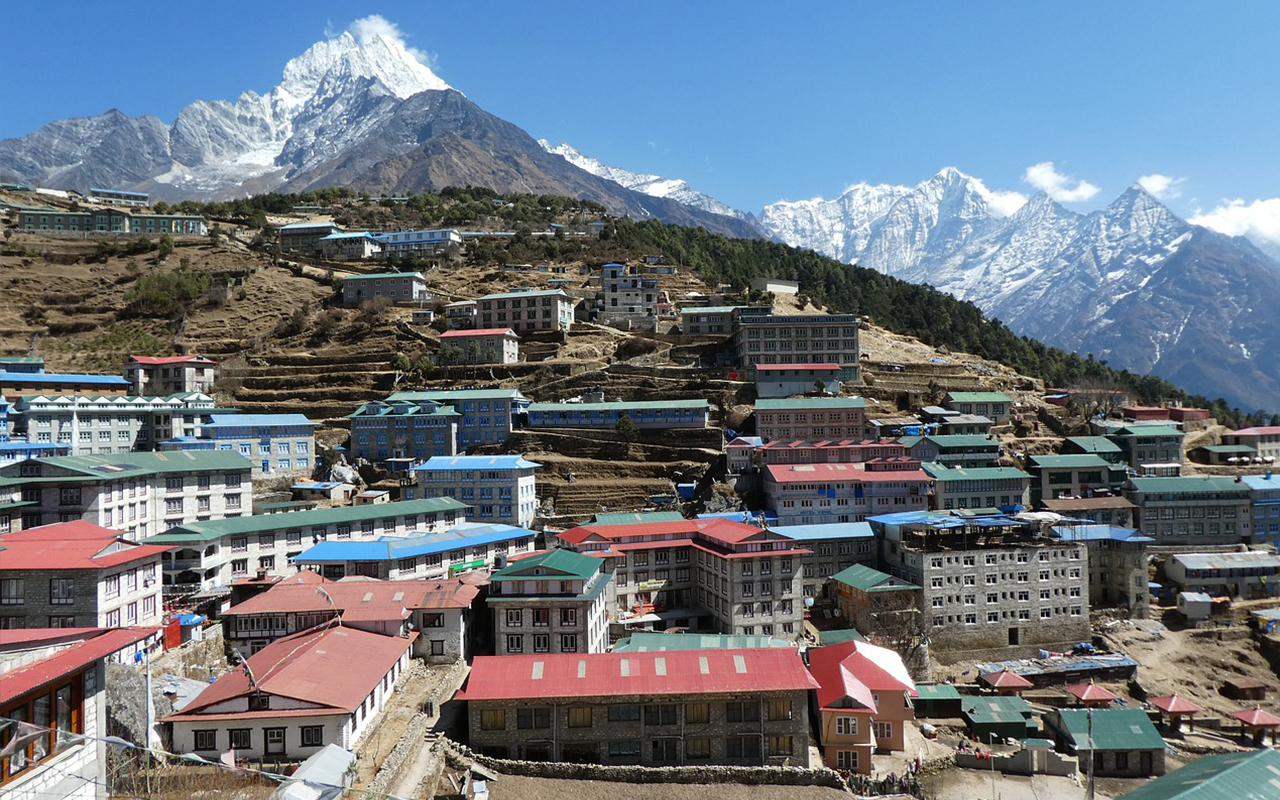
From Phakding, you will trek for about 6 to 7 hours to reach Namche Bazaar. Along the way, you will cross scenic trails and enjoy stunning views of the surrounding mountains, making the journey both rewarding and memorable. Today’s walk takes you further into Sagarmatha National Park where you will cross several bridges including the famous Hillary Bridge, before reaching a steep climb to Namche Bazaar. At the top, the colourful Sherpa capital greets you with its cafes, gear shops and bakeries
Activity: Trek 6-7 hours
Max. Altitude: 3,438m/11,280ft. (Namche Bazaar)
Meal: Breakfast, Lunch & Dinner
Accommodation: Hotel
You spend the day acclimatizing to the altitude. After breakfast, you hike to the Everest View Hotel for spectacular views of Everest and Ama Dablam. Further, guests can savor delicious cuisine amidst the surreal beauty of the Himalayas. The surrounding atmosphere and location make a visit to the hotel basically a must for trekkers in this region. Then you may continue toward Khumjung village to explore its monastery and visit local community projects supported by Sir Edmund Hillary. In the evening, return to Namche and enjoy its warm atmosphere.
Activity: Hike
Max. Altitude: 3,438m/11,280ft. (Khumjung)
Meal: Breakfast, Lunch & Dinner
Accommodation: Hotel
The trail then leaves Namche behind and climbs to Mong Village for amazing views of Himalayan giants such as Thamserku and Ama Dablam. After a short descent into Phortse Tenga, it’s a steady uphill walk and finally after 6 hours of walk you reach Dole, a beautiful mountain village nestled between stunning cliffs and wide-open skies.
Activity: Trek 6 hours
Max. Altitude: 3,680m/12,073ft. (Dole )
Meal: Breakfast, Lunch & Dinner
Accommodation: Hotel
You continue through high pastures, juniper bushes, and broad ridgelines. The landscape gets more stunning and open with elevation gain. Midday brings you to Machhermo after 5 to 6 hours of hike, a place where you can rest and enjoy close-up views of snowy peaks around. We usually walk the shorter distances as the altitude rises up because long hikes become physically exhausting. Once at the tea house, you can warm yourself up with the fire, play cards, and chat with fellow travelers. This cozy downtime makes each day’s trek a time for relaxation and enjoyment
Activity: Hike 5-6 hours
Max. Altitude: 3,870m/12,697ft. (Machhermo)
Meal: Breakfast, Lunch & Dinner
Accommodation: Hotel
Today is one of the most exciting days: You move slowly through rocky paths until the first Gokyo Lake appears. The third lake opens up beautifully beside the small Gokyo settlement after you have crossed the second lake after 4 hours of walking. You can have lunch at Gokyo third lake where lodges are available and enjoy the stunning view of the Gokyo lake sitting by the lake and walk around the lake which takes around 45 minutes to 1 hour.
Activity: Trek
Max. Altitude: 4,790m/15,715ft. (Gokyo)
Meal: Breakfast, Lunch & Dinner
Accommodation: Hotel
Early morning after breakfast, you may climb to Gokyo Ri for an unforgettable sunrise. Though the ascend to Gokyo Ri is quite steep and takes around 3 hours but the end result is rewarding as the view from the top is outstanding. You can view the Gokyo lakes from the top along with the view of Everest, Makalu, Lhotse, Cho Oyu, and the vast Ngozumpa Glacier.
After breakfast, you start this morning with a leisurely hike towards the 4th Gokyo Lake which takes around 4 hours. The calm blue water lies silently below towering peaks. After taking in the view you make your way back to Gokyo in time for lunch and start making your way back down to Machhermo for the night
Accommodation: Hotel
Today’s descent brings you back through Dole and forested trails filled with pine and rhododendron trees. As the air gets thicker, walking feels easier. By late afternoon, you reach Namche again after 7 to 8 hours of hike, where you can enjoy a hot shower and a homemade dessert at a local café.
Accommodation: Hotel
You again follow the Dudh Koshi River, cross the lively bridges, and pass through the beautiful Sherpa villages. Although the trail is long, it is quite comfortable because of the gradual downhill. You reach Lukla in the evening after 7 to 8 hours of hike and celebrate the successful trek with your team.
Max. Altitude: 2,860m/9,383ft. (Lukla )
Accommodation: Hotel
You fly out of Lukla this morning if the weather is clear but sometimes the flight might get delayed or even cancelled because of bad weather condition so be mentally prepared for that. But if everything goes as per plan we fly back to Ramechap then take a 6 hours drive to Kathmandu from Ramechhap. By midday we will reach Kathmandu and then you check back into your hotel and then the rest of the day is free. You might like to go out and eat some Nepali food, or simply rest.
Today, you visit Pashupatinath Temple (most sacred Hindu temple of Lord Shiva), Boudhanath Stupa (The largest spherical Buddhist stupa in Nepal), Swayambhunath, popularly known as the Monkey Temple (offers panoramic views of the Kathmandu Valley), or Kathmandu Durbar Square-UNESCO World Heritage Sites (showcases its historic palaces and courtyards and temples). You will get deeper insights into Nepalese culture and history on guided tours.
We transfer you to the airport for your flight home. As you leave Kathmandu, you carry unforgettable memories of Gokyo’s glowing lakes, Sherpa culture, and towering Himalayan peaks.

Note:
If you have a private group and prefer a personalized experience, we can organize a custom trip tailored to your requirements and group size, running it any day you choose.
Gokyo Lake Trek: All You Need to Know
Elevation & Trek
Begin at Lukla – around 2,860 meters high. That’s where it kicks off.
Key waypoints:
Trek distance:
Alternative Ways & Routes
Gadgets, Charging & Internet
A Typical Day During the Trek
Here’s how a typical trekking day goes:
Your Extra Expenses
Extra costs outside the main trek package to keep in mind:
Cost of the Gokyo Lake Trek
The cost shifts depending on the season, along with your chosen package. Although spending habits play a role too.
Additional Costs
Difficulty Level – Gokyo Ri Trek
Flight & Transport Info
Difficulty
Moderate
Duration
2-16 People
Duration
14 Days
Accommodation
Hotel,Teahouse
Best Time
Mar - May, Sep - Nov
Max Alt
5,360m (17,585ft)

Gokyo Lake Trek – 14 Days route map
General
It’s kind of hard, sometimes pretty rough. High elevation adds more challenge than how far you go. A lot of healthy hikers pull it off – just keep a slow rhythm
You’ll need a certified guide to do the Gokyo Lakes route. While not mandatory, hiring a porter can make things easier especially when you’d rather skip hauling bulky equipment.
Spring runs from March to May, while autumn covers September through November. You’ll find sunny skies during these times plus temperature stay pretty even. Flights tend to work out better then.
Sorry, but Nepal demands an approved guide here instead.
It usually takes about 5 to 7 days to finish the hike, depending on your pace and rest stops along the way.
Most trips last between 12 and 14 days – how long depends on rest points plus the path taken.
Just basic tea spots. Rooms are small, toilets you share with others, eating together in one space.
Dal bhat, soups, rice meals, noodles pop up too. Eggs show up on menus along with tea. Basic snacks are around but get rarer. Up high, choices shrink a bit.
Signal is unreliable – sometimes it works, sometimes not. Internet? Only if you’re near the main building.
Spotty phone signal. Some cabins offer internet access – though it’s often weak or drops out. Carry a portable charger.
Right. Choose a plan that includes hiking over 5,000 meters along with emergency chopper rescue.
Pause your ascent. Take a break, hydrate or head down. Listen to what your guide says. Use medicines only if they’re meant for you.
Yep, assuming you’re fairly active plus take time to adjust to the altitude.
It’s more peaceful here, with lakes standing out the most – Gokyo Ri gives you massive mountain scenes but skips the crowded Everest trails.
Preparation & Fitness
 Permits
To trek the Gokyo Lakes, you need:
Foreigners pay around NPR 3,000 – handled either in Kathmandu or at Monjo, just before stepping into the park.
Around NPR 3,000 each individual.
Mandatory for every trekker.
Visitors from abroad pay around NPR 2,000 for each TIMS Card. This allows them to enter legally while helping track where they are for safety reasons.
 Insurance & Visa
 Guides & Support Staff
 Accommodation and Facilities
 Food and Drinks
 Weather & Seasons
 Health & Safety
 Packing & Gear
 Booking & Payment
Additional Costs
 Transportation & Flight