

Difficulty
Easy

Duration
11 Days

Accommodation
Hotels

Best Time
Spring and Autumn

11 Days/10 Nights | Kathmandu • Thimphu • Paro • Punakha
Overview
This 11-day trip through Nepal and Bhutan suits those who prefer real moments, cozy stays, or cultural depth rather than racing from place to place. You’ll see two mountain countries with strong spiritual ties but unique ways of showing it. In Nepal, you get energy, history, along with a sense of chaos held together by charm. Meanwhile, Bhutan moves slowly, focused, built around mindful choices. Moving across both gives you a fresh look at how belief, custom, and everyday routines still guide life in these highlands.
The rhythm of this trip feels steady, with room to breathe. You’ll get to check out UNESCO spots while wandering real medieval towns that still buzz with life. Crossing beautiful mountain roads connects one moment to the next. Bhutan’s approach to slow, meaningful living becomes part of your journey too. Perfect if you care more about moments than miles, great for new Himalayan explorers or those traveling as a pair. Seniors enjoy it just as much when looking for substance without rush. Some gentle walks come up here and there. Still, nothing pushes hard, the days stay relaxed from start to finish.
A round-trip ticket from Kathmandu to Paro usually costs between $450 and $550 per traveller, this can shift based on when you fly or how full the plane is. You might pay more or less once you actually book, since rates aren’t fixed.
When applying for a Bhutan visa, you’ll need to submit a clean scan of your passport along with one up-to-date photo, get this done roughly two weeks ahead. As for Nepal, entry rules depend on where you’re from, most visitors grab their visa once they land.
This trip to Nepal and Bhutan suits those eager to explore the Himalayas more deeply. Not just sightseeing but you’ll move at a comfortable pace, guided by professionals who know their stuff. The plan mixes highs and lows, giving you rich moments across both nations without feeling rushed.
Your trip kicks off in Kathmandu, Nepal’s lively cultural hub. Once you land at Tribhuvan International Airport, a team member from Prime Holiday Travel greets you, then takes you to your hotel. As you ride through town, you’ll feel its pulse, temples sit beside street vendors while people go about their routines.
Once you’ve checked in, take it slow. Maybe unwind post-flight or head out for a light stroll near the place. Some visitors like wandering side streets, grabbing coffee at a corner spot, or just watching daily life unfold on a bench. A calm opening lets you adjust before busier tours kick off.
Once you’ve eaten, start exploring key spots across Kathmandu Valley, all day long. One after another, these places reveal pieces of Nepal’s faith and creative past.
The morning begins at Pashupatinath, Nepal’s holiest shrine to Lord Shiva. Sitting beside the Bagmati River, this site offers a raw look at Hindu rites, especially funeral pyres burning near the water. Even though snapping pictures isn’t allowed everywhere, your local guide breaks down the ideas about life, dying, or starting over that give this spot deep meaning.
After that, head over to Boudhanath Stupa, one of the biggest Buddhist stupas on Earth. Moving in a clockwise path alongside monks, visitors, and residents brings a quiet, thoughtful vibe. Prayer wheels turn gently while Buddha’s painted eyes gaze across the hills below. Monks’ homes nearby and eateries on flat rooftops give solid spots to take it all i
In the afternoon, head to Bhaktapur Durbar Square, an old town kept in great shape. Tiny red-brick paths take you past temple rooftops, palace yards, and areas where potters craft things manually. Life here seems calmer compared to Kathmandu, giving a clearer look at how Newari people live and build.
Right now you keep checking out the valley, looking at spots where Hinduism mixes with Buddhism in ways only found here. While moving around, notice how both beliefs fit together naturally across this region.
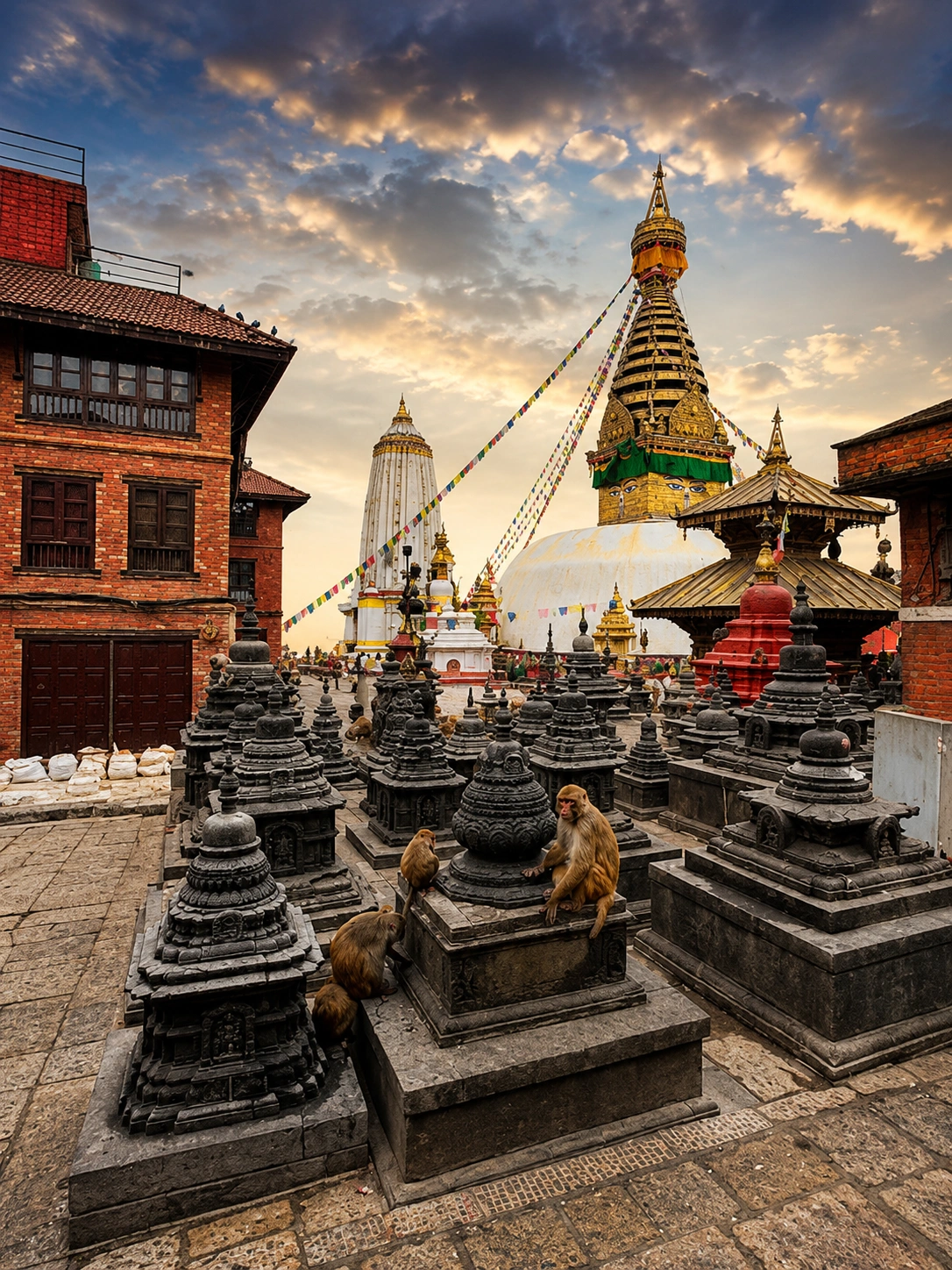
You start off at Swayambhunath, people call it the Monkey Temple. Sitting high on a hill, it gives you open views across the Kathmandu Valley. This stupa ranks among Nepal’s most ancient spiritual spots, showing peace between religions. Walking up the stairs takes time, but while you go, your guide talks about what the prayer flags, small temples, and carved details really mean.
After that, head over to Kathmandu Durbar Square, this used to be where Nepal’s kings lived. You’ll find old palaces, shrines, and open spaces here, like the Kumari Ghar, which houses the Living Goddess. Even though quakes hit it hard before, traces of its past still stand out while repairs go on.
In the afternoon, head to Patan Durbar Square, sometimes dubbed the City of Arts. With fine details everywhere, the place highlights amazing metal pieces, carved stones, along with creative temple layouts. Check out the palace museum if you want to get a clearer picture of Nepal’s artistic side, which wraps up your time in Kathmandu just right.
Once you’ve eaten, head to the airport for your trip to Paro. Flying in there is known for wild landscapes, steep peaks line the route as planes glide down into a tight valley. Views grab your attention right away thanks to bold terrain shaping the path.
When you get there, a local guide from Bhutan greets you then takes you on a peaceful ride to Thimphu, the nation’s capital. As you go, views of woods, flowing streams, and old-style homes show how calm life here can be. This place stands out ’cause it’s the one capital globally that doesn’t use traffic signals, which fits its focus on living simply and staying in harmony.
Once you’ve settled at the hotel, you can unwind or maybe wander nearby for a bit.
Right now we’re checking out Thimphu’s culture and how locals live day to day. This place mixes old Bhutan ways with a bit of new stuff, but quietly.
You stop by the Memorial Chorten, where people come every day to chant or sit quietly, gives you a real feel for how life ties into faith here. Then it’s off to the Buddha Dordenma, this huge figure watching over the whole valley, standing there makes everything seem calm, like you can actually see what devotion means.
The journey heads to the Takin Reserve, this is where Bhutan’s national animal lives, then moves on to Tashichho Dzong, a massive fortress holding government spaces along with the king’s ceremonial hall. Later in the day, there’s time to check out small market stalls or stores offering handmade fabrics and local art pieces.
Head out from Thimphu heading to Punakha, winding up through the picturesque Dochula Pass an elevation of 3,100 meters. When skies are clear, you’ll see vast stretches of the Himalayas scattered across the site stand 108 small stupas built in tribute to balance and calm.
Floating down toward the cozy Punakha Valley, you spot layered farms alongside winding waterways. Then comes Punakha Dzong, often called Bhutan’s prettiest stronghold. Nestled where two rivers join, this place shaped much of Bhutan’s spiritual and ruling past.
The night unfolds with a laid-back vibe near Punakha’s quiet landscapes, while soft breezes drift through the trees.
Right now it’s all about taking it slow while getting outside. Start off by walking toward Khamsub Yulley Namgyal Chorten, path’s in good shape, gives you sights across the valley. This trek isn’t too hard but still feels worth it, fits nearly everyone traveling here.
After that, head to Chimi Lhakhang, people call it the fertility temple. It’s tucked among rice paddies and tiny villages, walking there shows how people live outside the cities. Time moves slow the rest of the day, so you can just relax and take in the quiet landscape.
Once you’ve eaten, head back to Paro, same winding path through green valleys and high passes. When you get there, check out Rinpung Dzong, this old fortress-monastery shows how Bhutan builds its sacred spaces.
You’ll check out Ta Dzong too. Turned into the National Museum is stacked with old items, fabrics, and creative pieces giving clues about Bhutan’s past and who they are. Later on, you can grab some free time to browse shops or wander relaxed through Paro town.
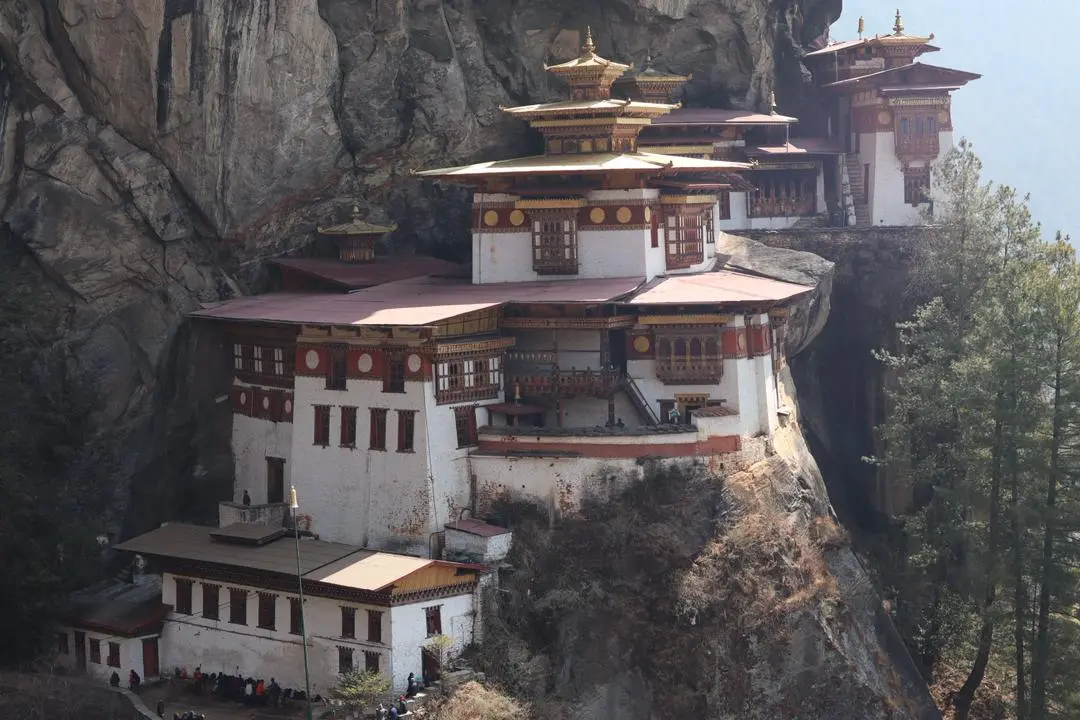
This day shows off a key moment in Bhutan, the trek up to Taktsang Monastery, often called Tiger’s Nest. Perched on a cliff at 3,120 meters, it stands as one of the nation’s holiest spots.
The trail climbs gently, moving slow enough to catch your breath, take pauses now and then, also there are spots perfect for taking in the views. When you get to the monastery, it feels like you’ve really done something meaningful while also getting closer to how Bhutan connects with its inner beliefs. Heading back down leads straight to Paro, where the night stays calm and quiet.
You’ll catch a flight from Paro to Kathmandu in the early hours. Once you land, your schedule opens up completely. A lot of visitors spend those hours browsing shops in Thamel instead of rushing off somewhere. Some grab coffee at local cafes rather than sticking to plans. Others go for relaxing spa sessions when they feel like unwinding. Or take slow-paced food tours if they’re curious about flavors.
This free day gives a chance to think back on what’s happened while checking out Kathmandu your way, so take it slow or go full speed, doesn’t matter.
Once you’ve eaten, we’ll head to the airport for your next flight. You’re leaving with strong memories from two mountain countries full of rich traditions, inner meaning, or wild natural beauty.

Note:
If you have a private group and prefer a personalized experience, we can organize a custom trip tailored to your requirements and group size, running it any day you choose.
Difficulty
Easy
Duration
11 Days
Accommodation
Hotels
Best Time
Spring and Autumn