

Nepal’s Tihar festival in 2026 will be celebrated from November 7 to November 11, bringing five days of lights, colourful decorations, traditional music, animal worship and family celebrations across the country. Also known as Deepawali or Yamapanchak, Tihar is one of Nepal’s most beautiful festivals, celebrating the relationship between humans, animals, nature and the divine.
The main highlights of Tihar 2026 include Kaag Tihar on November 7, Kukur Tihar and Laxmi Puja on November 8, Gai Tihar on November 9, Govardhan Puja and Mha Puja on November 10, and Bhai Tika on November 11.
For international travellers, Tihar offers a wonderful opportunity to experience authentic Nepali culture, explore the historic streets of Kathmandu Valley, enjoy the peaceful atmosphere of Pokhara and combine cultural sightseeing with Himalayan adventures.
Whether you are planning a cultural holiday, a family trip or a trekking adventure, visiting Nepal during Tihar can make your journey especially memorable.
Tihar follows the traditional Nepali lunar calendar, so its dates change every year. In 2026, the five-day celebration begins on November 7 and concludes on November 11.
Here is the expected Tihar 2026 festival schedule:
| Festival Day | Date in 2026 | Main Celebration |
| Day 1 | November 7, Saturday | Kaag Tihar – Worship of crows |
| Day 2 | November 8, Sunday | Kukur Tihar and Laxmi Puja |
| Day 3 | November 9, Monday | Gai Tihar – Worship of cows |
| Day 4 | November 10, Tuesday | Goru Tihar, Govardhan Puja and Mha Puja |
| Day 5 | November 11, Wednesday | Bhai Tika – Celebration of sibling bonds |
Important: The dates above follow the published 2026 festival calendar. Exact auspicious puja timings (sait) should be checked against the official Nepali Panchang announcement closer to the festival.
Tihar is a five-day Hindu festival celebrated throughout Nepal with deep cultural and spiritual significance. It is dedicated to Goddess Laxmi, the goddess of wealth and prosperity, as well as animals that play an important role in everyday life.
Unlike many other festivals, Tihar gives special recognition to crows, dogs, cows and oxen. It also celebrates the relationship between brothers and sisters through the beautiful tradition of Bhai Tika.
During the festival, Nepali homes, temples, shops and streets are decorated with:
The evenings become particularly beautiful as families light their homes and communities come together to celebrate.
Although Tihar shares some similarities with India’s Diwali, Nepal has its own distinct five-day traditions, including Kukur Tihar, Mha Puja and Bhai Tika.
Each day of Tihar has a different meaning and cultural importance. Understanding these traditions makes the festival even more interesting for visitors experiencing Nepal for the first time.
Kaag Tihar marks the beginning of the five-day festival. On this day, crows are worshipped and offered food by Nepali families.
In Hindu tradition, crows are considered messengers associated with Yama, the god of death. People believe that offering food to crows helps bring good fortune and protects their families from negative events.
Early in the morning, families place rice, grains and other food offerings in courtyards and on rooftops.
For visitors, Kaag Tihar offers an introduction to the spiritual beliefs and traditions that make Nepalese festivals unique.
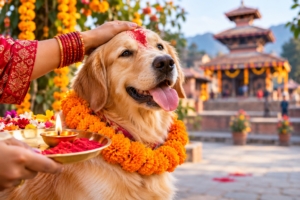
One of the most recognisable celebrations of Tihar is Kukur Tihar, the day dedicated to honouring dogs.
Dogs are worshipped with colourful tika on their foreheads, marigold garlands around their necks and special meals. The tradition recognises their loyalty, companionship and protective role in human life.
The celebration also extends to street dogs, reflecting the importance of kindness towards all animals.
The evening of November 8 is the main Laxmi Puja celebration in the 2026 calendar.
Families clean and decorate their homes to welcome Goddess Laxmi, who represents wealth, happiness and prosperity.
Some of the most beautiful sights include:
A traditional belief is that Goddess Laxmi visits clean and brightly illuminated homes during this special night.
In many neighbourhoods, children and young people also visit houses singing Deusi and Bhailo, traditional festive songs that bring communities together.
For travellers, this is one of the most atmospheric evenings to experience Nepal’s cultural celebrations.
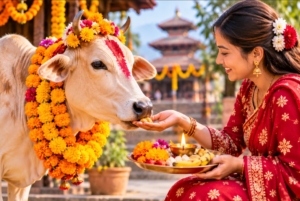
The third day of Tihar is dedicated to cows, which hold a special place in Hindu culture.
Cows are traditionally associated with Goddess Laxmi and are respected as symbols of prosperity, nourishment and motherhood.
Families decorate cows with colourful tika and flower garlands and offer them food.
The celebration reflects Nepal’s longstanding relationship with animals, agriculture and religious traditions.
The fourth day of Tihar includes several important celebrations.
Goru Tihar honours oxen, which have traditionally supported farming and agricultural life in Nepal.
Govardhan Puja is associated with the worship of Govardhan Hill and the protection of nature and agricultural communities.
One of the most fascinating cultural traditions takes place within the Newar community of the Kathmandu Valley.
Mha Puja means worship of the self. It is a spiritual ceremony that recognises the importance of one’s own life, health, well-being and inner strength.
Families perform special rituals, arrange traditional mandalas and offer prayers for prosperity and a balanced life.
Mha Puja also marks the beginning of Nepal Sambat, the traditional Newar calendar.
Travellers interested in Nepalese heritage should consider exploring Kathmandu, Patan and Bhaktapur during this period to better understand the living traditions of the Newar community.
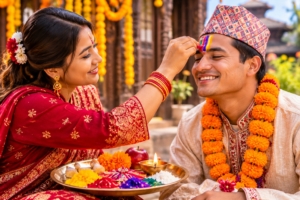
Bhai Tika is the final and one of the most emotional days of Tihar.
It celebrates the special relationship between brothers and sisters.
Traditionally, sisters apply colourful tika to their brothers’ foreheads, offer flowers and garlands, and pray for their long life, happiness and prosperity.
Brothers give gifts to their sisters as a symbol of love and appreciation.
The seven-colour tika is one of the most recognisable elements of Bhai Tika celebrations.
Families gather, share traditional food and celebrate together, bringing the five-day festival to a meaningful conclusion.
Nepal offers different cultural experiences depending on where you travel. From the historic streets of Kathmandu to the peaceful lakeside atmosphere of Pokhara, each destination provides a different perspective on the festival.
Kathmandu is one of the best places to experience Tihar because of its historic temples, traditional neighbourhoods and vibrant local celebrations.
During the festival, streets and homes are decorated with lights, flowers and rangoli.
Visitors can explore:
Kathmandu is particularly interesting for travellers who want to understand Nepalese culture, religious traditions and everyday city life.
Bhaktapur is one of the most beautiful heritage destinations in the Kathmandu Valley.
Its traditional architecture, brick-paved streets, historic courtyards and temples provide a wonderful setting for cultural exploration.
During Tihar, visitors can experience the local atmosphere and learn more about Newari customs, including Mha Puja and Nepal Sambat celebrations.
Bhaktapur Durbar Square, Taumadhi Square and Pottery Square are excellent places to explore.
Patan, also known as Lalitpur, is famous for its artistic heritage, traditional architecture and historic temples.
Patan Durbar Square is particularly beautiful for visitors interested in traditional Newari craftsmanship and cultural history.
During Tihar, exploring its traditional neighbourhoods provides a closer look at how local families celebrate the festival.
Pokhara offers a different atmosphere from Kathmandu.
Known for Phewa Lake, mountain views and relaxed lakeside surroundings, it is an excellent destination for travellers looking to combine cultural experiences with natural beauty.
Popular attractions include:
Pokhara is a great addition to a Nepal cultural holiday, particularly for visitors who want a balance of sightseeing, relaxation and Himalayan scenery.
For travellers interested in nature and wildlife, Chitwan provides a completely different experience.
Chitwan National Park is known for its rich biodiversity, jungle landscapes and wildlife experiences.
Depending on the season and available activities, visitors can enjoy guided jungle walks, birdwatching, cultural experiences and wildlife safaris.
Adding Chitwan to a Tihar holiday allows visitors to discover another side of Nepal beyond its temples and mountains.
Yes. November is generally one of the most attractive months to visit Nepal.
The post-monsoon season often brings clearer skies, comfortable daytime temperatures and excellent mountain visibility, although weather conditions vary by region and altitude.
Here are some reasons why November is a popular month for Nepal travel:
Pleasant sightseeing conditions: Kathmandu, Bhaktapur and Pokhara are generally comfortable for exploring cultural attractions.
Mountain views: The autumn season often provides beautiful Himalayan panoramas.
Festival experiences: Tihar brings a unique cultural atmosphere to cities, towns and local communities.
Outdoor adventures: November is a popular period for trekking and outdoor activities, subject to route conditions and weather.
Travellers planning to visit during Tihar should book flights, accommodation and transportation in advance, especially around the main festival days.
A visit to Nepal during Tihar does not have to be limited to festival celebrations. You can extend your stay with cultural sightseeing, Himalayan adventures, wildlife experiences or even a cross-border journey into Bhutan.
At Prime Holidays Nepal, travellers can explore different tour and trekking experiences based on their interests, available time and travel preferences.
Here are some recommended journeys to consider when planning your Nepal holiday.
Best for: First-time visitors, families and cultural travellers.
The six-day Kathmandu Pokhara Tour combines Nepal’s cultural heritage with its beautiful Himalayan landscapes.
Explore the historic attractions of Kathmandu before travelling to Pokhara, where you can enjoy Phewa Lake, mountain views and some of Nepal’s most popular sightseeing destinations.
This is a convenient option for travellers who want to discover two of Nepal’s most popular destinations without committing to a long trekking adventure.
Explore the itinerary: Kathmandu Pokhara Tour – 6 Days
Best for: Adventure enthusiasts and experienced mountain travellers.
The Everest Base Camp Trek is one of the most iconic Himalayan adventures.
The journey takes trekkers through the spectacular Khumbu region, traditional Sherpa settlements, suspension bridges, mountain valleys and breathtaking Himalayan scenery.
Highlights include Namche Bazaar, Tengboche Monastery and the incredible views surrounding Everest Base Camp.
Travellers interested in both Tihar and Everest trekking can plan the festival and trekking portions as separate parts of a longer Nepal holiday. The trek requires suitable preparation, acclimatisation and careful scheduling.
Explore the itinerary: Everest Base Camp Trek – 14 Days
Best for: Cultural explorers and travellers interested in Himalayan heritage.
Why explore only one Himalayan destination when you can experience two?
The seven-day Nepal and Bhutan Cultural Tour offers an opportunity to discover the heritage, architecture, traditions and landscapes of two fascinating Himalayan countries.
From Nepal’s historic cultural attractions to Bhutan’s monasteries and traditional architecture, this journey provides a broader perspective on Himalayan culture.
It is an excellent option for travellers looking to extend their Nepal holiday with another distinctive cultural destination.
Explore the itinerary: Nepal Bhutan Cultural Tour – 7 Days
Best for: Nature lovers, mountain enthusiasts and trekking travellers.
The Annapurna Base Camp Trek takes visitors into the spectacular Annapurna Sanctuary, surrounded by some of the most impressive mountain landscapes in Nepal.
The journey combines traditional mountain villages, terraced farmland, forests, Himalayan rivers and panoramic mountain views.
For visitors who want to experience Nepal beyond its cities and cultural attractions, this trek offers an unforgettable mountain adventure.
The trek can be planned before or after the Tihar festival as part of a longer Nepal itinerary.
Explore the itinerary: Annapurna Base Camp Trek – 10 Days
Best for: Families, nature lovers and cultural travellers.
This eight-day experience combines Nepal’s historic cultural attractions with the natural beauty of Chitwan.
Begin by exploring Kathmandu’s heritage sites, temples and traditional architecture before travelling to the Chitwan region for a wildlife experience.
The combination of cultural sightseeing and nature makes this a wonderful option for travellers who want to discover more of Nepal in one holiday.
Explore the itinerary: Kathmandu Cultural and Chitwan Wildlife Tour – 8 Days
Travel planning note: These are existing Prime Holidays Nepal tour and trekking itineraries, not guaranteed Tihar-specific departures. Contact the team to coordinate your festival dates, travel arrangements and preferred activities.
If you have around 8–10 days available, you can combine the main festival celebrations with cultural sightseeing and a visit to Pokhara.
Here is a sample itinerary:
| Day | Suggested Experience |
| Day 1 | Arrive in Kathmandu and explore the local surroundings |
| Day 2 | Discover Kathmandu heritage sites and local markets |
| Day 3 | Experience Tihar preparations and Kaag Tihar |
| Day 4 | Experience Kukur Tihar and Laxmi Puja celebrations |
| Day 5 | Explore Patan and Bhaktapur during the festival |
| Day 6 | Experience local traditions and Bhai Tika, according to the festival calendar |
| Day 7 | Travel to Pokhara |
| Day 8 | Explore Phewa Lake, World Peace Pagoda and local attractions |
| Day 9 | Enjoy Himalayan viewpoints and free time |
| Day 10 | Return to Kathmandu and depart |
Note: The itinerary is an example, not a fixed departure schedule. The exact travel days should be adjusted to match the five-day festival calendar, transport availability and the traveller’s arrival date. Travellers wishing to participate in specific family rituals should make arrangements with local hosts in advance.
Planning ahead can make your Tihar holiday much more enjoyable.
Here are some practical tips for international travellers.
Tihar is an important national celebration. Hotels, flights and transport services can become busy around the festival period.
Reserve your accommodation and domestic transportation ahead of time.
Tihar is a religious and family-oriented festival. Visitors are welcome to observe public celebrations, but should respect private family ceremonies and religious customs.
Always ask permission before photographing people during personal rituals.
Some smaller shops and local businesses may operate on adjusted schedules during festival days. Having some Nepali currency available can be helpful.
Government offices, banks and some businesses may have holiday closures or adjusted opening hours.
Allow flexibility in your sightseeing and transportation plans.
Comfortable walking shoes and modest clothing are useful when visiting temples, heritage sites and traditional neighbourhoods.
Tihar is also a time for family gatherings and traditional food.
Depending on the region and household, visitors may encounter sel roti, sweets, fruits, festive snacks and traditional Nepali dishes.
If you plan to combine Tihar with trekking, check the latest weather, trail conditions, permits and transport arrangements.
High-altitude trekking requires appropriate fitness, acclimatisation and preparation.
Experiencing a festival in another country is about more than visiting famous attractions. It is about understanding the people, traditions and everyday life that make a destination special.
At Prime Holidays Nepal, we help travellers explore Nepal through cultural tours, scenic journeys, wildlife experiences and Himalayan adventures.
Whether you are interested in Kathmandu’s historic temples, Pokhara’s beautiful landscapes, Chitwan’s wildlife or a challenging Himalayan trek, our team can help you plan a journey that matches your interests and available time.
We can also help coordinate a customised itinerary around Tihar 2026 so you can enjoy the festival while discovering more of Nepal.
Plan your Nepal holiday with Prime Holidays Nepal.
Website: https://primeholidaysnepal.com/
Email: info@primeholidaysnepal.com
WhatsApp / Phone: +977 9851009620
Tihar 2026 will be celebrated from November 7 to November 11, 2026. The five-day festival includes Kaag Tihar, Kukur Tihar, Laxmi Puja, Gai Tihar, Govardhan Puja, Mha Puja and Bhai Tika.
Laxmi Puja falls on November 8, 2026, while Bhai Tika will be celebrated on November 11, 2026.
Tihar is known as the Festival of Lights because families decorate their homes and surroundings with traditional oil lamps, candles and decorative lights. The main Laxmi Puja evening is especially beautiful.
Tihar and Diwali share religious themes, including the worship of Goddess Laxmi and the celebration of light over darkness. However, Tihar has distinctive Nepali traditions, including separate celebrations for crows, dogs, cows, oxen and the bond between brothers and sisters.
Kukur Tihar is a special day dedicated to dogs. People decorate dogs with flower garlands, apply tika to their foreheads and offer them special food as a sign of respect and appreciation.
Yes. International tourists can enjoy the festive atmosphere, traditional decorations, cultural performances and public celebrations. Visitors should respect local customs and avoid entering private family ceremonies without an invitation.
Yes. November is generally one of the best months for Nepal sightseeing and trekking. The weather is often pleasant, skies are relatively clear and mountain visibility can be excellent, although conditions vary by destination and altitude.
Kathmandu, Bhaktapur and Patan are excellent destinations for experiencing traditional cultural celebrations. Pokhara offers a more relaxed lakeside atmosphere, while Chitwan is ideal for combining cultural travel with nature and wildlife experiences.
Many restaurants, hotels and tourism businesses continue operating during Tihar, although opening hours can vary. Smaller shops and local businesses may close or operate on reduced schedules, especially during important festival days.
Yes. Travellers can plan Tihar celebrations alongside a trekking holiday, provided sufficient time is allowed for travel, acclimatisation and the trek itself. Popular options include the Everest Base Camp Trek and Annapurna Base Camp Trek.
Comfortable and respectful clothing is recommended, especially when visiting temples and religious sites. Comfortable walking shoes are also useful for exploring historic neighbourhoods and local markets.
You can explore available tours and trekking packages. For a customised Tihar holiday, contact the team at info@primeholidaysnepal.com or WhatsApp +977 9851009620.
Tihar is more than a festival of lamps and decorations. It is a celebration of gratitude, family, nature, prosperity and the special relationships that connect people with the world around them.
From the glowing streets of Kathmandu to the traditional courtyards of Bhaktapur, every destination offers a different way to experience Nepal’s cultural richness.
Whether you want to enjoy the beautiful traditions of Laxmi Puja, witness the emotional celebrations of Bhai Tika or explore the Himalayas after the festival, Tihar 2026 is a wonderful opportunity to discover Nepal.
Start planning your Nepal journey with Prime Holidays Nepal and experience the country’s culture, landscapes and hospitality.


