
Dashain 2026 in Nepal runs from October 11 to October 25, 2026, with Vijaya Dashami, the main Dashain Tika day, on Wednesday, October 21, 2026. The festival begins with Ghatasthapana on October 11, followed by Phulpati, Maha Ashtami, Maha Navami and the highly anticipated Tika day.
If you are searching for Dashain 2026 dates, Dashain Tika 2026, when is Dashain in Nepal, Dashain festival Nepal 2026, or the best time to travel to Nepal during Dashain, this guide brings the essential information together.
Dashain is much more than a religious festival. It is a time when families reunite, people return to their hometowns, homes become busy with celebrations, elders bless younger family members, and Nepal’s cities and villages take on a distinctly festive atmosphere.
For travelers, Dashain 2026 is also part of Nepal’s autumn travel season. The same period that brings one of the country’s biggest festivals also falls within a popular period for Himalayan trekking and cultural tours.
That combination makes October an interesting time to explore Nepal, provided your itinerary is planned around the festival calendar.
Dashain 2026 begins on Sunday, October 11, 2026, with Ghatasthapana and the main Tika celebration takes place on Wednesday, October 21, 2026. The broader festival period concludes with Kojagrat Purnima on October 25. Current Nepal calendar sources support these dates.
The festival follows the lunar calendar, which is why its Gregorian dates change every year. In the Nepali Bikram Sambat calendar, these celebrations fall across Ashwin and Kartik 2083.
For travelers, knowing the dates matters because Dashain is simultaneously a family holiday, religious celebration and major period of domestic travel.
| Dashain event | Date in 2026 | Day | What it means |
|---|---|---|---|
| Ghatasthapana | October 11 | Sunday | Dashain begins; Jamara is planted |
| Phulpati | October 17 | Saturday | Sacred Phulpati is brought into homes |
| Maha Ashtami | October 18 | Sunday | Major Durga worship and rituals |
| Maha Navami | October 20 | Tuesday | Worship of tools, vehicles and Durga |
| Vijaya Dashami / Dashain Tika | October 21 | Wednesday | Elders give Tika, Jamara and blessings |
| Ekadashi | October 22 | Thursday | Dashain celebrations continue |
| Dwadashi | October 23 | Friday | Family visits and Tika continue |
| Kojagrat Purnima | October 25 | Sunday | Closing day of the festival |
The dates above align with current Nepali calendar information, including Nepal’s official public-holiday listing.
One calendar detail sometimes causes confusion: some international festival calendars list Maha Navami differently because lunar tithi timings can cross calendar dates. For travel planning in Nepal, the Nepali calendar is the more relevant reference.
Dashain, also called Bada Dashain or Vijaya Dashami, is Nepal’s largest and longest major Hindu festival. Nepal Tourism Board describes it as a festival traditionally celebrated over two weeks, involving worship of Goddess Durga, family reunions, blessings, gifts and elaborate religious observances.
At its heart, Dashain represents the victory of good over evil. The central religious story connects the festival with Goddess Durga’s victory over the buffalo demon Mahishasura.
But asking only about its mythology misses an important part of what Dashain means to people in Nepal.
For many Nepali families, Dashain is also about going home.
People living in Kathmandu, Pokhara and other cities often travel back to their ancestral villages or hometowns. Families gather around food, children receive blessings from elders, houses become busy with relatives, and traditional activities become part of everyday life.
That family dimension is one reason Dashain feels different from a conventional tourist festival.
Dashain combines religion, family, food, tradition and community.
The early days focus heavily on worship and preparation. The later days become increasingly centered around family visits, Tika, Jamara, blessings and celebration.
Nepal Tourism Board notes that people traditionally visit elders during Dashain to receive Tika and blessings, while activities such as new clothes, feasting, kite flying and village swings form part of the wider festive atmosphere.
For an international visitor, this is an important distinction.
You do not necessarily experience Dashain by simply standing in front of a stage and watching a performance. Much of Dashain happens inside homes, temples and communities.
That makes respectful cultural interaction particularly important.
The fifteen-day festival contains several important dates, but a few days stand out for visitors and families.
Understanding what happens on each one makes the calendar much easier to follow.
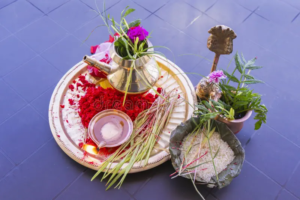
Ghatasthapana on October 11, 2026 marks the beginning of Dashain. On this day, families establish the sacred Kalash and sow seeds that will grow into Jamara, the yellow-green shoots later used during Tika.
The day begins the formal religious rhythm of Dashain.
In many homes, the Jamara is carefully cultivated in a protected, often dark space. Families continue worship and care for the sacred planting during the following days.
If you arrive in Nepal around Ghatasthapana, you can see the country gradually moving into festival mode.
Markets become busier.
People begin purchasing new clothes and gifts.
Families start preparing for the larger celebrations later in the festival.
Phulpati falls on Saturday, October 17, 2026. It is the seventh day of Dashain and involves the ceremonial introduction of an auspicious collection of flowers, leaves and plants.
The Kathmandu Valley has important Phulpati traditions associated with Hanuman Dhoka and the historic royal ceremonial complex.
For travelers interested in cultural photography and heritage, this is one of the more interesting points in the Dashain calendar.
It is also when domestic travel becomes particularly important.
Large numbers of Nepali people begin returning to their hometowns around the festival period, meaning roads, buses and flights can become significantly busier.
Maha Ashtami falls on October 18, 2026, while Maha Navami is observed on October 20, 2026. These are among Dashain’s major religious days, with worship dedicated to Durga and associated rituals taking place throughout Nepal.
Maha Ashtami is associated with powerful forms of Goddess Durga and important temple rituals.
Maha Navami follows with additional worship and traditional ceremonies. In Kathmandu, some historic religious sites have special significance during these days.
For visitors, the best approach is to observe rather than assume every ritual is a public spectacle.
Some ceremonies are deeply religious and may have restrictions on photography or access.
Dashain Tika 2026 is on Wednesday, October 21, 2026. This is Vijaya Dashami, the eleventh day of the fifteen-day festival and the day most people outside Nepal are referring to when they ask, “When is Dashain?”
Tika is the moment when Dashain becomes especially visible in family life.
Elders place red Tika and Jamara on the foreheads of younger family members and offer blessings. Tika commonly consists of a mixture involving vermilion, yogurt and rice, while Jamara refers to the sacred shoots grown from the Ghatasthapana planting. Nepal Tourism Board describes Tika and blessings from elders as a central Dashain tradition.
On October 21, 2026, families traditionally visit their elders to receive Tika, Jamara and blessings.
People dress in new or traditional clothes.
Homes fill with relatives.
Food is prepared throughout the day.
Children may receive Dakshina, traditionally money given as part of the blessing.
For visitors staying with a Nepali family, hotel, homestay or local host, receiving Tika may be a memorable cultural experience if the invitation is genuine and the visitor is comfortable participating.
The exact auspicious Tika time is determined through the Nepali Panchang and should be checked against the current official calendar when planning the ritual itself. Current Kathmandu calendar information places the principal Tika day on October 21.
Dashain has traditions that vary between families, communities and regions.
One household may focus strongly on religious worship, while another may emphasize family gatherings and food. Kathmandu Valley communities can also have traditions that differ from those in the hills, Terai or other parts of Nepal.
Some of the most recognizable traditions include Tika, Jamara, new clothes, family feasts, kite flying and traditional swings.
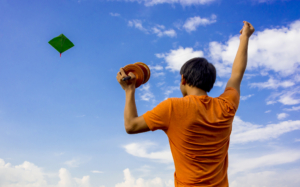
Kite flying is particularly visible during the period leading into Dashain.
Look toward the sky over Kathmandu and you may see colorful kites moving above the rooftops.
Traditional bamboo swings, known as ping, are another familiar part of Dashain culture, particularly in rural communities.
These traditions make the festival feel less like a single event and more like a cultural season spread across the country.
Food is a major part of Dashain.
Family kitchens become busy, relatives share meals, and traditional dishes are prepared in larger quantities than usual.
Common festive foods can include mutton and other meat dishes, sel roti, rice, pickles, vegetables, sweets and homemade specialties.
The food differs considerably between households, so there is no single “Dashain menu.”
Clothing is another visible part of the celebration.
Many people purchase new clothes for themselves and their children before the festival. Traditional clothing may be worn during family gatherings, Tika visits and religious occasions.
For travelers, this is one of the easiest cultural details to appreciate because you will notice the change in everyday street life without needing to attend a formal event.
Yes, Dashain can be an excellent cultural period for visiting Nepal, but it requires more planning than a normal October trip.
The biggest advantage is that you can combine the country’s autumn travel season with an important cultural period.
Nepal Tourism Board specifically promotes visiting Nepal during Dashain for natural and cultural experiences.
October also falls within a popular trekking period.
Prime Holidays Nepal’s travel guidance identifies mid-September through November as a favorable trekking window, alongside spring.
The challenge is domestic movement.
Nepal’s population travels extensively during Dashain, particularly around the main holiday period. Roads, buses and domestic flights can become heavily booked.
That means a traveler who normally likes to decide everything after arriving should consider reserving important transport and accommodation earlier.
Do not expect Nepal to operate exactly as it does during an ordinary October week.
Some offices close.
Some businesses reduce their hours.
Family-owned restaurants and shops may close temporarily.
Transport can become crowded around major travel dates.
At the same time, major tourist areas, hotels, trekking operators and many tourism services can continue operating.
The experience can therefore be surprisingly mixed.
You may find Kathmandu quieter in some areas because residents have left the capital to visit their families, while transport hubs become exceptionally busy.
For an international traveler, this is less a reason to avoid Nepal and more a reason to build flexibility into the itinerary.
There is no single place that “owns” Dashain.
The festival is celebrated across Nepal.
However, some destinations are particularly useful for travelers because they combine cultural attractions, accommodation, transportation and access to surrounding destinations.
Kathmandu, Bhaktapur and Patan are strong choices for travelers interested in heritage, temples and traditional Newari culture.
Kathmandu provides access to major religious and historic sites, while Bhaktapur and Patan offer their own architectural and cultural character.
During Dashain, temples and neighborhoods become particularly interesting, although visitors should always follow local rules about photography and access.
Kathmandu is also a practical starting point for longer Nepal itineraries.
Prime Holidays Nepal offers several city and cultural tour options from Kathmandu, making it possible to combine heritage sightseeing with broader Nepal travel.
Pokhara is ideal for travelers who want a combination of mountains, lakes, relaxation and easy access to trekking areas.
Chitwan offers a completely different experience through wildlife, forests and Tharu culture.
A Kathmandu–Pokhara–Chitwan itinerary therefore works well for visitors who want to see several sides of Nepal rather than focusing entirely on the festival.
Prime Holidays Nepal currently lists a Kathmandu–Pokhara–Chitwan tour alongside other Nepal travel options.
For mountain lovers, the period also provides access to Nepal’s trekking regions.
That brings us to one of the most interesting ways to combine Dashain with a Nepal trip.
Dashain falls during Nepal’s popular autumn trekking period, making October particularly attractive for travelers who want to combine culture with the Himalayas.
Prime Holidays Nepal identifies mid-September through November as a favorable trekking window.
Trekking during Dashain does require advance planning.
The trail itself may remain perfectly suitable, but guides, porters, accommodation and transport can become harder to arrange around the festival.
The Annapurna Base Camp Trek is a good option for travelers looking for a relatively compact Himalayan trekking experience. Prime Holidays Nepal lists the Annapurna Base Camp Trek as a 10-day itinerary, making it suitable for travelers who want to experience the Annapurna region within a limited timeframe.
How difficult is the Annapurna Base Camp trek in the 2026?
For travelers seeking a longer and more remote Himalayan experience, the Manaslu Circuit Trek offers a distinctly different trekking environment. Prime Holidays Nepal currently lists the Manaslu Circuit as a 14-day moderate trek, with a route that takes travelers through diverse mountain landscapes and less-developed areas of the region.
The Manaslu Tsum Valley region can be particularly appealing to travelers interested in mountain culture, traditional communities and more remote Himalayan landscapes. The area provides opportunities to experience local villages and cultural traditions alongside the surrounding mountain scenery.
Langtang is another option for travelers looking for a shorter Himalayan journey. Prime Holidays Nepal lists an 8-day Langtang Valley Trek, combining mountain scenery with opportunities to experience the culture and communities of the Tamang and Sherpa people.
The right Himalayan trek depends on several factors, including your available time, fitness level, previous altitude experience and preferred level of remoteness. Considering these factors can help you choose an itinerary that matches your travel plans and trekking experience.
Not everyone wants to spend their entire Nepal holiday trekking.
For many international visitors, the best Dashain trip is a culture-first itinerary with a short trek, wildlife experience or scenic destination added afterward.
A six- to ten-day itinerary can combine Kathmandu heritage sites, Pokhara and another destination.
For example, a Kathmandu and Pokhara trip gives you historic temples, Himalayan scenery, Phewa Lake and mountain viewpoints without requiring a multi-week trek.
A longer Kathmandu–Pokhara–Chitwan journey adds wildlife and Terai culture to the experience.
Prime Holidays Nepal also offers a Buddhist Cultural Tour in Nepal – 6 Days, visiting Buddhist heritage sites in Kathmandu and Lumbini. The itinerary includes Boudhanath, Swayambhunath, Pharping and Lumbini.
Travelers interested in combining Nepal with Bhutan can consider a 7-day Nepal Bhutan Cultural Tour, which includes Kathmandu and Paro as well as guided sightseeing and private transportation.
This creates several possible travel styles:
| Travel style | Suitable itinerary idea | Best for |
|---|---|---|
| Festival + culture | Kathmandu Valley + heritage sites | First-time visitors |
| Festival + mountains | Kathmandu + Pokhara + trek | Adventure travelers |
| Culture + wildlife | Kathmandu + Pokhara + Chitwan | Families and couples |
| Spiritual travel | Kathmandu + Lumbini | Buddhist and cultural travelers |
| Himalayan adventure | Kathmandu + Annapurna/Manaslu/Langtang | Trekkers |
| Multi-country | Nepal + Bhutan | Longer cultural holidays |
The simplest way to make a Dashain trip enjoyable is to understand that Nepal’s normal rhythm changes during the festival.
Do not build an itinerary that depends on visiting ten different offices or completing complicated administrative tasks during the main holiday period.
Complete important arrangements before the major holidays.
Reserve domestic flights and long-distance transport early.
Confirm hotel check-in arrangements if you are arriving around the main festival days.
If you are trekking, confirm your guide, porter and accommodation arrangements before traveling.
Most importantly, allow some breathing room.
A festival is not a normal working week.
If your bus arrives two hours late, your restaurant is closed for a family celebration or a planned shop visit does not work out, having an extra hour or an alternative activity can save your day.
Dashain affects business activity across Nepal, but not every tourism service closes for the entire festival.
Government offices and many businesses observe official holidays around the major Dashain period. Nepal’s published 2083 holiday calendar lists Dashain-related holidays beginning around Phulpati and continuing through the main festival period.
Tourism businesses can operate differently.
Hotels serving international travelers may remain open.
Trekking agencies can continue supporting groups.
Major tourist restaurants may operate with reduced hours.
Transportation services continue, but demand can be unusually high.
This is why pre-booking is particularly important for Dashain travel in Nepal.
The issue is not simply whether something is open.
It is whether you can get there at the time you need.
For Dashain 2026, travelers planning to visit around October 11–25 should finalize important arrangements as early as possible.
The most important bookings are usually international flights, domestic flights, trekking services, accommodation and long-distance transportation.
If you want to be in Nepal specifically for Dashain Tika on October 21, build the itinerary around that date rather than treating it as a random stop during your trip.
For example, you could arrive before Ghatasthapana, spend several days exploring Kathmandu, experience the festival build-up, receive or observe Tika on October 21 if invited, and then travel toward Pokhara or a trekking region.
Another strategy is to experience the early festival days and then trek after Tika.
This can reduce the amount of time your mountain itinerary overlaps with the busiest family-travel period.
Packing for Nepal during Dashain depends on whether you are staying in cities or heading into the mountains.
For Kathmandu and Pokhara, October is generally a comfortable travel period, but mornings and evenings can feel cooler.
For trekking, temperatures change dramatically with elevation.
Bring layered clothing rather than relying on one heavy jacket.
A practical packing list includes:
If you are invited to participate in Tika, wearing clean and respectful clothing is more important than trying to create a costume.
Traditional Nepali clothing is not mandatory for international visitors.
Dashain 2026 begins on October 11, 2026, with Ghatasthapana and concludes with Kojagrat Purnima on October 25, 2026. The main Dashain Tika celebration, Vijaya Dashami, falls on October 21.
Dashain Tika 2026 is on Wednesday, October 21, 2026. This is Vijaya Dashami, when elders traditionally place Tika and Jamara on younger family members and offer blessings.
Ghatasthapana is Sunday, October 11, 2026. It marks the beginning of Dashain and the traditional sowing of Jamara.
Yes. International tourists can travel to Nepal during Dashain, and it can be an especially interesting time to experience Nepali culture. However, travelers should expect holiday closures and heavy domestic travel, particularly around Phulpati and the main Tika period.
Yes. Dashain overlaps with the popular autumn trekking period. Annapurna, Langtang, Manaslu and other trekking regions can be considered, but guides, accommodation and transportation should be arranged ahead of time because October is a busy travel season.
Dashain 2026 in Nepal runs from October 11 to October 25, with Dashain Tika on October 21. It is a festival of worship, family reunions, blessings, food, travel and traditions that reach far beyond a single ceremony.
For international travelers, Dashain offers something that ordinary sightseeing cannot easily provide.
You can visit historic Kathmandu, explore Bhaktapur and Patan, see the Himalayas from Pokhara, experience Chitwan’s wildlife, trek toward Annapurna or Manaslu, and still have the opportunity to encounter one of Nepal’s most important cultural celebrations.
The key is timing.
If Dashain Tika 2026 is your priority, plan around October 21.
If trekking is your priority, use the broader October autumn window and arrange transport and trekking services before the festival rush.
And if your goal is to understand Nepal rather than simply photograph it, leave room for the unexpected: a family invitation, a kite-filled sky, a busy market, a quiet Kathmandu street or a conversation over a cup of tea can become just as memorable as any scheduled attraction.
For travelers looking to combine Dashain with Nepal tours, cultural experiences and Himalayan trekking, Prime Holidays Nepal currently provides options ranging from city tours and cultural journeys to Annapurna, Manaslu and Langtang trekking.
Plan your Nepal journey around the festival, not against it, and Dashain 2026 can become part of the travel experience itself.


