
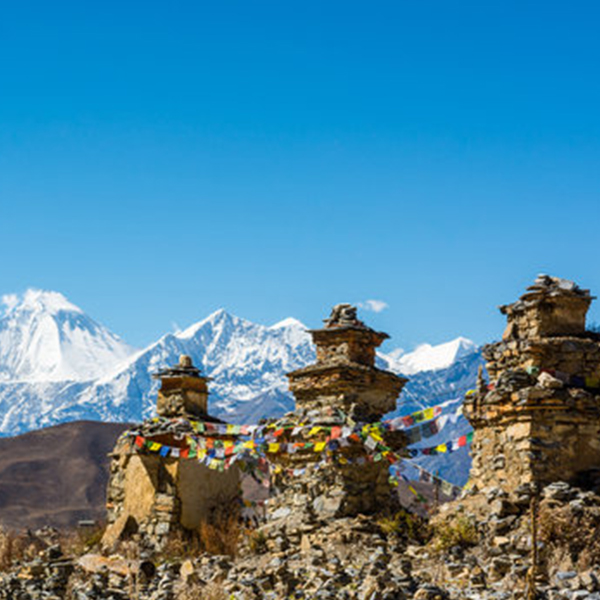
The Upper Mustang Trek leads to a remote dry zone once called the Kingdom of Lo. This place remained shut for years, yet that quiet rhythm lives on in everyday routines. Because of deep Tibetan Buddhist ties, traditions shape how people farm and where homes are built on barren slopes.
Your journey to Upper Mustang kicks off in Kagbeni – the gateway to the restricted area. Right away, the land shifts quickly. You hike past arid cliffs, narrow ravines shaped by wind, rugged ridgelines, plus ancient stone houses built right into cliff faces. Tiny settlements hang on steep hillsides. Every village has spinning prayers, weathered stupas, lines of engraved rocks, also houses that echo Tibetan design.
Head farther up, takes you to Lo Manthang – the ancient fortified town. It’s set on a wide flat stretch near 3,800 meters high. Small houses pack narrow alleys. Temples keep unique artwork, aged figures, along with murals tied to ages of Buddhist tradition. The royal palace remains right in the middle. Even though the valley is isolated, the valley draws you in with its steady, quiet way of living.
Upper Mustang lies behind the Annapurna and Dhaulagiri peaks where little rain falls, making daytime hikes usually dust-dry. You’ll cross multiple high points between 3,800 and 4,200 meters while trekking through this zone. Winds tend to build by afternoon; starting early helps dodge harsher conditions later. Lodges along the way aren’t fancy yet functional expect modest sleeping spaces, common bathrooms, plus hot food at day’s end.
What makes the Upper Mustang Trek special isn’t just the land – its how people live on it. The landscape, dry dirt, red rocks, ancient caves, prayer flags, and ruins looks like it has been the same for centuries, unaffected by the modern world.


