24 X 7 SUPPORT / VIBER / WHATSAPP +977014510074(Office),

Trekking in Nepal

There are some places in the world that you visit, and some that remain with you in some form or another. Nepal is definitely in the latter category. As soon as the peak of the Himalayas comes into view, trekking in Nepal becomes less of a vacation and more of an odyssey into another world altogether.

Trekking in this place does not depend on speed or distance. This is the way in which the sense of being alive is nurtured through early morning walks under the soft light of the mountains, the gentle conversations in the rural teahouses, and the constant footsteps upon the old trails which traders and monks and rural people of the mountains have traveled in the past. Nepal presents a unique blend of nature, culture, and adventure that not only attracts trekking enthusiasts but also ranks among the top trekking options available on the planet.

With Prime Holiday Travel and Tour, a trekking adventure in Nepal becomes a carefully orchestrated process where discovery, security, comfort, as well as knowledge of the locality, come into play.

Why Nepal is among the Top Trekking Countries in the World

With eight of the world’s fourteen peaks over 8,000 meters, Nepal sees the most high-altitude treks in the world, and it’s famous for this. But there’s more to trekking in Nepal than high-altitude treks. What truly defines trekking in Nepal is variety.  In a single hike, you can experience going through terraced agricultural land, dense forest, alpine areas, and glacial valleys with a glimpse of daily life in mountain villages in Nepal.

Every trail holds a story. There’s prayer wheels lining the wall, colored flags along the passes, and monasteries nestled in the background. Trekking in Nepal provides the traveler with changing landscapes on a day-to-day basis and cultures deeply rooted in tradition.

Best Time for Nepal Trekking: When to Go and Why It Matters

The choice in the best season for trekking in Nepal outlines the whole experience. Weather, visibility, trail conditions, and crowds each vary with the time of day.

Autumn Trekking in Nepal (September to November)

The best time to go trekking in Nepal is during the autumn session. The monsoon rains really clean the environment, and the mountains look crystal clear. Skies are clear, the air feels fresh, and the trails are dry and stable.

The daytime temperatures are comfortable to walk for a long time, while evenings are cool enough to sleep well. This is the best time of year for classic routes such as Everest Base Camp, Annapurna Circuit, Annapurna Base Camp, and Manaslu Circuit. Even the villages along the trekking trail seem buzzing, as people from different parts of the world share their experiences over hot meals in the different villages.

The autumn season also incorporates the main festivals that occur in Nepal, creating an opportunity to observe the celebrations even in the mountainous regions.

Spring Trekking in Nepal (March to May)

Spring trekking in Nepal provides a distinct experience in terms of beauty. As winter season dissolves, mountains and forests turn vibrant. Rhododendron flowers change mountains into shades of red, pink, and white.

The temperatures become warmer, and the high regions can now be easily reachable. Even if clouds form in the afternoons, the mornings may be generally bright and cloudless. Spring is the most advantageous time for nature and photography enthusiasts who prefer optimal and colorful conditions.

Monsoon and Winter Trekking (Off-Season Adventures)

Monsoon rains pour down on most of Nepal, but some areas are best for trekking. Upper Mustang, Dolpo, and other such treks are in the rain shadow, meaning the trails are dry, the landscapes are rugged, but the treks are less crowded.

Winter trekking offers quiet trails and crystal-clear skies. The snow may shut down the high passes, but lower and mid-altitude treks will still be available. With proper preparation, winter trekking provides solitude and stunning views.

Weather and Trail Conditions: What Trekkers Should Expect

The types of weather in Nepal depend more upon elevation than upon distance. The trek could start in balmy valleys or finish in frozen mountain tops, or both within a few days. Even during peak season, it is possible to notice sudden changes in weather, which makes it more of an adventure.

Trails vary from broad stone-paved paths in tourist areas to mountain trails in remote regions that are much narrower. Suspension bridges, steep hills, and rocky downhill trails are to be expected. Trails can vary greatly with the weather conditions in different periods of the year.

Routes and daily distances offered by Prime Holiday Travel and Tour are carefully designed according to the seasonality of the environment as well as personal trekking capabilities.

The trekking trails of the Nepal region are diverse in accordance with its geography, each trail has its own distinct characteristics to offer.

Everest Base Camp Trek

The Everest region is very famous. Doing an Everest Base Camp trek means walking through a Sherpa village, crossing a high Suspension bridge, and being under some of the world’s highest peaks. The trek presents stunning mountain views and a strong cultural element influenced by Buddhist culture.

Annapurna Region Trek

The region around Annapurna is famous for contrasts. The Annapurna Circuit offers experiences with varying climatic conditions and cultures, whereas the Annapurna Base Camp provides an opportunity to witness the massive Himalayan ranges up-close. It is an attractive destination for trekkers who seek diversity without being entirely remote.

Langtang Valley Trek

Langtang is a relatively less crowded alternative that is close to the capital city of Kathmandu. The route passes through woodlands as well as valley floors with opportunities to interact with the local Tamang people. It is especially suited for people with limited time who are still interested in experiencing a trekking adventure.

Manaslu Circuit and Upper Mustang Treks

Manaslu and Upper Mustang are also popular with trekkers in search of seclusion and Off-the-beaten-path places. The treks involve passes through villages and monasteries that are far from any signs of normal tourism.

Prime Holiday Travel and Tour offers treks and hiking plans across all of these destinations, depending on individual physical fitness, interest, and travel purpose.

What Trekking in Nepal Is Really Like

A Typical Day on the Trail

Days start early, sometimes beginning with the sunrise illuminating the mountain peaks. After breakfast, trekking continues with a gentle pace, with intervals for rest and photos. Walking time usually varies between five hours and seven hours a day.

The pace of life becomes slower as trekkers spend the afternoon resting, visiting villages, or just taking in the scenery from a mountain lodge. The evening offers warm food and company as well as a soothing mountain experience.

Trek Accommodation and Food

Most trekking routes rely on teahouses. Though simple, they are warm, comfortable, and friendly places, offering hearty meals freshly prepared to help trekkers along the day.

Eating local cuisine is also an experience that can result in conversations with other travelers and locals.

Altitude, Health, and Acclimatization

Altitude can be an important aspect in Nepal treks. Acclimatization becomes imperative, particularly when the treks involve taking routes above 3000 meters. Gradual ascent, resting days, hydration, and professional guidance add to making the journey safe.

Prime Holiday Travel and Tour prioritizes well-paced itineraries that allow trekkers to enjoy the experience without unnecessary risk.

Hiking & Trekking For All Levels of Experience

Nepal is not just for experienced adventurers. Nepal provides easy hikes, village walks, medium-level treks, as well as hard treks at higher altitudes. Depending on what you want to accomplish on your trek, there is definitely a trekking trail suited to your needs.

The professional guidance helps the trekkers to choose the right route that will ensure both enjoyment and safety.

Adventure Activities Other Than Trekking

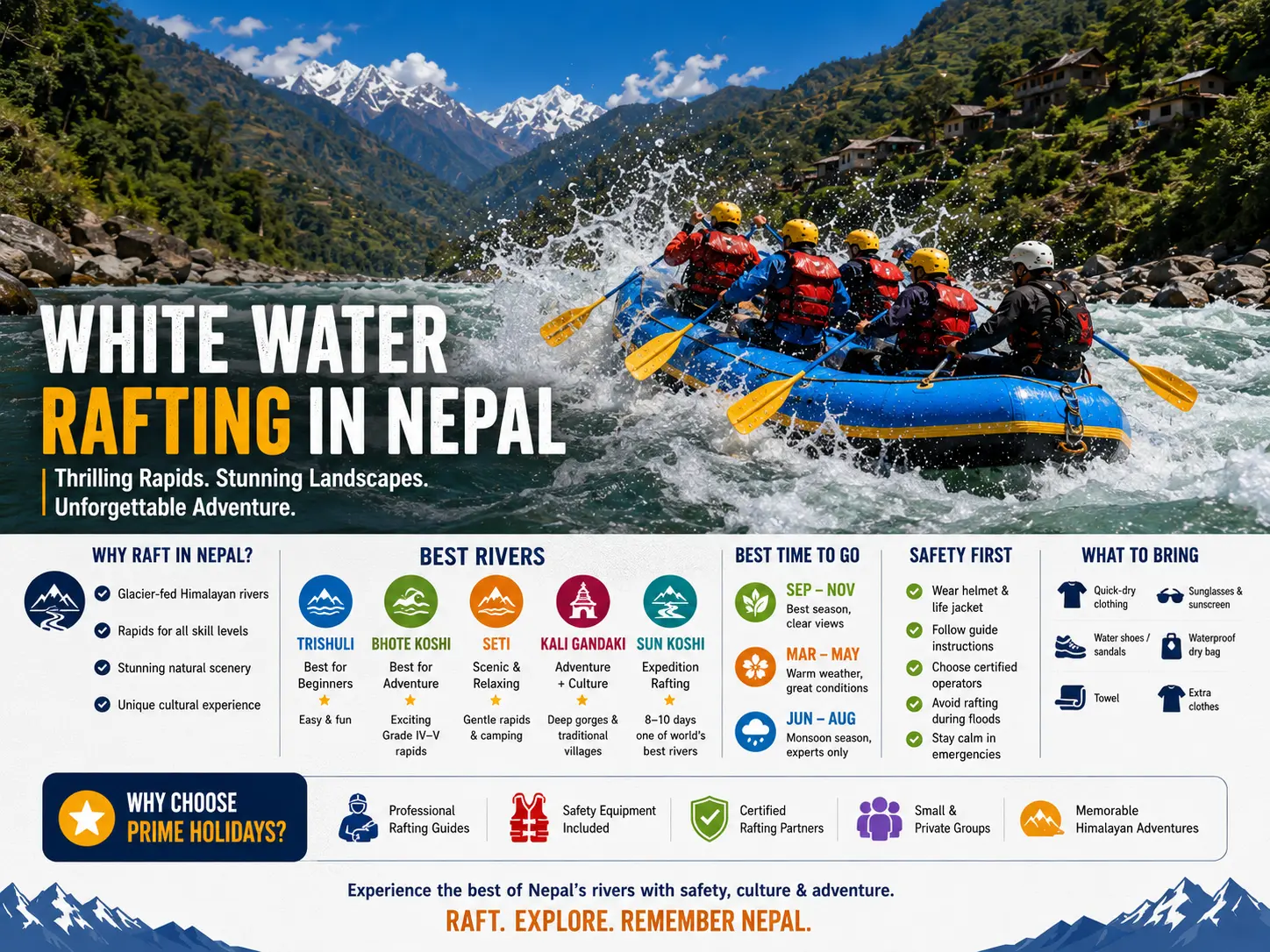
Many visitors combine trekking with other adventure experiences in Nepal. Whitewater rafting, paragliding over Pokhara, jungle safaris in Chitwan, and cultural sightseeing in Kathmandu Valley add depth and variety to the journey.

Such activities serve as additional adventures for trekkers by providing a new way to enjoy the sights and culture of Nepal.

Basic Trekking Information: What You Need to Know Before You Go

Permits and Regulations

Treks in most regions of Nepal require government permits. Certain areas, like Manaslu and Upper Mustang, are totally restricted and require special permits and licensed guides. Such permits enable the preservation of the environment and the trekkers’ safety.

Guided Versus Independent Trekking

Guided trekking is very popular and often mandatory in many places. Local guides not only provide knowledge of the routes but also help with the culture and safety, so the trekker can simply enjoy the experience.

Physical Preparation and Exercise

Nepal trekking does not require any technical know-how. However, some basic physical fitness would be needed. Acclimatizing oneself to walking or trekking beforehand would make trekking all the more comfortable. Some psychological preparation would also be needed, as trekking tends to be carried out with a slower pace.

Packing Must-Haves

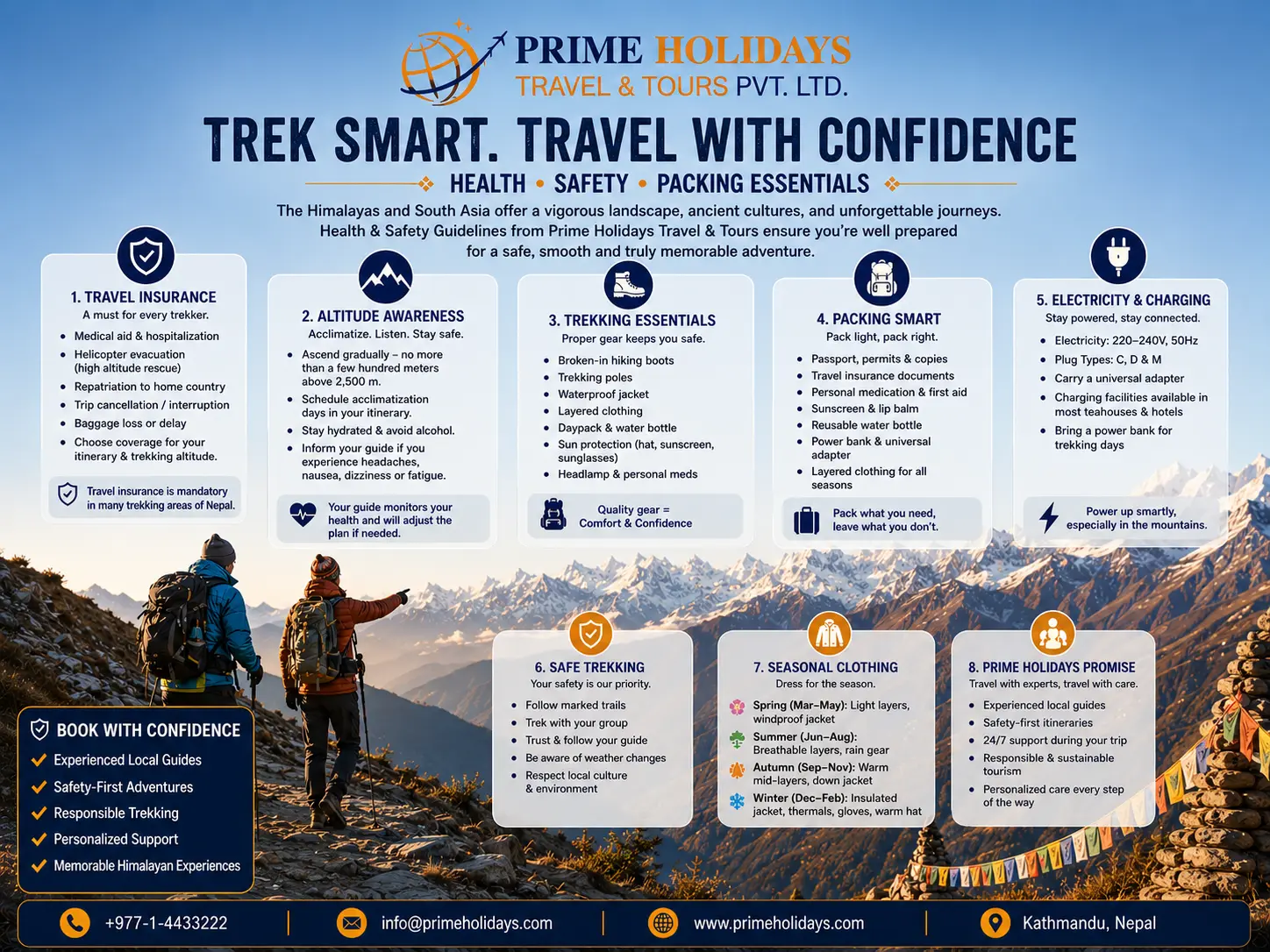
Packing effectively is important. Layers, good trekking boots, rain gear, sun protection, and first-aid kit are important items. Traveling or backpacking light can be more enjoyable and comfortable to the traveler.

Facilities and Connectivity

In trekking areas, mobile communication services as well as charging points will also be available in the villages, though network coverage may not be excellent. Finer points of this will help create proper trekking expectations.

Why Trek with Prime Holiday Travel and Tour

Prime Holiday Travel & Tour focuses primarily on offering significant trekking experiences in Nepal. Their strategy for this includes appropriate planning, guidance by local professionals, along with customized treks. From the issuance of permits to the means of transportation to accommodation to the overall security assistance, everything is handled with professionalism.

Their extensive knowledge of the trekking areas in Nepal makes possible the discovery of the country with assurance and authenticity.

Lastly,

Trekking in Nepal is not a ‘to-achieve list’. It’s an experience where moments unroll leisurely before you, views pause you in the midst of your trek, and connections seem real. Definitely a trek that tests your body, and a true reward for your soul.

With Prime Holiday Travel and Tour, your trek becomes more than a route on a map, it’s a story carved out of mountains and culture, and the gentle act of walking through one of the world’s most extraordinary landscapes.

Tiji Festival in Lomanthang

Tiji Festival

The Tiji Festival is a significant cultural festival in the Upper Mustang region. Upper Mustang is a restricted area. It is conducted in Lo Manthang, the ancient fortified capital of the ancient Kingdom of Lo. It has a significant historical connection related to the Tibetan Buddhist tradition.

Upper Mustang is a restricted Himalayan area that has been conserved in a cultural and geographical way. The Tiji Festival is not conducted for the purpose of tourism. Rather, it is an important religious ceremony conducted by monks to bring balance, to dispel the negative forces, and to pray for blessings.

For tourists, going to Tiji is more than just a sightseeing adventure. It presents a chance that does not often come by in a lifetime to observe a thriving spiritual culture in one of the most isolated areas in Nepal. Events like the Tiji Festival of Lo Manthang are strong reflections of Nepal’s heritage, paying respect to spirituality, protection, and beliefs of ancient time.

Going beyond the sightseeing, festivals like these will provide meaningful stories, authentic encounters, and unforgettable memories for travelers.This ceremony is a ritual performed with an intention to cleanse away the negative elements in the region. From sacred monasteries to Nepal-continuing traditions across generations, it welcomes you with more.

Meaning and Origin of Tiji Festival

The Tiji is a religious Buddhist festival related to the mythological account from Tibet. The event got the name “Tiji” from a word known as “Tempa Chirim,” which translates to “Prayer for World Peace.” Its main focus is on a mythological account about a deity known as Dorje Jono, who was said to have killed a demon responsible for causing droughts, diseases, and misery among the people of Mustang.

By means of masks dances, chants, and ritual gestures, monks recreate this ancient tale in order to wash the land from bad energy and bless this territory in a new year.

When is the Tiji Festival held?

Tiji is normally held in May, as per the Tibetan calendar. This ceremony is three days long, and every day signifies a level in a religious narrative.

Due to its fixed location and limited access, this has to be one of the holiday destinations for which early planning is absolutely indispensable for travelers.

Where is the Tiji Festival conducted?

The festival takes place in the courtyard of the Lo Manthang royal palace site itself, which is an ancient fortified city sitting at a height of 3,770 meters above sea level.

Lo Manthang is ringed by desert lands, eroded mountains, and snow-capped Himalayan ranges. Isolation has helped this town retain its buildings, language, and culture, the festival environment is thus as compelling as the festival itself.

Spiritual Meaning of Tiji

It describes the story of a deity, Dorje Jono, who conquered a demon said to be inflicting drought and hunger.

The monks, through their ritual dance and prayers, cleanse the land and bless the community for the coming year. During the festival:

  • Monks do ritual dances to remove the negative elements.
  • Prayers are offered for rain, the harvest season, or protection.
  • The earth and the humans are purified in anticipation of the forthcoming year.

Such a ceremony reflects the strong bonds between religion, nature, and everyday life in Upper Mustang

What occurs During the Three Days of Tiji

It is a three-day festival, each day represents another stage of the spiritual story.

Day One: The forces of chaos and imbalance are unleashed. Masked dances are performed by monks, representing the negative energy that affects the land.

Day Two: Day Two includes the religious preparation of Dorje Jono, with the dances remaining highly symbolic, illustrating the fight between good and evil. Representation of Dorje Jono’s spiritual preparation and power.

Day Three: The final day represents victory and purification. After that, Dorje Jono defeats the demon, and prayers are offered for peace, prosperity, and protection for the coming year.

It will take place in the courtyard of the former royal palace in Lo Manthang, an ancient walled city nestled deep within the Himalayas. Victory dance depicting the defeat of the demon and cleansing of evil.

Colorfully robed monks of Choedhe Monastery perform masked dances to the accompaniment of traditional instruments and chants.

Why Tiji Festival Is Unique

  • Occurs in the restricted region of the Himalayas
  • Maintains original Tibetan Buddhist traditions
  • Appearing amidst dramatic scenery of Upper Mustang
  • Very rare cultural experience that is not affected by modern tourist activity

This festival provides an important link between travelers and Himalayan religious culture.

Why travel to Nepal during festival season?

Festival travel in Nepal offers:

  • Deeper cultural understanding
  • Photography of unique opportunities
  • Direct interaction with the local communities
  • Once in a lifetime experiences

Festivals enable travelers to participate in culture firsthand, rather than just viewing it from afar.

Travel Requirements for the Tiji Festival

There are restrictions in Upper Mustang, therefore, tourists need to plan:

  • Special Restricted Area Permit
  • Annapurna Conservation Area Permit (ACAP)
  • Licensed guide
  • Minimum two trekkers per permit application
  • It is mandatory that permits be processed through a registered trekking agency.

These needs are important in ensuring the safety of visitors and protecting the local culture and environment.

How to Reach Lo Manthang

Lo Manthang is hard to get to and takes time along with a lot of planning.

The usual routes of administration include:

Kathmandu-Pokhara flight, Pokhara-Jomsom flight, and then by jeep or trek

Jeep excursion into the villages of Lower Mustang

Kagbeni – Chele – Ghami – Charang trek

The journey typically takes several days in order for the body to acclimatize.

Health, Altitude, Safety

Lo Manthang has a high altitude; therefore, acclimatization is necessary.

Travel tips:

  • Ascend gradually
  • Drink lots of water
  • Avoid alcohol in the ascent phase
  • Carrying travel insurance that includes high-altitude evacuation
  • Follow your guide’s advice

There are not many medical facilities, so preparation is the key.

Accommodation in Lo Manthang

Lo Manthang has limited but comfortable accommodations.

Travellers can expect:

  • Local guesthouses and small lodges
  • Basic but clean rooms
  • Shared facilities in certain regions

Accommodation during the Tiji festival fills up quickly. It is, therefore, important to book in advance.

What to Expect as a Traveler

While traveling to the Tiji Festival, one needs to do so with respect and understanding that the event is one where the environment and behavior are serene and centered on the rituals.

Taking photographs is generally allowed, though it should be done in a quiet and unobtrusive manner. Visitors should also dress modestly and heed the advice of local guides and monks.

It is a festival to observe, reflect, and learn. It is not necessarily for active participation.

What to Expect During the Festival

  • Masked Dances of monks from Choedhe Monastery
  • Cultural musical heritage, chants, and ritual costumes
  • Rituals conducted at the courtyard of the royal palace at Lo Manthang
  • Volunteers from local villagers and pilgrims

Each of the three days symbolizes a different level of the spiritual experience.

Best Season to Visit and Conditions

May is a great time to visit Upper Mustang. It is a rain shadow region, so the climate is generally dry with clear weather. It is a good time because the climate is neither hot nor very chilly.

Roads and trails are relatively accessible during this season and thus are good for overland or trekking expeditions.

How to Plan a Trip Around the Tiji Festival

The normal duration of a Tiji Festival trip is between 10-14 days, depending on the route taken and the mode of travel. Visitors often combine the festival with:

  • Drive or trek in lower Mustang
  • Visits to monasteries and caves
  • Cultural village walks

As access is restricted, it is necessary to book permits, guides, and accommodations in advance.

Who Should Attend the Tiji Festival

The Tiji Festival is best for:

  • Cultural and heritage tourists
  • Spiritual seekers
  • Photography enthusiasts
  • Tourists seeking adventure with the end of going to a far-off destination

It is most fit for those travelers who believe in authenticity rather than the available luxuries.


Upper Mustang Trek – 18 Days
Tiji Festival The Tiji Festival is a significant cultural festival in the Upper Mustang region. Upper Mustang is a restricted area. It is conducted in Lo Manthang, the...
duration 18 Days
difficulty Moderate

US$ 18000

Why to Go on an Upper Mustang Trek during Tiji Festival

Beyond the festival, what Upper Mustang offers includes:

  • Ancient monasteries and royal palaces
  • Desert landscapes framed by snow-capped peaks
  • Traditional villages untouched by mass tourism
  • A strong link to Tibetan culture

Visiting during the Tiji festival allows you to experience cultural richness at a very unique destination.

Trip Schedule

Typical Tiji Festival trekking durations are 10 to 14 days, depending on the trekking preferences.

Many visitors combine the festival with:

  • Lower Mustang exploration
  • Visits to ancient monasteries
  • Cave systems and village walks

Advance planning is required because of the permits and logistics involved.

Frequently Asked Questions (FAQs)

What Is Tiji Festival?

The Tiji Festival is a three-day Buddhist ceremony conducted every year in Lo Manthang, Mustang region. It is a religious activity conducted by monks to cleanse the area of negative elements and bring back peace and harmony.

When Does the Tiji Festival occur?

Tiji is generally observed in the month of May, as per the Tibetan Calendar. The dates keep changing every year. Planning ahead is, therefore, necessary.

Are there special permits that I need for the Tiji Festival?

Yes. There are restricted area permits, and the regions are restricted, including the area around the Upper Mustang. Permits required are the Restricted Area Permit, the Annapurna Conservation Area Permit, and a guide.

What is the significance of the Tiji Festival in Lo Manthang?

The Tiji Festival is a three-day ritual performed by the Tibetan monks in the Lo Manthang region of the Upper Mustang region of Tibet, with the intention of driving away the negative spirits and bringing prosperity to the region.

Is the Tiji Festival open to tourists?

Yes, but visitors must be properly permitted and must travel with a licensed guide.

Is it possible to be a part of Tiji and not have to trek?

Yes, overland jeep travel is possible, though trekking offers deeper cultural exposure.

Is photo shoot allowed during Tiji?

Photography is permitted, though it is necessary to use one’s discretion.

Conclusion

The Tiji Festival in Lo Manthang is more than just a cultural event. It is a living tradition, symbolizing the belief, strength, and spirituals of the Himalayan races.

For travelers in search of a more meaningful experience, Tiji presents a unique chance to observe religion, history, and a community in one of the most fascinating areas of Nepal. It needs proper planning to make it a memorable and enriching experience.

Bhutan Travel Guide | Things to Do in Bhutan

Introduction: Bhutan, a Country That Chooses a Different Path

Bhutan isn’t in a rush to wow you. Instead, it unfolds bit by bit through silent valleys, colorful prayer flags fluttering on high trails, also locals who smile at you without pretense. Sandwiched between India and Tibet, the country guards its traditions, nature, and daily rhythms more than anything else.

Bhutan just feels different. You won’t see traffic lights or huge crowds of tourists rushing from one spot to the next. You never feel like you’re being rushed or pushed around. Instead, everything moves at its own pace. It’s a slow, steady way to travel that actually lets you connect with the land and the local culture.

This Bhutan travel guide suits those curious about real life in Bhutan. It shows top spots to visit, activities worth trying, ways to organize your trip, also tips for linking it with Nepal if you’re eyeing a bigger trek across the Himalayas.

Hidden Gems of Bhutan: Quiet Places That Leave a Mark

The big sights are great, but the best parts of Bhutan happen when you just wander off and find your own quiet moments.

Local Neighborhoods and Everyday Life

In places such as Thimphu or Paro, wandering into homes reveals how Bhutanese people live. Kids head to class dressed in local clothes. Older people turn prayer wheels while going about their day. Everything here has a purpose, but nobody is in a hurry to get it done.

Traditional Markets

Weekend bazaars in Thimphu or tiny valley spots feel busy yet down-to-earth. Locals bring in ripe veggies, spicy dried peppers, homemade cheese, fragrant sticks, along with hand-made tools. You’ll find no flashy shows here, just honest trade that shows daily life up close.

Lesser-Known Monasteries

Besides the famous fortresses, you’ll find tiny temples scattered across slopes or tucked deep in woods. Some sit silently, rarely seen by travelers, perfect for slowing down and thinking. Stepping inside gives a sense of belonging like getting a personal welcome instead of just passing through.

Cultural Experiences That Define Bhutan

Culture in Bhutan isn’t kept just to show off, it lives through everyday actions.

Festivals (Tshechus)

Bhutanese festivals, known as Tshechus are held each year across various areas. Instead of just watching, people join through masked dancing, old-style tunes, or sacred acts tied to their faith. Locals show up wearing best outfits, so gatherings seem warm, like family shows, not staged shows.

Traditional Arts and Crafts

Bhutan really cares about its traditional crafts, what they call Zorig Chusum. It’s a big part of how they keep their history alive. Things like weaving, painting, and woodcarving are all taught by hand, passed down from one person to the next. Even the metalwork still follows the old ways, staying true to their roots while only changing a little bit over time. Checking out local studios shows you how customs grow, not just sit unchanged.

Spiritual Life

Buddhism influences everyday routines across Bhutan. You see it fluttering on ridges as colorful prayer flags, glowing inside shrines as butter flames, unfolding in quiet acts done simply, no fanfare. For visitors who aren’t religious either, that calm sense of purpose quietly enriches the trip.

Things to Do in Bhutan: Places That Tell a Story

Tiger’s Nest Monastery (Paro Taktsang)

Hanging off a cliff, Tiger’s Nest Monastery stands as Bhutan’s best-known landmark. The climb lasts a few hours – steady, not too rough. Getting there feels like an achievement, and, the scenery pays off every step. A lot of visitors find this moment emotionally touching.

Punakha Dzong

Set where two rivers meet, this fortress stands out for its looks and past. With sunny yards inside, old timber crossings, because of clean bright walls, it ranks among Bhutan’s finest strongholds.

Thimphu Valley

Bhutan’s main city mixes old ways with today’s world like they belong together. Check out the big Buddha figure, nearby temples, or handmade stalls instead. Thimphu won’t tire you. It gives meaning.

Practical Travel Tips for Visiting Bhutan

Transportation

All trips across Bhutan is done in a personal car, guided by an approved driver plus a local guide. Routes twist around peaks and lowlands, making each journey feel like a view-filled adventure instead of just getting from point A to B.

Entry Fees and Sightseeing

Many monasteries or dzongs charge a small fee, usually covered if you book a guided visit. Wear simple clothes, respect customs, also check first before snapping pictures in sacred spots.

Best Time to Visit Bhutan

Springtime, March through May and September up to November make ideal windows for a Bhutan trip. Clear views show up more often then, with mild weather that feels just right, and ceremonies draw big crowds. Cold months sit calm and sharp, whereas June brings in greenery paired with heavy seasonal downpours.

Bhutan Sustainable Development Fee (SDF)

Bhutan sticks to a strategy that limits tourist numbers while focusing on quality experiences. However, each foreign traveler must cover a daily charge called the SDF, set at $100 per person.

This cost helps cover:

  • Environmental conservation
  • Cultural preservation
  • Education and healthcare
  • Infrastructure in remote regions

Rather than restricting trips, the SDF helps Bhutan gain from tourism while making sure travelers still get a real connection. Instead of cutting down visits, it supports local value and gives guests deeper moments.

Bhutan Visa and Permit Information

Going to Bhutan means you need a visa set up ahead of time by a licensed travel agency.

Visa Requirements

Please provide:

  • A photocopy of your passport, make sure it’s easy to read
  • A recent photo, passport-sized

Documents must be submitted 15–20 days prior to travel.

Visa and Flight Information

  • One-time Bhutan Visa Fee: USD 40
  • Kathmandu to Paro round-trip flight: around $450–550, price may shift when you book

All permits and approvals get sorted ahead of time ensuring smooth entry into Bhutan.

Package Details

Inclusions Exclusions
  • Arrival and departure airport transfers in Nepal and Bhutan
  • 3-star hotels in Nepal but also Bhutan
  • Daily Bhutan SDF (USD 100 per person per day)
  • One-time Bhutan Visa Fee (USD 40)
  • Certified English-speaking guides in Nepal and Bhutan
  • Personal ride during the whole trip
  • All ticket costs for monuments or temples
  • Daily breakfast in Nepal
  • All meals in Bhutan (Breakfast, Lunch, Dinner)
  • Bottled water for drinking while moving between places
  • Global flights or local plane tickets
  • Nepal visa fee
  • Lunch and dinner in Nepal
  • Bar drinks or washing clothes
  • Luxury hotel upgrades
  • Tips to guides and drivers
  • Travel insurance
  • Personal expenses
  • Choose extras like river floats, chopper rides, or cycling gear

Suggested Bhutan Itinerary and Nepal-Bhutan Combination

Picking how many days to spend really counts when you’re in Bhutan. Even though spots aren’t far apart, getting around takes longer on purpose. Paths twist along river basins, seeing sights eats up hours, also some sites need more than just a glance. These plans move at a relaxed speed, never hurried but still hit all the key parts of Bhutans story.

A week in Bhutan gives you time to slow down while soaking up local life.

Day 1: Arrival in Paro, transfer to Thimphu

Day 2: Thimphu sightseeing

Day 3: Thimphu to Punakha

Day 4: Punakha exploration

Day 5: Return to Paro

Day 6: Tiger’s Nest hike

Day 7: Leisure day and departure

Day 8 (if you want): Another visit to the valley or a local tradition

First-timers should plan around eight days in Bhutan, gives you room to explore Paro without rushing. Spend solid time in Thimphu, but don’t skip the quieter vibe of Punakha. Altitude adjustment is easier when your pace isn’t packed. Traveling from one valley to another feels smooth on this schedule.


Day Itinerary
Day 1: Arrival in Paro Your flight to Paro feels like part adventure, passes right by the towering Himalayan ridges before touching down in a calm, green valley. Once you land, find your guide and head off to the hotel together. The afternoon stays light on purpose. Instead of rushing, maybe stretch your legs with a stroll through Paro’s lanes or peek inside a peaceful hillside temple, just enough to ease into things after the journey.

This slower start lets you get used to Bhutan’s height and rhythm while easing into the flow, it gives your body time to adapt.

Day 2: Paro Sightseeing Right now, it’s time to get a real feel for Paro, way past the famous Tiger’s Nest. Most visitors swing by Paro Dzong, then head over to the National Museum, while some check out old-style village homes. Life here moves at its own rhythm, so you’ll notice colorful prayer cloths fluttering above farmland, meanwhile rivers running through the town. The morning feels calm, giving you space to wander slowly while getting ready for tomorrow’s trail walk.
Day 3: Tiger’s Nest Hike This spot tops the list for plenty of visitors. Heading up to Tiger’s Nest Monastery, also called Paro Taktsang, lasts a few hours, so visitors move at an easy pace, pausing now and then. The path stays clear and steady, while scenery gets better the higher you go.

Getting to the monastery gives a real sense of satisfaction, less about the scenery, more about the calm and old vibes soaking the place. Once you head back down, the hours after lunch tend to stay open for chilling out.

Day 4: Paro to Thimphu Once you’ve eaten, head out from Paro toward Thimphu by road. It’ll take about an hour or maybe a bit more, if you pause now and then. As you get closer to the main city of Bhutan, the views start spreading wider.

In Thimphu, you might check out the Memorial Chorten, wander through small craft bazaars, or take in city views from scenic spots. While it seems more up-to-date than other Bhutanese towns, old customs can be seen all around.

Day 5: Thimphu Exploration This day shows you Thimphu’s culture and daily life. Most trips cover the giant Buddha statue, nearby temples, or spots that highlight Bhutanese art, how things are run, and beliefs. But instead of rushing, you get moments to wander neighborhood streets and small shops.

Thimphu’s different from most capital cities. It’s quiet, small, so you can walk around without any hassle.

Day 6: Thimphu to Punakha The trip to Punakha feels like riding through a live painting. Over Dochula Pass, sharp mountain tops can be seen when skies are clear. Strings of prayer cloths wave beside small stone shrines along the way, just right for pausing awhile.

When you head down to Punakha, it gets milder, while the land turns lush. Later in the day, check out Punakha Dzong, it sits right where two rivers meet, looking pretty.

Day 7: Punakha Sightseeing Punakha moves at an easier pace. You might take quick strolls through local villages today, check out temples close by, or just wander around the valley now and then. It’s a chance to soak in Bhutan more freely, no rush, no noise. Watch how people live, notice the fields, hills, everything passing slow.

Some visitors say it feels like the calmest part of their journey.

Day 8: Return to Paro and Departure Head back to Paro when it’s time to go. If your flight’s later, maybe grab some souvenirs or stop by a small temple one last time. Leave Bhutan knowing how life moves here.

If you’re thinking about visiting Bhutan along with Nepal, giving yourself plenty of time matters. Squeezing both places into a brief journey often leads to hurrying past key spots while missing what each place is really like. If you’re linking Bhutan with Nepal, aim for around 10 to 12 days. That gives space for exploring Kathmandu, catching flights, also fitting in solid time across both spots without rushing.

A 10 or maybe 12-day plan fits better.

Why This Combination Works Well

Nepal pairs well with Bhutan, different, yet fitting. You get deep roots, crowded lanes, old shrines in Nepal, whereas Bhutan gives calm and purpose. Begin in Kathmandu, it makes visas for Bhutan smoother, plus flight links work better.

Nepal-Bhutan Itinerary: 10–12 Days Ideal

Days 1 to 3: Kathmandu Valley

Check out historic spots like Pashupatinath, then move on to Boudhanath as both are part of Nepal’s rich heritage. Kathmandu Durbar Square adds deeper meaning, setting the stage before you cross into Bhutan.

Days 4 to 10 or 12: Bhutan (Paro, Thimphu, Punakha)

Fly from Kathmandu to Paro then stick to a Bhutan route like the 8-day example shown, just adjust it based on how long you’re traveling. Instead of fixed dates, shift stops around so everything fits your schedule without rushing or wasting time.

This setup prevents tiredness, gives time to adjust, while keeping both sides steady.

Nepal Bhutan Discovery Tour – 11 Days
Introduction: Bhutan, a Country That Chooses a Different Path Bhutan isn’t in a rush to wow you. Instead, it unfolds bit by bit through silent valleys, colorful prayer...
duration 11 Days
difficulty Easy

Nepal-Bhutan Discovery Tour

11 Days / 10 Nights | Kathmandu • Thimphu • Paro • Punakha

Walk through two mountain countries in a single smooth trip. This Nepal-Bhutan adventure mixes old traditions from Nepal with quiet, untouched living in Bhutan. Ancient shrines, palace courtyards, green highland trails, and temples stuck to rocky edges, each moment comes slow, not forced. Instead of speed, you get space to take it all in.

Day Itinerary
Day 01:Arrival in Kathmandu Welcome to Nepal. Once you land at Tribhuvan International Airport, our team member will greet you, then take you to your hotel in Kathmandu.The ride into town gives a quick look at Nepal’s lively routines, crowded roads, colorful stores, while old places add character.

Time later on stays open, so you can unwind post-travel or wander close spots, coffee stops, small restaurants however feels right. Overnight in Kathmandu

Day 02: Kathmandu Full-Day Sightseeing Right now’s about exploring Nepal’s soul and traditions by checking out its UNESCO spots.Start at Pashupatinath Temple, a key site for Hindus honoring Lord Shiva. Sitting beside the holy Bagmati River, this area shows real glimpses of age-old customs, funeral rites, also daily worship practices.Head over to Boudhanath Stupa, among the biggest Buddhist stupas on Earth and a hub for Tibetan Buddhist life. Move around it in a clockwise direction, turn the prayer wheels while you go, or just watch monks and visitors absorbed in silent worship.

Later on, check out Bhaktapur’s old square, full of tilted rooftops, quiet yards where kings once stayed, spots where locals shape clay by hand, and traditions kept alive through generations. Strolling around gives you that old-world vibe, like flipping pages of a worn-out history book. Overnight in Kathmandu

Day 03: Kathmandu Valley Heritage Tour Keep discovering art and history across Kathmandu Valley, wander through old towns, uncover hidden courtyards, or stumble upon quiet temples tucked down narrow lanes. Head to Swayambhunath Stupa, called the Monkey Temple sitting high on a ridge above the valley. This place mixes Hindu with Buddhist symbols while giving you wide-open sights of Kathmandu.

Head over to Kathmandu Durbar Square, the old palace spot for Nepal’s royalty. Check out shrines, open yards, the ancient Kasthamandap building, also known as the wooden pavilion. Move through narrow lanes to reach Kumari Ghar, where the young living goddess lives. Wrap up your day in Patan Durbar Square, often called the City of Art. Famous for detailed stonework, intricate metal pieces, or a rich palace museum, this spot highlights Nepal’s creative soul like few others can. Overnight in Kathmandu

Day 04: Fly to Paro – Transfer to Thimphu Flying from Kathmandu to Paro means breathtaking views of snowy peaks along the way. Once you land at Paro’s airport, a local guide will greet you right away. Then head off by road toward Thimphu, soaking in valley sights and quiet villages ride.

The path winds through green valleys, wooded slopes, also quiet countryside spots. Thimphu, the main city of Bhutan, seems peaceful and neat, where old ways mix with today’s pace. Overnight in Thimphu

Day 05: Full-Day Thimphu Valley Exploration Right now you check out Thimphu’s main spots tied to culture and faith. Head to the Memorial Chorten, a busy prayer spot where people come each day. Then move on to the Buddha Dordenma, a giant sitting figure that watches over the valley.

Head to the Takin Reserve, this is where you’ll spot Bhutan’s rare national animal. Then check out Tashichho Dzong, a striking fortress with offices and the royal hall inside. In the afternoon, check out local craft stalls or handmade goods stores, get a feel for Bhutan’s age-old art styles along the way. Overnight in Thimphu

Day 06: Thimphu to Punakha via Dochula Pass Head to Punakha, go over Dochula Pass which sits at 3,100 meters. When skies are clear, you’ll see the eastern Himalayas stretch out ahead, surrounded by a circle of 108 small shrines.

Head down to the cozy Punakha Valley, check out Punakha Dzong, Bhutan’s prettiest fortress sitting right where the Pho Chhu meets the Mo Chhu rivers. Overnight in Punakha

Day 07: Punakha Sightseeing and Gentle Hiking Start your morning by walking up to Khamsum Yulley Namgyal Chorten, a quiet shrine on a ridge where you can see the whole Punakha Valley spread out below. While it’s a gentle climb, the lookout feels wide open once you reach the top. This sacred spot sits above the trees, giving you space to breathe while taking in the scene across the hills.

Later on, head to Chimi Lhakhang, a well-known temple tied to fertility, sitting among rice paddies and small settlements. Walking across the landscape gives you a real glimpse into daily life in Bhutan’s villages. The rest of your day is pretty chill, so you’ll have plenty of time to just hang out and enjoy the peace. You’ll be staying the night in Punakha.

Day 08: Back to Paro – Local Culture Drive back toward Paro, following the curvy mountain roads and passing right through the lush, green river valleys. Once you get there, check out Rinpung Dzong, a traditional Bhutan’s highlight perched above the valley.

Head to Ta Dzong, Bhutan’s national museum, neat displays of art, old items, and history fill the rooms. Later that day, hang out in Paro town, checking out craft stores along with small shops selling local goods. Overnight in Paro

Day 09: Tiger’s Nest Monastery Hike Right now marks the peak moment of our trip through Bhutan. We trek toward Taktsang Monastery, often called Tiger’s Nest hanging bold and steep on a cliffside up at 3,120 meters.

The trail winds through some big pine trees, and every so often, you get these amazing views through the branches. Getting to the monastery feels like a test on your body that also lifts your mood, turning it into one unforgettable moment while exploring Bhutan. Go back to Paro in the afternoon and just have a relaxing evening. You’ll be staying the night there.

Day 10: Fly back to Kathmandu Get to the Paro airport for your flight back. Once you’re in Kathmandu, just take it easy. You can spend the day resting or just wander around the city, it’s totally up to you.

If you feel like going out, you could go souvenir shopping or find a nice cafe in Thamel. If you’re looking for something extra to do, you could book a massage or go on a walking food tour. You’ll be staying the night in Kathmandu.

Day 11: Heading Home It’s time to head to the airport for your flight out. You’re going home with some incredible memories of Nepal and Bhutan, the kind of views you won’t forget and traditions that really stay with you. Hopefully, you’re leaving with a bit of that peace and quiet you found along the way.

FAQs About Traveling to Bhutan

Is Bhutan expensive to visit?

Bhutan isn’t cheap to visit, yet pricing’s clear and covers most things. Instead of hidden fees, the SDF promotes eco-friendly trips while guaranteeing solid value.

What’s a good number of days to spend in Bhutan?

A week or so works best when you’re going there the first time.

Can Bhutan be combined with Nepal?

Yes. Nepal’s the easiest way into Bhutan, fits nicely when it comes to culture or travel plans.

Wondering if Bhutan works for people traveling abroad the first time?

It’s true as Bhutan feels safe and everything just works. And, having a guide makes the whole trip a lot easier and less of a headache.

Conclusion: Why Bhutan Leaves a Lasting Impression

Bhutan isn’t just checking sites off a list. It’s feeling where you are. Stillness counts, so does crisp highland breeze, the flow of regular routines, also how old ways hold weight. That’s what makes it real.

Going to Bhutan solo or pairing it with Nepal works better if you set things up ahead. Prime Holidays Travel and Tour takes care of each piece quietly, so your mind stays free for what matters.

If Bhutan’s on your list, now’s a solid moment to check it out with purpose.

Tibet Travel Guide

Introduction: Tibet and Lhasa – The Spiritual Heart of the Himalayas

Tibet isn’t only a place you visit, it sticks around in your mind way past departure. Sitting up high on the plateau, boxed in by the planet’s biggest peaks, it gives off vibes of eternity, quiet meaning, and old ways still alive. If what you’re after is depth, culture mixed with stories from the past and moments to think inside yourself as not many spots out there feel quite like this remote region.

Lhasa sits right in the middle of Tibet, this city breathes Buddhist tradition. Known as “Land of the Gods,” it greets travelers with shiny temple tops, colorful cloths dancing on breezes, holy men reciting prayers deep inside old temples, also locals circling holy spots on devotional walks. Walking through Lhasa feels like entering a real-life exhibit where belief, stories from long ago, yet everyday routines fit together without effort.

Not just popular sites but hidden corners too, tied with everyday customs and practical tips, everything fits together when exploring Lhasa up close. Experience Tibet slowly, fully, piece by piece, guided by real insights instead of hype.

Hidden Gems of Tibet: Beyond the Famous Landmarks

Even if well-known sites like the Potala Palace or Jokhashi Temple attract lots of people, taking it slow around Tibet reveals unexpected moments. Off-the-radar places let you feel closer to everyday rhythms, where customs live quietly, where moments stick without flash.

Local Neighborhoods of Old Lhasa

Strolling around the historic Tibetan lanes by Barkhor Street shows a part of Lhasa most tourists miss. Tiny paths, lime-coated homes, colorful banners fluttering on rooftops, these blend into a vibe that just seems real. Dawn’s the best time, since folks start morning routines while stalls warm up one after another.

Traditional Tibetan Markets

Local spots in Lhasa give a real look at how Tibetans live each day. You’ll find things like dried yak cheese or supplies for butter tea, along with prayer beads and home-made incense, items tied to old customs. While Barkhor Market draws the biggest crowds, tiny area markets let you browse without the rush. Each place holds its own flavor, showing life beyond tourist views.

Lesser-Known Monasteries

Besides the big monasteries, Lhasa has quieter spots nearby where monks focus on learning and reflection, staying clear of busy areas. While some remain secluded, others let travelers stop by, so long as they’re respectful and genuinely interested. Instead of just seeing sights, you get a real look at how Tibetan Buddhists live when tourists aren’t around.

Cultural Experiences in Tibet

Tibet’s culture is one of its biggest strengths. Shaped by deep beliefs, creative expression, lively celebrations, also tight bonds that have lasted ages.

Tibetan Festivals

If your visit matches up with a local celebration, you’ll catch something unique. When festivals like Losar, Tibet’s New Year or the Shoton event roll through town, expect chanting rituals, dancers in masks, tunes from old instruments, along with bright folk outfits lining the roads. Each gathering gives a raw look at how Tibetan culture stays alive today.

Traditional Arts and Crafts

Tibetan craft carries deep meaning. Thangka art, handmade rugs, metal figures, each shaped by skills taught from parent to child. Watching makers at work or into their workshops lets people sense the effort and attention behind each piece.

Daily Religious Life

Religion guides daily life all through Tibet. Not just elders touching foreheads to temple steps, but also young monks debating inside courtyards, belief flows into every corner. Seeing these moments? That’s one of the rawest paths to truly sensing Tibetan identity.

Iconic Spiritual and Historical Sites in Lhasa

Potala Palace: A Symbol of Tibetan Identity

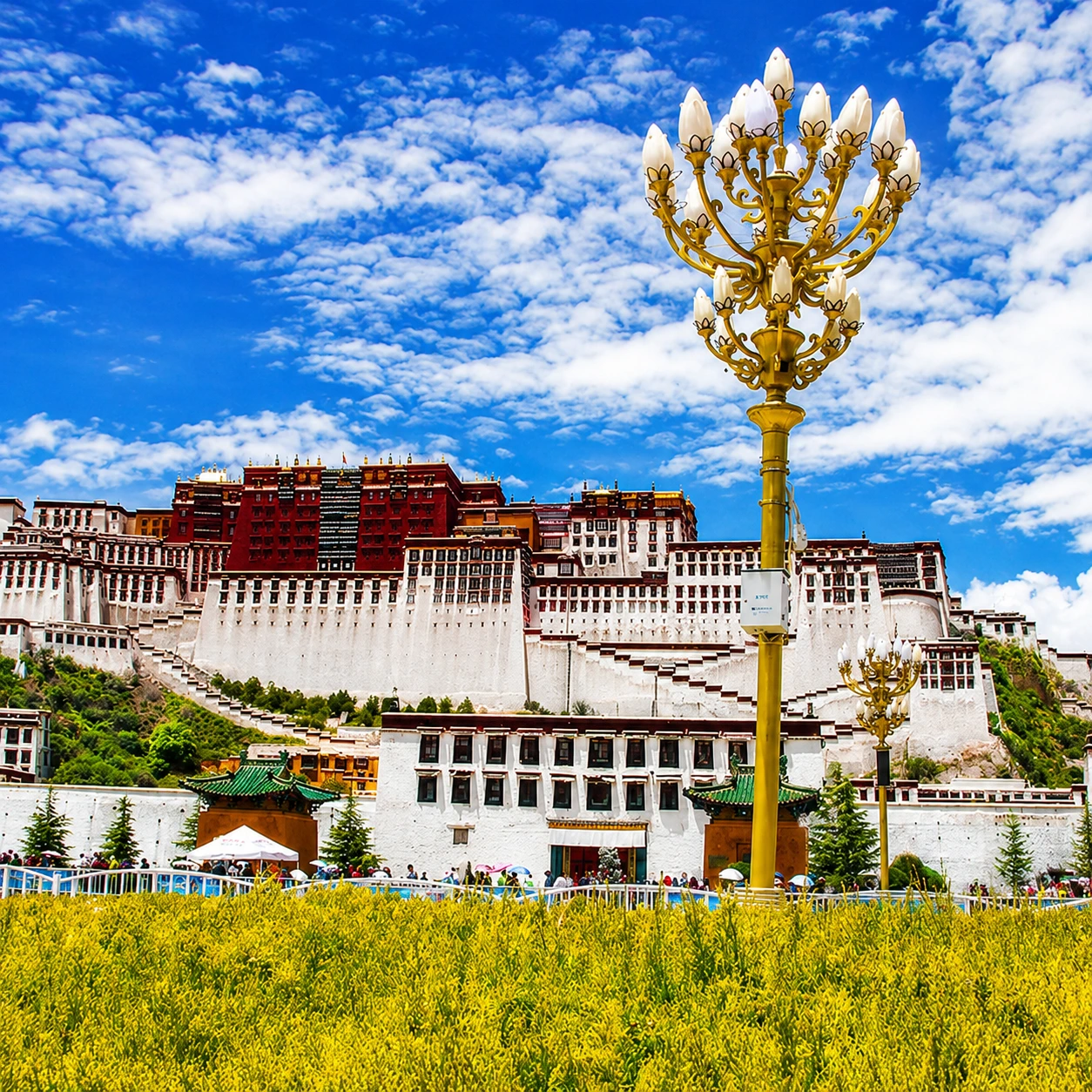
Rising above Lhasa, the Potala Palace is Tibet’s most famous landmark. Once the winter residence of the Dalai Lama, today it’s guarded by UNESCO, part palace, part sacred temple. Within its walls, you’ll discover prayer rooms, old painted scenes on walls, along with spiritual treasures showing how religion and power shaped Tibet.

To really get the Potala Palace, slow down. As you climb the stairs, you’ll see amazing sights of Lhasa, this also opens up Tibet’s inner world.

Jokhang Temple: The Holiest Site in Tibet

The Jokhab Temple holds top importance in Tibetan Buddhist belief. People journey far just to worship here, some even stretch out flat on the ground again and again near the door. Inside, the air’s thick with worship – smoke curls around quiet chants from robed figures. Monks murmur deep tones, filling the space with a hush that sticks. The atmosphere pulls you down into stillness, slow and steady like breath at dawn.

Strolling the Barkhor path near Jokhang Temple lets travelers walk alongside locals who follow an ancient practice showing deep respect, quiet strength, or inner belief.

Sera Monastery and Monk Debates

Watching monks argue at Sera Monastery? That’s one of Lhasa’s top highlights. These sessions happen each afternoon right in the open yard – loud, full of hand slaps, sharp moves, yet super focused. Though you might not catch every word, their passion and control really stick with you.

Explore Nepal and Tibet Tour – 12 Days
Introduction: Tibet and Lhasa – The Spiritual Heart of the Himalayas Tibet isn’t only a place you visit, it sticks around in your mind way past departure. Sitting...
duration 12 Days
difficulty Moderate

Nepal-Tibet Himalayan Journey | 12 Days of Culture, Nature, and Spiritual Discovery

Some trips show you pretty spots while others shift your whole outlook without saying a word. Take this 12-day trek through Nepal and Tibet, it’s one of those quiet changers. You get Nepal’s vivid traditions, soft hills, plus friendly hosts, blended with Tibet’s deep spiritual roots and age-old monasteries. Instead of rushing, it flows slow from busy Kathmandu to peaceful Pokhara, ending in holy Lhasa giving folks space to soak up customs and height alike.

This journey fits those wanting genuine moments rather than racing past landmarks, think old temples, towering mountains, holy places, mixed with time spent beside local folks. Not your typical trek, it’s a well-paced adventure across the Himalayas, carefully shaped to feel complete, personal, and true from beginning to end.

Day Itinerary
Day 01: Arrive in Kathmandu Your trip kicks off in Kathmandu, Nepal’s lively heart where culture meets energy. Once you land at Tribhuvan International Airport, someone from Prime Holidays Travels and Tours will greet you, friendly and ready to help get you to your hotel.

The rest of the day stays low-key. After a tiring journey, maybe unwind at your hotel or take a casual stroll around the lively neighborhood nearby. The city pulses with energy, bright prayer banners flutter overhead, scents of burning incense float down narrow lanes, yet shrines, shops, and little coffee spots show up on every corner. Overnight in Kathmandu.

Day 02: Kathmandu Heritage Tour If you’re up for kicking off your morning with a unique twist, try the Everest aerial tour though it’s optional. Instead of hiking, hop on this hour-long ride that flies near Mount Everest along with other towering peaks nearby, it’s like seeing Nepal’s rooftop from above. Later on, you’ll explore Kathmandu Valley’s top historic spots with a guide leading the way. Starting off at Swayambhunath Stupa, often called the Monkey Templ.  It sits high on a hill, watching over the whole valley below. One of Nepal’s most ancient Buddhist spots, this place gives you wide-open sights along with a quiet feeling inside. Buddha’s famous eyes watch from every side.

Then comes Kathmandu Durbar Square, the old town’s central hub. Once a royal residence, this site holds detailed carvings, open yards, along with sculptures showing Nepal’s ancient design skills and Newari work. The trip heads on to Pashupatinath Temple, a key sacred site for Hindus globally. Found beside the Bagmati River, this temple area gives a raw look at age-old Hindu practices through real moments of worship.

Your last stop’s Boudhanath Stupa, huge, peaceful, one of the biggest around the world, also a heartland for Tibetan Buddhist life in Nepal. Monasteries and spinning prayer wheels wrap around it, giving off calm vibes, particularly when monks or travelers walk slowly round it, focused, silent. Overnight in Kathmandu.

Day 03: Drive to Pokhara Once you’ve eaten, head out toward Pokhara through winding roads that reveal Nepal’s varied terrain. Hills stretch wide, dotted with step-like fields, while streams cut across the view, each turn brings something new. Tiny settlements pop up along the way, breaking the rhythm of green with clusters of homes. The scenery shifts constantly, never quite repeating itself.

Finding your way to Pokhara means things start feeling calmer. This lakeside spot, often called Nepal’s own little water town rests quietly under the towering Annapurna range. A peaceful trip across Fewa Lake gives a clear look at the rolling hills and famous Mt. Fishtail mirrored in still water. As day winds down, walking by the shore brings cool breezes, quiet moments, along with distant peaks. Overnight in Pokhara.

Day 04: Pokhara Sightseeing Ahead of dawn, you’re heading to Sarangkot; there, the sun peeks over Annapurna and Dhaulagiri like a quiet spark. When that first glow hits the snowy tops, everything shifts into golden-pink hues, slow and soft. Once you’ve eaten, the trip around town kicks off. First up’s Davis Falls, this wild cascade plunges right into a hidden passage below ground. Close by lies Gupteshwor Mahadev Cave, a holy site honoring Shiva, famous for its odd-shaped stones and deep meaning to locals.

The trip heads on to Mahendra Cave, a rocky tunnel full of hanging bats, with sharp stone drops from above and spikes rising up below. Then you swing by the Seti River Gorge, where the milky-white river cuts deep through the city, forming a narrow and mysterious canyon. Overnight in Pokhara.

Day 05: Pokhara to Kathmandu Once you’ve eaten, head back to Kathmandu while taking in the views around you. When you get there, go to your hotel, then spend time wandering through Thamel, a lively area packed with food spots and stores. You can look at handmade goods, grab a drink somewhere cozy, or just relax and watch the world go by.

In the evening, you’ll enjoy a classic Nepali meal alongside lively cultural dances. These acts highlight regional tunes and rhythms across Nepal, giving a joyful peek into local traditions. Each performance brings its own flavor, making the night feel alive and unique. Overnight in Kathmandu.

Day 06: Kathmandu to Lhasa (3,650m) Today marks a highlight of the journey as you fly from Kathmandu to Lhasa. If skies is clear, you’ll spot endless white-tipped mountains below during the trip. Views roll out wide when clouds stay away.

Once you land at Gonggar Airport, a ride takes you to Lhasa, roughly sixty minutes by road. After that, the day stays open so you can get used to the elevation slowly. Your body needs time to catch up with the high altitude, so the rest of the day is kept free for acclimatization. Stay back at the hotel if you like, or maybe stroll around close by instead. Overnight in Lhasa.

Day 07-08: Lhasa Full Sightseeing In the coming 48 hours, you dive into Tibet’s soul, its beliefs and traditions. For starters, check out the amazing Potala Palace – this was where the Dalai Lama stayed when winter hit. Sitting high above Lhasa, it looms large without hesitation. Massive in size, this place stuns you with how it’s built, showing strong pride in Tibetan identity. You’ll head next to Jokhang Temple, the holiest site in Tibet. Folks travel from every corner of the highlands just to worship there, touch their foreheads to the ground, or walk around it with deep respect. Out here, the Barkhor Bazaar hums with energy, part sacred path, part lively marketplace where handmade goods meet everyday hustle.

The trip heads on to Drepung Monastery, once the biggest in the world as well as Sera, known for monks arguing out loud in the open yard. Then there’s Norbulingka Palace, where the Dalai Lama used to stay during warmer months, tucked inside calm green spaces. Spending nights in Lhasa.

Day 09: Ganden Monastery and Drak Yerpa Cave On this trip, you’ll head out past town into deeper parts of Tibet where sacred spots lie. Perched high along a rocky ridge, Ganden Monastery stands as the main hub for Gelug Buddhist teachings, quiet, vast, full of calm. Instead of crowds, there’s space to breathe; rather than noise, just wind and silence.

Later on, head to Drak Yerpa Cave – a quiet spot where old Tibetan teachers used to meditate. With its rocky hollows and wild terrain, the place feels calm yet intense. You head back to Lhasa at night to rest up.

Day 10: Lhasa to Kathmandu Once you’ve eaten, you’ll head back to Kathmandu by air. The hours after that are yours, chill out, check out places again, or grab some quick souvenirs. This break gives you space before diving into the trip’s closing cultural stretch. Overnight in Kathmandu.
Day 11: Bhaktapur and Patan Durbar Squares Right now we’re checking out two awesome old towns in Nepal. While Patan Durbar Square’s called the hub of delicate art forms, it’s packed with graceful shrines, royal yards, and stunning metal and rock carvings. You’ll head next to Bhaktapur Durbar Square, a well-kept spot listed by UNESCO. Key sights? The Golden Gate stands out, alongside the 55-Window Palace, and centuries-old temples showing off Newari heritage through time.

In the evening, travelers come together for a goodbye meal filled with lively Nepali tunes and dancing, it’s just right to wrap up this mountain adventure. Overnight in Kathmandu.

Day 12: Departure Once you’ve eaten, we’ll head to the airport for your next flight. Leaving behind, you take moments from quiet temples, early light on peaks, old towns carved by time, also the uncommon chance to move across two deep-rooted Himalayan zones.

Thanks for choosing Prime Holidays Travels and Tours. Have a safe trip, maybe we’ll see you down the road on your next big adventure.

Practical Tips for Visiting Tibet in 2026

Tibet Travel Permit

All foreigners going to Tibet have to get a special entry pass. You can’t sort this out on your own, it needs to be done by an authorized travel agency. Independent trips aren’t allowed under any circumstances. Our team at Prime Holidays takes care of every detail, so you don’t have to worry about paperwork or delays.

Best Time to Visit Tibet

The ideal months to see Tibet run from April through October, weather’s better then, also travel routes stay open. Summer brings lively festivals plus green valleys, on the flip side, spring and fall give you sunny views along with more personal space.

Transportation in Lhasa

Getting around Tibet mostly means using private cars booked via travel agencies. Around Lhasa, strolling on foot works well for checking out historic districts, however, hiring a guide with transport helps when visiting temples or nearby sites.

Entry Fees and Sightseeing Tips

Major spots such as the Potala Palace cap how many people come each day so book ahead or you might miss out. Get there right when it opens, fewer people around means extra room to check things out.

Altitude Awareness

Lhasa’s up high, which means visitors need to take it easy at first. Drink plenty of water while taking things slow, this combo cuts down on altitude issues. Resting the initial day works well since your body starts adjusting right away.

FAQs About Visiting Tibet

Do I need a permit to visit Tibet?

Yes, every visitor from abroad needs a Tibet permit, got to sort that out before heading there.

Is Tibet safe for tourists?

Yes, tourists can visit Tibet without issues if they go through an authorized guide company.

Can I travel independently in Tibet?

On your own trips aren’t permitted. You need to book via approved operators instead. Every visitor from abroad needs a certified guide along with set-up transportation.

When’s the ideal moment to travel to Tibet?

From April through October’s when visiting spots works best.

Should you take a bus or fly when going from Nepal to Tibet?

A road journey via the Kerung border is the most popular option. This way, you climb higher slowly while soaking in epic mountain views. Head straight to Lhasa by air, sure, it’s quicker but your body gets fewer chances to adjust.

What’s the best number of days for a trip to Nepal and Tibet?

Around eight or nine days works best. That gives you enough time to cross borders, get used to the altitude, also explore Lhasa well. If your trip’s shorter, it might end up feeling hurried plus tough on the body.

Is it simple to visit Nepal and Tibet on a single journey?

Yes, Nepal’s a solid starting point for Tibet trips. In Kathmandu, you’ll find everything needed to get ready, gear, guides, info. Because Nepali and Tibetan Buddhism share deep roots, the shift from one culture to the next feels natural, almost effortless.

Do I need different visas or permits?

Right. Visitors require a China visa along with a Tibet permit. If crossing into Tibet from Nepal, the visa setup works another way – this’s sorted via a licensed travel agency instead.

Could you feel sick from high elevations during a trip through Nepal and Tibet?

Flying high can hit hard. Going slow up the trail, mixing climb days with chill ones and drinking plenty of water cuts danger fast. The path from Nepal through Kerung into Lhasa? Built so your body adapts step by step.

Can beginners handle this trip if they’ve never been up high before?

Yeah, if you take it slow. A nine-day trip works well for newcomers, just stick to advice and give yourself days to settle in.

Why 6 Days Is Not Recommended for a Nepal-Tibet Tour

Though six days might suit visits just to Lhasa, it’s too tight when mixing Nepal with Tibet. Just crossing the border eats up hours, besides, jumping straight from Kathmandu to Lhasa risks altitude issues that make things harder and less fun. Going slow means fewer health worries, better rest, plus more moments worth remembering. No, six days isn’t enough because of border checks, long drives, or time needed to adjust. Go for at least eight or nine days, it’s way better.

Is traveling from Nepal to Tibet by road safe?

Yes. The route via Kerung gets picked a lot since it goes up gradually.

Can newcomers handle the thin air up high?

Yes, if you take it slow and add breaks now and then. The path from Nepal into Tibet’s built around helping your body adjust.

Conclusion: Plan Your Tibet Journey with Confidence

Tibet reaches deep into your heart – Old temples, ancient halls, every spot gives you a piece of truth.Quiet monasteries mix with lively markets, making each day feel different yet full. Lhasa isn’t only about what you see, it’s how the people live with calm, belief, or balance.

A solid plan, clever tips, along with local insight, turns a Tibet journey into something calm and worthwhile. Prime Holidays takes care of documents, maps out your path while customizing experiences – making your 2026 visit run easy and stay unforgettable.

Best Places to Visit in Kathmandu Valley

The Kathmandu Valley is considered Nepal’s cultural center and lies right in the middle of the country. Packed with old temples, former royal homes, and busy lanes showing off deep roots from long ago. People checking out these places often bump into holy grounds, neighborhood bazaars, or peaceful views that stick around in memory after seeing Nepal up close.

Once you land, the vibe hits hard – messy but magnetic. Most visitors stay on Thamel’s busy roads, though there’s way beyond packed markets or famous temples here. Tiny lanes twist into old plazas where history hums through worn stone. Craftsmen still shape metal, carve wood, or press paper by hand, keeping skills alive without fanfare.

First-timers might feel swamped by how many spots there are to see in Kathmandu. Instead of just ticking boxes, try touring landmarks like Pashupatinath Temple or Boudhanath Stupa – both UNESCO sites that open doors to the area’s deep past.

While Patan Durbar Square and Bhaktapur Durbar Square draw crowds, quieter picks such as the Garden of Dreams show a more peaceful vibe. Skip the usual routes; wander through old lanes or busy local markets to catch real city life.

If you’re visiting Kathmandu just before hiking the Himalayas or want to dive into local culture, this place gives you more than most cities do. Every trip brings fresh surprises – maybe a quiet temple hidden down an alley, a lively celebration, or a peaceful spot on a ridge with views across town.

In this guide, we show top spots in Kathmandu Valley – mixing famous sites with quiet ones you might miss. If you plan well, you’ll see big-name sights along with secret places, so your trip feels alive with culture. Each stop adds flavor, turning the whole visit into something worth remembering.

UNESCO World Heritage Sites

The Kathmandu Valley offers unique cultural moments that few places match. Lots of visitors come aiming only for high-altitude hikes, but what they miss is how rich this region feels up close. While wandering around town and nearby spots, history comes alive through old crafts, legends, alongside everyday customs still practiced today.

You’ll see how old UNESCO spots still form the heart of most trips to Nepal. Take Pashupatinath or Boudhanath – these places stay popular for a solid reason. Swayambhunath and the royal palaces in Kathmandu, Patan, and Bhaktapur hold centuries of stories.

From stone writings to carved woodwork, each location shows deep roots. Tiered shrines stand tall, shaping what this area truly is. Back then, Malla rulers owned these temple grounds and palaces. Today, much of the detail comes from Newar makers who mixed Hindu and Buddhist styles without effort.

When you move through Kathmandu, Nepal, you start noticing the valley goes beyond well-known landmarks. Fresh districts, calm inner yards, ancient villages, yet hidden temples give a glimpse into everyday routines.

Instead of just rushing from one tourist spot to another, you catch moments where belief, celebrations, together with local bonds set the pace of life here. The longer you stay around, the clearer it gets – this place isn’t merely a starting point for mountain trips; it’s packed with tales, signs, along traditions still alive today.

This blend of holy sites, creative customs, and hometown tales makes Kathmandu Valley one of the best spots to wander – either before or after a hike. A place formed by ancient stories, carved by skilled hands, yet lived in daily through prayer, festivals, and making things right there. For anyone chasing more than surface views of Nepali life, starting here gives real meaning from day one.

Kathmandu Durbar Square

Kathmandu Durbar Square lies right in the heart of the ancient city – still standing as a top draw for visitors who love stories from the past and striking buildings. Walking inside, you’re surrounded by packed-together temples, open spaces, and former royal homes that housed both Malla and Shah rulers long ago.

That’s why this spot matters on any Nepal trip, particularly when you’re curious about how traditions and power shaped life here through time.

The square goes by many names – like Basantapur Durbar or Hanuman Dhoka – and each one tells a different part of its story. Though the oldest parts reach back to the Licchavi era, kings who came after made it bigger, stacking up temples and palace bits still standing now.

Walk through the open yards and you’ll spot carved woodwork, stone figures, along with rising rooftops typical of Newar craft.

You can start walking near the outer yards, where spots such as Kasthamandap, Kumari Ghar, along with the Shiva-Parvati Temple face noisy roads. Kumari Ghar matters more since it’s home to the Living Goddess, who shows up quickly by her ornate window – this brings in crowds.

Moving further inside, Hanuman Dhoka appears, plus the ancient palace spreads out ahead. Some chambers today act like museums, offering a close-up view of kings’ lives via everyday items, seats of power, arms, also pictures.

Popular spots around the plaza give it extra character. Rising high over nearby buildings, Taleju Temple stays closed most of the year – visitors can enter just one day annually. Nearby, Jagannath Temple grabs attention with finely carved wood supports on its roof.

In Nasal Chowk, old royal ceremonies happened again and again through the centuries. Figures such as Narsingha and Kal Bhairav stand out in open spaces, turning myths into visible forms. Together, sculpture and story shape places across Kathmandu that feel both ancient and alive.

When you walk around Kathmandu, Nepal, it’s clear why people love this plaza. The vibe changes as hours pass. Early on, residents head to small temples, lighting incense or bowing quietly.

Later, visitors stroll across wide yards, pause at craft tables, snapping pics of ancient wood mixed with rock and clay walls. Side paths – like Freak Street or the trail leading to Asan Market – bring extra flavor to the trip.

Kathmandu Durbar Square shines bright due to its old roots, packed temples, and ongoing customs – ranking high on any must-see list in the city. You’ll get a tight snapshot of royalty once held here, spiritual routines still alive today, alongside craft styles passed down through generations; so it’s no surprise this spot pulls every culture seeker wandering Nepal’s core.

Entry Fee

  • For SAARC nationals: NPR 150
  • For other tourists: NPR 1000
Kathmandu Luxury Tour – 4 days
The Kathmandu Valley is considered Nepal’s cultural center and lies right in the middle of the country. Packed with old temples, former royal homes, and busy lanes showing...
duration 4 Days
difficulty Easy

Patan Durbar Square

Patan Durbar Square lies right in the middle of Lalitpur – yet it’s unlike anything else in the Kathmandu Valley. When exploring Kathmandu, Nepal, you’ll see how Patan feels different from nearby towns. Tight lanes, red-brick homes, along tiny open spaces keep the pulse of local craft alive. Craftsmen shaping metal or carving wood stick to old methods passed down through generations – so walking here is like stepping into history.

The square used to house the royal palace of the Malla rulers – today, it’s packed with top cultural spots across Kathmandu. Once inside, courtyards alongside palaces and shrines pull your eye from every angle. Every building points to peak Newar design, particularly back when Patan thrived as a hub for creativity and skilled craft under the Mallas.

A stroll across the square leads to Keshav Narayan Chowk – today home to a museum packed with ancient bronze pieces. Restored inner yards give a glimpse into how royalty once lived.

Just around the corner, Sundari Chowk shows off fine carvings in stone, timber, and metal; meanwhile, its sunken royal pool, Tusha Hiti, stands out as a top highlight in valley architecture. Together, these spots turn Patan into a must-see near Kathmandu for anyone curious about hands-on artistry.

The Krishna Temple grabs attention fast. Rising in the 1600s, it’s made of stone, shoots up with 21 towers among Nepal’s first Shikhara-style builds. While exploring Nepal spots, you’ll bump into Manga Hiti too, a stepped underground fountain showing off old water tech. This spot proves how smart city setups used to be.

Patan’s vibe spills past the royal courtyard. Around places like Khumbeshwor Mahadev, crowded local hubs come alive. Devotees brush shoulders with craftspeople shaping metal or wood. Weathered nunneries sit beside homes built centuries ago, alongside cramped studios buzzing with handwork. All these layers up, turning the lanes into a go-to spot for those chasing real glimpses of old Kathmandu, not staged ones.

Patan Durbar Square stands out – it’s packed with history, kept in great shape over time. Thanks to deep-rooted art forms combined with intact old buildings, it pulls people in fast. Religion hums through daily life here, while craft skills passed down generations show up in every carving.

Step into museums or pause by shrines – the vibe feels alive, layered. Peek inside workshops where metal artisans hammer details slowly, skillfully. Each corner adds texture – past mixing with now, without effort.

Entry Fee:

  • For SAARC nationals: NPR 250
  • For other tourists: NPR 1000

Bhaktapur Durbar Square

Bhaktapur Durbar Square ranks among the standout sights in Kathmandu Valley – showing off Newar craftsmanship, city planning, besides echoes of ancient royalty. Step inside, but instead of a crowded plaza, find a wide yard surrounded by old temples, splendid palaces, along stone figures from the 1200s up to the 1700s. Time seems to pause here; still, wandering through makes sense since each structure links naturally to the next.

The first detail you notice? The Palace with 55 Windows – a standout spot where carved wood frames display top-tier Newar skill. Just beside it, the Golden Gate leads inside the royal yard – its hammered metal designs rank among Nepal’s best traditional metalwork. Keep walking, then it clicks: this ancient plaza is why Bhaktapur stands out as a key cultural hub across Kathmandu.

Over by the central yard, open space opens up, filled with small holy spots, carved figures, besides old prayer houses, giving charm to the place. Look ahead – you’ll spot the Lion Entrance, a bold figure of King Bhupatindra Malla, along with the Batsala Shrine known for detailed rock art, plus a high-rising spire.

Above the shrine’s flat roof area swings the well-known Dog Bark Bell; it used to chime each evening, marking night rules back in the Malla days.

You keep walking around, spotting signs of the Malla era’s peak when creativity and buildings thrived across the valley’s trio of royal towns. In case you’re hunting for real spots in Kathmandu that skip packed attractions, Bhaktapur quickly turns into a top pick.

Since the city holds tight to its roots, you’ll see more of real Nepal here. Check out Pottery Square – see folks shaping clay right before your eyes, or head over to Dattatreya Square and Taumadhi Square, where shrines tower over slim red-brick alleys. Every corner gives you a fresh peek at historic Bhaktapur.

If you like sampling regional dishes when visiting Kathmandu, Nepal, skip nothing else but Juju Dhau – the well-known rich yogurt – or Bara, a common Newari bite. Since Bhaktapur is recognized for woodworking, metal artistry, and pottery, it’s ideal for checking out age-old crafting studios or picking up one-of-a-kind handcrafted keepsakes.

You might stroll over to Siddha Pokhari – Bhaktapur’s ancient pond – for a peaceful pause during your trip. Instead of just one sight, the Durbar Square packs palaces, temples, shrines, fountains, and revived plazas into one spot. Rather than rush through, you’re free to wander this old town slowly, seeing what catches your eye.

If you’re mapping out sights in Nepal, this spot stands as a key piece of Kathmandu’s culture. Every turn brings something real, showing how life and history shaped the valley over centuries. See it either before hitting the mountains or after coming down. It adds depth no matter when you go. For travelers craving an old town still alive with customs, this remains a top pick without question.

Entry Fee

  • For SAARC nationals and Chinese Citizens: NPR 500
  • For other tourists: NPR 2000

Pashupatinath Temple

Pashupatinath Temple sits right in the middle of Nepal’s holiest shrubs, holding tight to traditions that have lasted ages. Alongside the Bagmati River, it pulls in crowds of Hindu worshippers daily, turning it into a key stop for those curious about belief systems, old stories, or how rituals unfold.

Though only Hindus can enter the core shrine, others are free to watch from raised platforms on the east side. It is a perfect spot to see what happens near the water.

While walking around, it clicks – this spot’s a must-see in Kathmandu. Along the river, burning pyres reflect how Hindus view life and endings. Meanwhile, small temples and open yards nearby reveal centuries of building craft. When dusk hits, the Bagmati Aarati begins – singing, flickering lights – a moment that sticks with most travelers checking out Nepal.

As you move further into the maze-like grounds, tiny temples appear alongside stone Shiva symbols, while groups of holy men sit quietly under trees. Just close by, the Guhyeshwari shrine stands strong as a key goddess site, shifting the feel of your journey.

Travelers visiting Kathmandu, Nepal, curious about spiritual roots and history, will find Pashupatinath revealing real practices still alive today. Instead of staged shows, it gives raw glimpses into daily rituals passed down for generations.

While some sites feel frozen in time, this place pulses with ongoing devotion. Not far from the city’s bustle, tradition runs deep without pretense. So if you’re after authenticity over polish, this spot delivers quiet power.

Entry Fee

  • Free for Indian citizens
  • For other tourists: NPR 1000

Boudhanath Stupa

Boudhanath Stupa is among the boldest sights in Kathmandu Valley, towering on the city’s east edge with a wide white mound plus a gleaming gold tower. Right after stepping off the plane, you’ll spot this monument. It grabs attention fast, shaping how you see travel here from the start.

Constructed ages ago under the Licchavi rule, then enlarged over time, it’s now the biggest stupa across South Asia while still serving as a heartland for Tibetan Buddhist life.

As soon as you arrive, the vibe stands out compared to typical tourist spots in Kathmandu. Monks, visitors on pilgrimage, and people who live nearby walk slowly around the stupa, always going clockwise.

Metal prayer wheels sit along the looped trail while chants echo alongside everyday noises. Because of this mix, the place hits deeper than most sites when exploring Nepal. Also, it is perfect if you’re curious about real spiritual practice.

When you walk deeper, over 50 monasteries pop up near the stupa – each one runs different ceremonies, displays unique wall paintings, also holds classes. Side paths pack in stores selling thangkas, spots making butter lamps, plus places dishing out Tibetan coffee, which shapes the area’s vibe. Up on roofs, sightlines open wide: there’s the big stupa, along with crowds circling it nonstop.

Boudhanath holds major spiritual meaning, tied to centuries of tradition. It’s among Kathmandu’s key heritage spots. You might visit for dusk mantras, nearby temples, or peaceful terrace sights; either way, the monument gives a clear glimpse into how Buddhism lives here.

Entry Fee

For SAARC nationals: NPR 100
Other tourists: NPR 400

Garden of Dreams

The Garden of Dreams gives a quiet pause from Thamel’s nonstop energy, making it one of the chill spots in Kathmandu Valley. It used to belong to the Kaiser Mahal grounds. After being ignored for ages, it got fixed up and now works as a laid-back hideout for city wanderers. When you need a slow moment while traveling around Kathmandu, Nepal, this spot makes for a quick yet soothing stop.

Once you walk in, the traffic sounds disappear. Instead of busy streets, you find quiet paths lined with neo-classical buildings and fountains. Open grassy areas stretch out, making this spot stand apart from usual spots in Kathmandu. Pergolas and stone railings add charm – like something from Europe. You’ll see decorated pots scattered around, plus a pretty garden set below ground level.

There’s a small pond right at the center. Neat rows of flowers surround it. This makes the place perfect for strolling slowly or just sitting with a book. It’s also great if you want some peaceful time on your own.

The garden’s got a café plus an eatery tucked into the main building. Though meals might cost a bit, the vibe feels nice – perfect for a calm tea pause mid-Nepal trip. Inside, tiny displays reveal how this green space came back to life, giving your stroll a little backstory.

Built with elegant design yet calm vibes, this spot’s turned into a top pick among Kathmandu’s cultural gems. You could snap pics, hang out with pals, or just sit quietly – either way, it feels like a soft pause from the city’s rush, sticking in your mind after you wander around town.

Entry Fee

  • For SAARC nationals: NPR 150
  • For other tourists: NPR 400

Swayambhunath Stupa

Swayambhunath sits on a little hill just west of town, also counted among Kathmandu Valley’s standout spots. Heading up to the stupa, folks take sharp stone stairs or an easier path winding around the slope.

Meanwhile, the city sounds drop off while the scenery opens up. Once at the peak, nearly all of the valley unfolds beneath, turning this into a go-to lookout for travelers exploring Nepal.

People usually say it’s the Monkey Temple since troops of monkeys wander all over the place. Still, this spot isn’t just some throwaway name for visitors. In fact, it’s among the earliest temples in Kathmandu, tied to old tales of a sacred lotus rising from a lake’s center.

For hundreds of years, both Buddhists and Hindus came here together. Because of that, it’s one of the city’s deepest cultural landmarks.

When you walk around the top area, prayer wheels pop up along with tiny chaityas, old statues, or tucked-away shrines honoring gods from two paths. A massive gold vajra stands at the east gate, whereas a big Sakyamuni figure rests on the west edge. Close by, monastic spots show handmade artwork plus peaceful nooks where followers meet each morning to pray.

Swayambhunath mixes daily life, old stories, and wide-open views. So, it’s one of the key spots to see in Kathmandu. For anyone chasing the soul of the valley during their trip to Nepal’s capital, this temple on a hill is worth stopping by.

Entry Fee

  • For SAARC nationals: NPR 50
  • For other tourists: NPR 200

Changu Narayan Temple

Changu Narayan Temple sits atop a little hill near Bhaktapur, roughly 12 kilometers from Kathmandu. It’s among the city’s earliest shrines and is linked closely to worship of Vishnu, called Narayan here by locals.

Folks visit all year round, though crowds grow heavy around Harishayani and Haribodhini Ekadashi festivals. Recognized by UNESCO, this spot blends deep belief with ancient craftsmanship. Because of that mix, travelers into heritage spots or old-world charm won’t want to skip it.

The temple’s design comes from the Licchhavi time, featuring a double-layered pagoda top, detailed wooden art, and plenty of carved stone figures. Inside its yard lie some of Nepal’s earliest writings, like a pillar dated 464 CE, alongside breathtaking images of Vishnu, such as the ten-faced Vishnu-Dasavatara.

Near the gate stands a Garuda figure, known as Vishnu’s divine vehicle. Tiny temples dedicated to Shiva, Durga, Laxmi Narayan, or Kileshwar sit nearby, showing how various Hindu groups once shared space.

Travelers heading to Changu Narayan usually take a taxi from Bhaktapur or hop on a local bus. If you’re into walking, there’s a nice trail linking Nagarkot; it’s doable in one morning or afternoon.

Once there, the nearby village shows how Newari folks live in simple homes, stone paths, and hand-carved windows. From the top of the hill, you can see far across the whole valley, especially at sunrise when mist floats above the fields.

A trip to Changu Narayan mixes old tales, quiet devotion, and fine craftsmanship, turning it into a standout spot near Kathmandu. Exploring the valley for culture, pictures, or faith? This temple belongs on your list.

Entry Fee

  • For SAARC nationals: NPR 100
  • For other tourists: NPR 400

Shivapuri Hills Hike

Shivapuri Hills lie above the city, giving quick access to wild green spaces inside Kathmandu’s rim. The starting point? Just a brief ride from Budhanilkantha, so it suits folks chasing clean breezes, peaceful woods, or ridge panoramas close by. Want movement during your Nepal trip? This path stands out as a top pick near town.

The trek starts in Budhanilkantha, known for a holy temple where a big stone figure of Vishnu lies submerged in water. After that, you step into Shivapuri Nagarjun National Park, walking along a quiet trail shaded by pine, oak, or rhododendron trees. While gaining altitude, city sounds disappear while views stretch wider around you. This route’s popular among folks who enjoy greenery near Kathmandu.

You can get to the top using either the steep stone path via Deurali or the easier track looping toward Nagi Gompa – a peaceful monastery with views over the valley. While one’s quicker, the other takes you past quieter spots. Each way arrives at Bagdwar, where the Bagmati River begins, then climbs upward to Shivapuri’s peak at 2,732 meters.

From up top, you can see the Langtang and Ganesh Himal mountains spread out ahead, while the Kathmandu Valley sits distant down low. Since it’s got green forests, quiet temples, along with an easy trek that takes just one day, the Shivapuri path stays a favorite spot near Kathmandu – perfect for those wanting calm woods plus unique local landmarks.

Entry Fee

  • For SAARC nationals: NPR 600
  • For other tourists: NPR 1000

Hidden gems: local neighborhoods, traditional markets

• Asan Bazaar and Indra Chowk – these crowded hubs stay central to everyday Kathmandu. At Asan, you’ll find spices, fabrics, metal goods, and snacks from stalls. Go at dawn for a raw slice of local rhythm. Indra Chowk mixes old shrines with packed stores, tangled alleys, linking belief, commerce, and community pulse.

• Thamel’s narrow lanes sneak past crowded stores, peek behind, and you’ll find quiet cafés. Local joints serve home-cooked bites instead of fancy menus. Tiny art spots show handmade pieces, not mass-market junk. Old Newari houses sit hidden, shielded by busy storefronts.

• Tiny yards, plus aged monastery spots in overlooked neighborhoods – they show everyday living, calm faith vibes, busy tourist zones. These places give a peek at classic buildings, real culture, without the noise. Hidden corners where time feels slower, yet full of meaning. No crowds, just honest moments tucked behind old walls.

• Those spots in the valley show more of daily life in Kathmandu, away from tourist sites – perfect when you’re curious how folks eat, worship, or sell things now.

Cultural moments

Local festivals, handmade art, or folk music – bring people together through shared stories instead of flashy trends.

• Festivals bring old spots to life – with dancing masks, carts rolling through streets, also shared traditions popping up town-wide. Shops light up alongside backroads. Spots near Asan or Indra Chowk buzz loudly, filled with bright vibes when celebrations hit.

• Old skills live on – like pottery made in quiet villages near Bhaptapur, cloth woven by hand, metalwork with brass or copper, and also carving done in wooden pieces close to ancient streets. These trades keep going, usually right where few travelers ever step.

• Spiritual spots tucked in the hills – Away from big temples and stupas, tiny gompas, along with aged shrine-yards, give calm corners for quiet thought, community practices, or handmade crafts.

If you plan right, you’ll see real customs along with daily handwork – both part of what makes Kathmandu unique.

Tips for visitors: transport, entry fees, best times to visit

Tip Area What to Know
Transport Use taxis, local buses, or rickshaws to move between neighborhoods. In the case of areas that are considered hidden gems or for hill escapes, a hired cab or private ride gives flexibility.


Modest Entry Fees & Access Some heritage sites or monuments have small entry charges, while local markets, alleys, and monasteries are often free.


Dress & Behavior Dress modestly while visiting temples and monasteries. Respect local customs and rituals.


Best Time to Visit For clear skies and festival atmosphere, late September–November and March–May are ideal. The monsoon period, between June and August, colours these hills in verdant hues but is disruptive due to rain. Cold, quiet winters also offer low-crowd visits if you’re okay with cooler weather.


Morning hours preferred Whether for local markets-Asan Bazaar, for instance, heritage courtyards, early morning hours provide the best light, least crowds, and most authentic feel.


3-day itinerary for Kathmandu Valley

Day 1 Visit historic monuments, major temples, or stupas.

Get a feel of the local bazaars: Asan & Indra Chowk

Explore Thamel: dinner, cafes, local music


Day 2 Explore hidden neighborhoods and visit smaller monasteries or courtyards.

Browse craftsmen’s workshops; buy handicrafts.

If timing permits, attend a local festival/cultural event.


Day 3 (optional) Go on a short hike, or visit quiet villages/heritage towns surrounding the city

See countryside temples, rural markets, or artisan villages

Return to the city-relax at a rooftop café, or enjoy sunset views


This plan balances major sites with cultural immersion, giving a mix of history, tradition, and real-life experiences.

Conclusion & Call to Action

Kathmandu Valley blends ancient temples, pulsating markets, spiritual shrines, and everyday life in a way that few other places in the world can match. You may see grandeur if you limit yourself to the main attractions, but if you walk down the narrow alleys, venture into small local markets, observe artisans at work, or participate in a small festival, you will catch glimpses of the living heart of Nepal.

Ready to plan your Kathmandu trip? Here’s a guide to help you mix heritage, hidden gems, and local life for a rich, layered experience.

Social Media Caption Suggestions

  • Explore Kathmandu Valley’s top cultural sites and hidden gems!
  • From Pashupatinath to Bhaktapur: the ultimate Kathmandu Valley travel guide.
  • Discover Nepal’s rich heritage in the heart of Kathmandu.
  • Plan your sightseeing trip in Kathmandu Valley with our top recommendations.
  • Temples, palaces, and markets: explore the best of Kathmandu Valley.

FAQ’s

Q1. Which UNESCO sites should I see?

Key attractions of the Kathmandu Valley await at the Durbar Squares of Kathmandu, Patan, and Bhaktapur, Boudhanath and Swayambhunath stupas, Pashupatinath, and the temple of Changu Narayan.

Q2. How many days are enough to explore?

2–3 days is ideal to cover the main places to visit in Kathmandu. More time lets you explore hidden gems and small monasteries.

Q3. Is it safe to walk around?

Yes. Popular cultural sites in Kathmandu are safe. Hire a guide for remote areas.

Q4. Best time to visit?

Spring – March to May – and autumn – September to November – are the best times to travel to Kathmandu, Nepal.

Q5. Are there entry fees for monuments?

Yes, there are fees to enter most heritage sites. The street markets and neighborhoods are free.

Things to do in Chitwan National Park

Chitwan National Park is one of the most rewarding places in Nepal for close-up wildlife encounters. It sits in the subtropical lowlands, where dense sal forests, winding rivers, and wide grasslands create a safe haven for rare species. When you look into Chitwan National Park activities, you’ll notice that the area blends nature, culture, and outdoor adventure in ways few destinations can match.

As you make your way through this landscape, you can observe one-horned rhinos grazing in tall grass, hear the calls of colorful birds, and- if you’re lucky-get a glimpse of evasive big cats.

Simultaneously, nearby Tharu villages allow you to peer into a community that has coexisted with the jungle for centuries. From this mix comes a long and varied list of things to do in Chitwan, whether you would prefer slow-paced nature walks or more active exploration.

Furthermore, Chitwan is among the most visited places for having a Chitwan safari in Nepal. Guided jeep drives, calm canoe rides, forest walks, or bird-watching outings are some reasons people visit here.

These jungle adventure Nepal options help in understanding the park’s rich ecosystem while remaining close to nature. On top of that, several wildlife tour operators of Chitwan make a visit quite easy with expert guidance.

This blog will walk you through the major activities that make Chitwan worth your time, helping you build a trip that balances adventure, relaxation, and genuine cultural moments.

Things to Do in Chitwan National Park

From guided jungle treks to elephant safaris, canoeing, and village tours, a plethora of interesting Chitwan National Park activities awaits one in the case of planning a jungle adventure in Nepal.

This protected area happens to be one of the best wildlife viewing spots in Asia. As you make your way through the park, you’ll find rhinos grazing by the river, crocodiles sunning on sandbanks, and vibrant Tharu culture thriving beside the forest. With so many things that one can do in Chitwan, this guide is here to help you have a smooth, memorable trip.

Top Safari Options in Chitwan

The experiences in Chitwan safari, Nepal, vary in terms of pace and style. Each option gives you a different way to explore the jungle.

What You Can Do in Chitwan – Safari, Wildlife & Culture

Check out these top things to do while you’re in Chitwan.

1. Jungle & Jeep Safari

Most people prefer the jeep safari because it covers long distances, and this increases their chances of spotting animals. A 4×4 jeep ride is still the top choice for getting far into the jungle while checking out wide spots – also, it’s quick. Travelers pick this option since it handles rough ground well, plus it reaches remote zones easily. It moves fast through thick trails instead of wasting time on foot.

Safaris often happen once at dawn, then again near sunset – that’s when animals such as rhinos or deer move around most. While light is low, critters stir; mornings tend to be quiet, evenings bring chatter through the trees.

If you go on a full-day safari, there’s a better shot at spotting rare animals, maybe sloth bears or wild elephants. If things line up, possibly a tiger too.

Highlights:

  • One-horned rhinos
  • Sloth bears
  • Crocodiles
  • Rare birds
  • Dense sal forest and wide grasslands

2. Canoe / River Safari on Rapti or Narayani River

A quiet paddle offers a calm view from the water. While drifting, you might see gharials or marsh-muggers, crocs that blend into the reeds. Birds skim the surface, hunting for fish in slow motion.

Sometimes, deer step close to sip from the current. Each moment feels unplanned and raw.

Go out at dawn or just before dark. Animals often head to the water then. Take guided hikes through the woods – locals who know the land show the way.

Spot critters, winged ones, green stuff growing, signs left by creatures, things you’d miss driving by. Each walk shifts what you see.

On foot tours, stay sharp as wild animals are unpredictable. Your leader shares key tips before you head into the bush.

What to Expect:

  • Gharial crocodiles resting near the water
  • Marsh mugger crocodiles
  • Kingfishers, herons, storks
  • Scenic views of peaceful rivers

3. Walking Safari

For those visitors who want to become more involved, walking safaris allow them to engage in a slower and much more focused experience.

Good For:

• Tracking rhinos
• Spot small mammals
• Identifying bird species
• Learning about plants and forest ecology

4. Elephant experiences (ethical only)

Many lodges today focus on responsible elephant encounters, whereby guests can view the elephants, participate in feeding, or take part in walking sessions.
(Avoid elephant rides as they are discontinued or discouraged in most lodges due to welfare concerns.)

5. Bird Watching & Wildlife Photography

Chitwan is full of bird types, as more than 500 kinds have been spotted there. You might see the rare Bengal florican, which is at risk of disappearing. Hornbills show up now and then, while kingfishers pop in regularly. Eagles hang around, too, depending on the time of year. When seasons shift, different birds pass through, just stopping by for a bit.

Early mornings bring good lighting, and also boost odds for spotting critters if you’ve got binoculars or a camera. Wildlife fans often prefer dusk as it’s quiet, shadows stretch, and movement is clearer.

6. Visit the Elephant Breeding Center

The park has a recognized spot for breeding elephants close to where most tourists hang out. Here, people get to watch the animals up close while discovering how they’re looked after and protected. Occasionally, guests are invited to take part in hands-on experiences tied to these creatures.

This offers a calm, informative approach to enjoying these amazing animals while leaving wild groups undisturbed.

Wildlife Spotting

The rich Chitwan ecosystem supports a surprising range of species. A typical wildlife tour in Chitwan includes sightings of:

  • One-horned rhinos
  • Royal Bengal tigers, which are rare, but may be possible
  • Asian elephants
  • Sloth bears
  • deer and sambar deer
  • Gharials and marsh mugger crocodiles
  • More than five hundred kinds of birds roam the skies

7. Explore Local Culture – Visit a Tharu Village & Enjoy Cultural Shows

A trip to Chitwan isn’t complete without connecting with local Tharu communities.

Close to the park are small settlements where the native Tharu people live. The Tharu Village Visit lets you peek into how they build houses, grow food, make handmade items, while also showing everyday routines close to wild animals.

Night shows feature classic stick dances along with local tunes.

In the evening, lots of places to stay or local hubs put on the Tharu Cultural Dance. Their rhythmic dancing, tunes, also traditional crafts bring up the area’s roots.

8. Relax, Photograph & Enjoy Nature

Chill by the water, catch the sun dipping below trees – jungle vibes show up real quick. Spotting critters? A solid pair of binoculars or phone cam works wonders when everything goes still.

Adventure & Nature Activities

  • You could make your journey richer by trying different outdoor activities instead.
  • Bird spotting’s best at dawn, particularly in colder months since critters stir when it’s crisp.
  • Nature strolls – great way to spot leaves, trunks, or footprints left by critters.
  • Try walks that are great for rhino snaps, golden skies, or greenery vibes. One that fits your pace.
  • Riverbank sunsets: The Rapti River is known for its calm sunset views

Accommodation Options

Accommodation Type What It Offers
Jungle Lodges Close to nature, quiet setting


Eco-Resorts Eco-friendly stays with guided tours
Boutique Hotels Comfortable rooms and curated experiences
Budget Guesthouses  

Inexpensive and basic


Most travelers stay in Sauraha, which is the main access town.

Best Time to Visit & Practical Advice

This trip packs jeep rides, paddling trips, forest hikes, time at an elephant spot, watching birds, or diving into local life – each piece shows you real Chitwan: animals, green spaces, traditions, thrills. Most pros care about nature.

Still, since it’s a living environment, treat it kindly – move gently, stick to guidelines, skip loud sounds or trash, yet keep in mind you’re visiting where animals live.

Season

Season


What to Expect / Why Visit


October – March (Dry & Cool)


Great for seeing animals, clear views, and pleasant climate.


April – Early June (Pre-monsoon, Hot)


Wild creatures often stick close to drying water holes – so you might catch a glimpse of a rhino or maybe even a tiger. While one waits, another moves in quietly from the side.


June – September (Monsoon)


Downpours might fill rivers, plus make paths unusable – trips on foot or by boat could get canceled or changed.


Best Season to Visit

  • Oct to March: ideal for spotting animals while skies stay clear, while temps feel just right.
  • April to May: Hot season, but great for spotting animals near water sources.
  • From June to September, it’s the rainy season – trips into nature might get tricky because of downpours.

Travel tips:

  • Stick to what your guide says – this matters most when you’re on foot or paddling a canoe.
  • Grab must-haves such as binoculars, solid footwear for trails, bug spray, a cap, plus sunscreen.
  • Look after nature: toss trash in bins, skip plastic sacks, or better yet – use reusable ones. Keep wildlife safe by watching quietly, snap pics instead of taking things home.
  • Grab your safari spots and rooms early when it’s busy season.

Itinerary

Try this smarter way to enjoy a quick visit to Chitwan:

Day 1: Arrival & First Impression

You will be received from the Tribhuvan International Airport by our staff. Then we get you to a close by town, maybe fly into Bharatpur or take a road trip from Kathmandu or Pokhara. Then head to your guesthouse.

Stroll slowly through the spots close to Sauraha to experience the forest vibe up close. While you move, notice how nature starts to surround you bit by bit. This way lets you see things quietly without rushing at all. Instead of pushing ahead fast, just let the sights settle in naturally.

As night falls, take a walk along the shore at dusk or unwind near the water. Watch closely for rhinos or birds by the river.

Head to a Tharu show later in the evening, once you’ve eaten – it lets you dive into village traditions. While food settles, step out for live rhythms and dance that tell old stories through movement instead of words.

Day 2: Water & Jungle – Canoe + Jungle Walk + Elephant Center

Start at dawn with a quiet paddle along the Rapti or Narayani River. Keep an eye out – crocs might be sunbathing by the banks. Birds flit through reeds, while otters slip between ripples. Watch closely, nature’s busiest when light first hits the water.

Mid-morning: head out on a jungle hike with a nature guide – follow forest paths, discover plants and animals, while keeping an eye out for tiny critters or birds.

Later on, check out the Elephant Breeding Center to learn how these big animals are protected while seeing how they act. While there, you’ll get a clear look at why saving them matters through real-life examples and close observation.

Chill out at your cabin when the sun goes down. Swap tales with fellow guests instead. Or just head to the riverbank for some peace.

Day 3: Jeep Safari Deep into Jungle + Birdwatching & Departure

Start early: take a jeep ride deep into the woods – you might see rhinos, deer, maybe even a tiger or a sloth bear hiding around. While it’s quiet, move slowly through thick trees – chances go up when noise stays low. Instead of rushing, keep eyes wide open near water spots and clearings. Because animals stir at dawn, timing works in your favor if you’re patient.

Midday into the afternoon: if you’ve got some free minutes, try spotting birds – it works best close to marshes or quiet edges, otherwise check out local lakes when possible.

Late afternoon hits – watch the last sun dip behind the water, gather your stuff, get ready to leave (or head off somewhere else).

If you’ve got more hours on your hands, try spreading it out over four or five days, mix up how you move around, like using a jeep one day, a boat another, then hiking later. Go back to places where animals showed up before they might still be there. Check out local communities near the reserve, or wander through untouched land just beyond the main zone.

FAQs

Q1: When is the best time to visit Chitwan National Park?

Spring – March to May – is great. Also, autumn, from September through November, works well.

Q2: Can I spot tigers in Chitwan?

Yes, it can happen while riding through in a jeep, although spotting one isn’t common.

Q3: Do elephants suffer when people ride them?

Pick places to stay that care about sustainable travel.

Q4: How long should someone spend in Chitwan?

A couple of days, maybe two or three, for a complete wildlife adventure plus local culture vibes.

Q5: Wondering if you should get help when going on safari trips?

Guides who lead tours know where wildlife hides, also they keep you from wandering into trouble.

Conclusion

Chitwan National Park mixes animals, greenery, and local life like nowhere else. If you’re into hiking through forests or drifting on calm rivers instead, the experiences here stick with you well beyond the last day of travel. Begin mapping out your animal-focused trips in this region now – grab hold of Nepal’s top wild escape.

Suggested Social Media Captions

  • Get ready for excitement – discover the best activities in Chitwan National Park.
  • Explore Chitwan’s animals by jeep, maybe a canoe, or just on foot!
  • Spot rhinos or explore Tharu homes – your go-to for Chitwan National Park.
  • Get ready for a wild trek through Chitwan’s dense forests in southern Nepal.
  • Animals, traditions, or lush landscapes – that’s Chitwan at its best.

Nepal City Tours: Kathmandu, Pokhara, and Chitwan

Nepal city tours let you see how people live, while soaking in culture, green spaces, or local sights. Head into three unique spots – Kathmandu, then Pokhara, followed by Chitwan. This journey matches what “Nepal city tours” means: temples, hills, animals, and real moments.

Travelers pick it since you get world heritage places, calm waters, peaks, and forest rides – all packed close. It runs smoothly when you’re pressed for time yet need a tidy setup.

Kathmandu: Culture, History, and Everyday Life

Kathmandu Valley’s packed with old temples, stupas, or palaces – a mix where history meets tradition. Kathmandu usually kicks off most Nepal trips, yet this is where things click quickly. Temples pop up everywhere, tucked yards hide secrets, while shops buzz nonstop.

Kathmandu might seem packed, yet that’s what gives it charm. Many trips to explore Nepal begin right here since no place shows the country better. Spend one solid day here exploring holy spots, ancient royal buildings, then slip into calm nooks just watching folks do their daily thing.

Key Places

Pashupatinath Temple

Travelers usually check out Pashupatinath Temple as it’s a key spot for Hindu pilgrims. Watch outdoor ceremonies, small temples, or holy men busy with routine tasks. Along the Bagmati riverbank’s where most spiritual action happens.

Boudhanath Stupa

A Tibetan Buddhist spot. People often follow the path around the stupa, hang out at roof cafes, while others see monks walking near the bottom. While Boudhanath Stupa draws crowds with its calm vibe.

Swayambhunath (Monkey Temple)

A quick walk up takes you to a stupa on top of the hill, plus wide sights across town. These monkeys move around freely, so keep an eye out for them.

Kathmandu Durbar Square

A historic palace spot filled with shrines and open yards. Near the Kumari House, Taleju Temple, and museum, you get a real feel for how things used to be. Kathmandu Durbar Square rounds it up, full of old charm and history – all these places are tagged by UNESCO.

Pashupatinath Temple sits by the river, while Boudhanath Stupa rises with quiet strength. Swayambhunath watches from a hilltop, its eyes open wide. The squares of Kathmandu, Patan, and Bhaktapur hold ancient palaces. Newar hands shaped these bricks, crafting symmetry without words.

Wander through tight lanes where tiny stores pop up. It’s great if you’re after handmade stuff or tasty bites from the region. These spots give a real feel of daily life, without the typical touristy buzz.

Other Strong Stops

  • Patan Durbar Square for Newar architecture
  • Ason and Indra Chowk for markets
  • Garden of Dreams, if you need peace after all that chaos

What You Can Do

– Take a local food walk around Ason
– Join a pottery session in Bhaktapur
– Visit museums at Hanuman Dhoka and Patan
– Browse handicraft shops at Thamel and Lalitpur

Pokhara: Lakes, Views, and Calm

Pokhara fits right when you’re done with Kathmandu. It’s calmer, full of wide areas and sights that just hit your eyes without effort. Pokhara lies next to a lake, tucked under the Himalayas. Water blends with rolling hills, hidden caves. Pokhara works as a starting spot for treks, yet quick visits still make sense if hiking isn’t on your list.

Key Places

Phewa Lake

The usual starting spot for many. A boat ride leads straight to the Peace Pagoda route, while others prefer strolling along the shore instead, or walking by the water, or just chill out.
Davis Falls and Gupteshwor Cave

They’re close by. As you move ahead, a series of caves leads straight into an area full of falling water. Gupteshwor hides deeper underground with narrow paths leading through. Devi’s Fall thunders nearby, where the river vanishes into rock. Each spot blends nature’s force with quiet beauty.

World Peace Pagoda

A quick walk offering broad views of the Annapurna peaks. Try going at dawn or, if not, then by late evening light.

Sarangkot Viewpoint

Sarangkot gives a clear look at the Himalayas, lighting up at dawn. Also shows off the valley below, while mountains stretch out in every direction. Worth waking up early for. When skies are clear, Annapurna shows up, also Machhapuchhre, then Dhaulagiri if you’re lucky.

International Mountain Museum

Worth checking out when you’re into mountain climbing stories, nearby villages, or how the Himalayas are shaped.
Outdoorsy stuff, plus adventures like kayaking or brief walks, are part of plenty of trip deals. Some trips also include laid-back exploring instead.

What You Can Do

  • Paragliding from Sarangkot
  • Floating by boat across the water – also try paddling a kayak when it’s calm
  • Short hikes to Peace Pagoda or Kaskikot
  • Yoga plus relaxation sessions
  • Evening strolls around Lakeside

Chitwan: Jungle, Wildlife, and Village Life

Chitwan National Park feels nothing like city life or the mountains. Many trips to Nepal mix jungle hikes with paddling on rivers instead of roads. Travelers often meet locals through lively Tharu events rather than typical tourist shows.

Key Places

Chitwan National Park

This is the place to head if you’re after wild animals. You’ll often spot rhinos, deer, or crocodiles, sometimes birds too. Seeing a tiger isn’t usual, yet it might happen. Chitwan National Park, Nepal’s first protected area, holds UNESCO recognition. Its mix of dense woods, wild rivers, and open grasslands feels nothing like urban routines or mountain trails.

Wildlife plus greenery grabs attention here. Rhinos roam near deer while crocodiles hide in waterways alongside many bird types among thick plants. Jungle plus wild creatures – the reserve’s got safaris, spotting birds, trips on the river, hikes through trees. You’ll see deer or rhinos, maybe feathered types, who knows what else shows up based on timing and chance.

Tharu Village Areas

You get to see old-style houses, farm gadgets, also how people live together. A lot of visits come with a local dance show at night instead.

Cultural experiences plus time in rural villages. Lots of tours offer stops at native community settlements, often smaller tribal groups, while including live heritage shows. These moments reveal everyday customs close to the park area.

Chitwan moves at a gentler rhythm. Cultural village trips let you meet people from local tribes, taste homegrown dishes, and enjoy live folk tunes or dances. These experiences feel unique when stacked against urban getaways or hillside escapes.

What You Can Do

    • Jeep ride through the wild reserve
    • Canoeing along the Rapti River
    • Birdwatching walks
    • Head over to the elephant nursery
    • Sunset gazing near the water’s edge

Multi-City Itinerary

Day 1 – Arrival in Kathmandu

You will be received from the Tribhuvan International Airport and dropped straight to your hotel. When there’s enough time, walk through downtown spots – like narrow lanes, busy bazaars, or small eateries nearby. We’ll spend the night in Kathmandu.

Day 2 – Full Kathmandu Sightseeing

Check out Pashupatinath, then head to Swayambhunath – both are must-sees. Move on to Boudhanath, followed by Kathmandu Durbar Square. If there’s room in your day, swing by Patan or Bhaktapur. Soak up the design details, spiritual vibe, and nearby bazaars along the way. Spend the night back in Kathmandu.

Day 3 – Travel to Pokhara

Start off early by car or plane to Pokhara. Traveling by road reveals shifting landscapes – rolling hills, flowing rivers, lush valleys. Arrive and check into your place. Take a relaxed stroll near the lake later, or just chill out. Spend the night in Pokhara.

Day 4 – Explore Pokhara

Sunrise trek up to Sarangkot – see peaks and valleys glowing. Then head over to Phewa Lake, take a slow boat out on the water. Check out hidden spots nearby: maybe Mahendra Cave, or slip into Gupteshwor, also see where the river vanishes at Devi’s Fall. Chill later when the light fades. Sleep in Pokhara under quiet skies.

Day 5 – Pokhara to Chitwan

Once you’ve eaten, head off toward Chitwan – the route follows Mugling and the Narayani-Trishuli rivers. When you get there, settle into your place, clean up a bit. Later in the day, take a stroll through the nearby village. Stick around for a live performance shaped by native traditions, maybe Tharu customs. Sleep tight in Chitkan that night.

Day 6 – Jungle Safari & River / Wildlife Activities in Chitwan

Jungle trek by jeep or foot, maybe spot wildlife up close. A boat trip along the river could show crocodiles or birds flying around. Keep an eye out for feathers if that’s your thing. You might swing by a hatchery or stop at a community-led nature post. Chill later at a cabin near the trees. Sleep tight in Chitwan.

Day 7 – Return / Departure

Once you’ve eaten, head back to Kathmandu or make your way to the airport – depends on your timing. If there’s a gap, maybe check out some local shops, either downtown or in Thamel. That wraps it up.

What This Package Typically Includes

Once booked via travel agencies, several deals include pickup from the airport, private rides across towns, and stays at lodgings usually around 3 stars or average level. Food, particularly in Chitwan, where full meal plans are also included.

Tours typically feature walkthroughs led by guides in Kathmandu plus wild zones, entry charges for parks in Chitwan come covered too, alongside various things to do like safaris, boat trips, exploring caves, or watching local performances.

You might have to pay for extra activities. If they’re available, or meals, small costs on your own, giving staff a little extra cash, or short outings that aren’t part of the main trip.

What to Expect

  • You’ll find three totally different scenes – city life and culture in Kathmandu, mountain views with lakes in Pokhara, or wild forests full of animals at Chitwan. Get a taste of the entire country on just one journey.
  • Take it steady – no hurry, no lag. See spots while enjoying greenery along with downtime.
  • Look at Nepal’s mix of cultures – faiths, buildings, ways different groups live.

Things to Note

  • Getting from one spot to another might take ages – driving eats up hours. Flying cuts down travel time, yet it’s pricier.
  • Weather or time of year changes what you see – like how clear the mountains are or how thick the jungle gets.
  • Spotting animals in Chitwan? It’s down to chance, time of year, also how much you’re willing to wait – nothing’s certain.
  • If you’re after fancy or top-tier places, deals might have to be tweaked.

Accommodation

  • Kathmandu: Thamel, Lazimpat, and Patan work best
  • Pokhara: Lakeside puts you close to all key spots
  • Chitwan: Sauraha has the most lodges

Weather and Best Time

Spring or autumn brings the clearest skies. On winter mornings, Chitwan often gets fogged in. During summer, rain shows up along with leeches deep in the jungle.

Local Experiences

Short trips around town might seem more interesting if you include some neighborhood spots.

Markets

  • Ason and Mangalbazaar in Kathmandu
  • Lakeside markets in Pokhara
  • Sauraha craft shops in Chitwan

Food

  • Dal bhat, momo, thukpa
  • Newari food, like bara, choila, or even yomari
  • Fresh lakefront cafes in Pokhara
  • Local Tharu meals in Chitwan

Festivals

If your trip lines up with local celebrations, you’ll catch a whole new vibe from the place. During Dashain or Tihar, city life gets livelier – Indra Jatra brings street energy, whereas Teej adds its own rhythm.

Conclusion

Nepal city tours show how much the country changes in only a few days. Kathmandu offers tradition and history. Meanwhile, Pokhara brings peace along with wide horizons. On the flip side, Chitwan serves up wild animals and nature. Together, they fit perfectly when it’s your first trip, and you’re after variety without stress.

Suggested Social Media Captions

  • Explore Nepal’s towns – Kathmandu, Pokhara, also Chitwan are ready.
  • See the Himalayas, then uncover hidden gems in Nepal’s towns – go on a city trip.
  • Start mapping your ideal trip across Nepal’s cities now – build it step by step, pick spots you love, then go explore.
  • Temples dot the hills. Lakes shimmer below. Wildlife stirs at dawn – this is Nepal’s city trip in full swing.
  • Explore heritage, thrill, or wildlife around Nepal’s main towns.

FAQs

Q1: What’s the best number of days for exploring cities in Nepal?

Around 5 to 7 days works fine – cover Kathmandu, then head to Pokhara, followed by Chitwan at a relaxed pace.

Q2: Should you get someone to show you around town?

That makes a difference. Because you see how things fit together at sacred sites, exhibits, or local spots.

Q3: When’s the top time to see Nepal’s towns?

Spring runs from March to May – then comes autumn, stretching through September till November.

Q4: Can city tours include adventure activities?

Yep. Pokhara’s got paragliding – also quick treks, zipline rides, or boat trips on the lake.

Q5: Can you move from one city to another without hassle?

Right. Take a plane or hop on a tour bus, maybe drive yourself.

Free Trip Planner
Australia
Australia +61451484874
whatsapp    viber