Nepal at a Glance
Capital city: Kathmandu
Language: Nepali is the official language with English widely spoken
Country Code: +977
Currency: Nepali Rupee
Electricity: 220-240 Volts and 50 HZ. Type C, type D and type M are used.
Time zone: UTC+5:45
Population: 29.65 million
Best time to visit
The best months to visit Nepal are September to November and from February to May. During these months, the weather is more comfortable with clearer skies and drier weather. The mild temperatures make it ideal to go trekking or to go sightseeing and enjoy the beautiful views of the Himalayas. All year round, there are unique experiences that can be enjoyed by visitors to Nepal.
History and Culture
Nepal is thought to have originated in the 9th BC with the settlement of Kathmandu Valley. Various dynasties have ruled Nepal for centuries including the Licchhavi Dynasty, Rana Dynasty and Shah Dynasty. In 2008, the country was declared a a democratic republic in 2008, ending centuries of monarchy rule.
Hinduism is the main religion followed by Buddhism which is practiced in certain regions. Nepal has over 100 ethic groups and languages with strong Tibetan, Indian, Mongolian and Chinese influences. Different parts of Nepal have their own unique customs, clothes, music and food which shows the diversity of the country.
Festivals in Nepal are a big part of the culture and are widely celebrated by the community. Vibrant and lively, the festivals often feature blessings, traditional music, authentic cuisine and a range of performances. The most significant religious and cultural festivals include Dashain, Tihar, Indra Jatra, Buddha Jayanti and Holi.
Geography and environment
Nepal is a landlocked country that borders China in the north and India in the south, east and west. Even though it is a small country, Nepal has a diverse landscape and climate with three main regions; the Himalayan region in the north which covers 15% of Nepal, the central hilly region which dominates 68% of Nepal and the southern fertile lowlands known as the Terai region which accounts for 17% of Nepal.
Alpine temperatures dominate the Himalayas in the north with eight of the 14 mountains located in this region. The temperature becomes milder in the Mid-Hills region where there are mainly hills and valleys and where most of Nepal’s population resides. In the south, the climate is tropical in the Terai lowland region with marshes, plains and forests and strong agricultural areas and high diversity in plants and animals.
Food and Drinks
There are diverse types of food and drinks depending on which part of Nepal you are visiting. In the Himalayan region, hearty meals like stews, noodle soups and porridge are mainly eaten whereas in the Kathmandu Valley, the Newari cuisine is rich in flavour and includes rice and various vegetable and meat dishes. Samay Baji is a key Newari dish and consists of rice with different side dishes. The cuisine in Nepal also has strong influences from neighbouring countries – India, China and Tibet.
Nepal’s national dish is Dal Bhat Tarkari. Eaten daily by Nepalese people, it consists of steamed rice (bhat), lentil soup (dal) and seasonable vegetables (tarkari). Momos (dumplings), Thukpa (noodle soup), Sel Roti (a crispy sweet ring-shaped rice bread), Chatamari (Nepali pizza) and Choila (spiced meat with rice) are other noteworthy foods to try in Nepal.
Popular drinks in Nepal include Chiya which is a sweet milk tea and lassi which is a yoghurt-like drink. Alcoholic drinks include Tongba which is made from fermented millet and Rakshi which is a strong and clear distilled spirit made from millet or rice.
Top places to visit in Nepal
Kathmandu: the capital city of Nepal is bustling with different cultural and historic places to visit and explore;
- Durbar Square is the most important and significant area in the city as it was previously where the city’s kings used to be crowned. There are over 50 ancient temples, palaces and courtyards located in the UNESCO World Heritage site.
- Pashupatinath Stupa is considered one of the world’s most sacred Hindu temples and is situated on the banks of the Bagmati River.
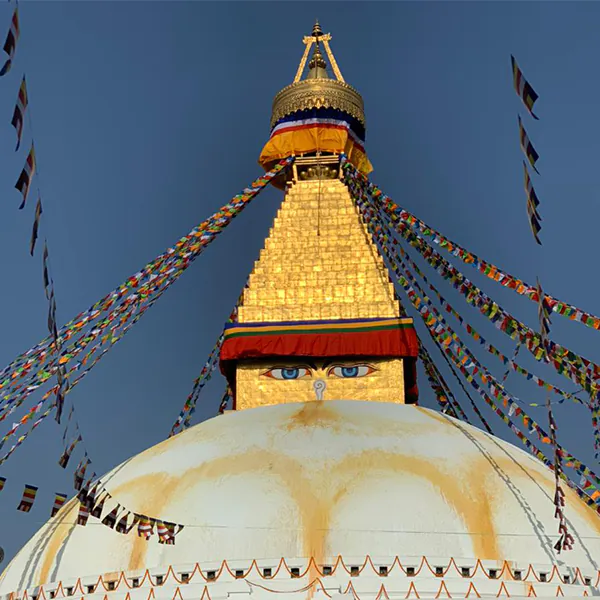
- Boudhanath Stupa is one of the world’s most largest and significant Buddhist It has the largest spherical stupa in the world.
- Swaymabhunath Stupa is a significant religious UNESCO World Heritage site that attracts both Buddhists and Hindus. It is known as the Monkey Temple due to the population of monkeys who have lived there for many years.
- Patan, known as Lalitpur or the City of Beauty, is an old historical Buddhist city with places to visit include the Durban Square, the Royal Palace and Golden Temple.
- Bhaktapur has a city centre that is car free with visitors free to wander along the cobbled streets to visit temples, grand palaces, street markets and discover arts and crafts.
Nagarkot: known for having one of the best scenic views of the Himalayas particularly at sunrise and sunset. It is located 32km from Kathmandu and has areas for hiking and mountain biking.
Dhulikhel: an old hilltop town that has impressive views of the Himalyas and forests. There a number of temples to visit including the Kali Temple and Ten Thousand Stairs Temple.
– Shivapuri Nagarjun National Park: founded in 2002, the national park is home to a vast number of wildlife including Himalayan black bears, leopards and over 300 bird species. Hike and explore lush forests, rivers and enjoy beautiful views of Kathmandu Valley.
Kirtipur: a small hilly town known for the its colourful stacked buildings, the ancient city has temples and religious attractions to visit including the Chilamchu Stupa and the Bagh Bhairab Temple.
Janakpur: a historic and significant city filled with culture, attractions for visitors include Janaki Mandir, Ram Mandir, Dhanusha Sagar, Vivah Mandap and shopping bazaars.
Jomsom: a town that is located 2734 metres above sea level, it is surrounded by the Dhaulagiri and Nilgiri mountains. Visitors flock to the town to enjoy its many trekking trails with beautiful views and adventurous activities including mountain biking and rock climbing.
Kagbeni: located in Kali Gandaki Valley, the traditional village has uniquely built houses and places to visit including Kagbeni Monastery and Kali Gandaki River. It is a starting or ending point for treks such as the Annapurna circuit and Upper Mustang trek. Popular activities include mountain biking, horse riding and going on motorcycle or off-road jeep tours.
Pokhara: situated 200km west of Kathmandu and the second biggest city in Nepal, Pokhara has a lot to offer visitors. Museums, lakes and adventurous sports such as bungee jumping, paragliding and zip-lining can be experienced. There are many acclaimed treks that commence from Pokhara to explore the mountain range. Pokhara is the best place to view the Annuapurna Range with three of the world’s ten highest peaks – Dhaulagiri, Annapurna I and Manaslu.
Chitwan National park: a UNESCO World Heritage Site located at the foot of the Himalayas, Chitwan is Nepal’s first National Park. Founded in 1973 and covering 932 square kms, the park was initially a rhino sanctuary and is now home to many different wildlife including the one-horned rhino, deer, monkeys, Bengal and over 554 types of birds.
Lumbini: the birthplace where the Lord Buddha, Siddhartha Gautama, was born in 623 B.C. Within the grounds, the Mayadevi Temple is the sacred site where the Lord Buddha was born. Buddhists from different countries come to visit one of the most significant Buddhist sites in the world and to study Buddhism and meditate.
Bandipur: a town located on a hilltop, Bandipur has one main street that has a mix of traditional Newari architecture and coffee shops. The Thani Mai Temple situated at the top of a hill is the best vantage spot to see stunning views of the Himalayans, the valley and the town. There are different treks from Bandipur that can take hikers to villages, forests and shrines. Visitors can explore Siddha Gufa, Nepal’s largest cave, with its magnificent limestone formations.
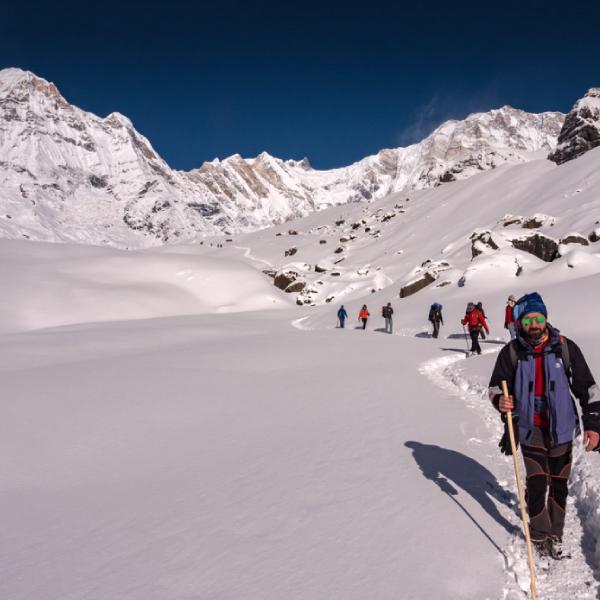
Annapurna region: located in the north-central part of Nepal with the world’s 10th highest mountain Annapurna as its centrepiece, the region has snow-capped mountains, hills, quaint villages and lush forests. The mountain range, Annapurna Massif, stretches 55km and has a collection of peaks that vary from 6,000m to 8,000m.
The Annapurna region is renowned for its popular treks which include one of the world’s best long distance hikes, Annapurna Circuit, which can take anywhere from 12-22 days to complete. The Annapurna Base Camp Trek takes 7-12 days with opportunities to view the mountains, glaciers, forests and natural hot springs. The Tilicho Lake Trek takes around 15 days and offers the best view of the beautiful pristine lake, Tilicho Lake. The Nar Phu Valley Trek only opened to visitors in 2003 and takes 9-14 days to hike. The Mardi Himal Trek takes 7 days and is great for beginners. The Ghorepani Poon Hill Trek is a short hike that can take between 3 and 5 days and is known for being beautiful and scenic.
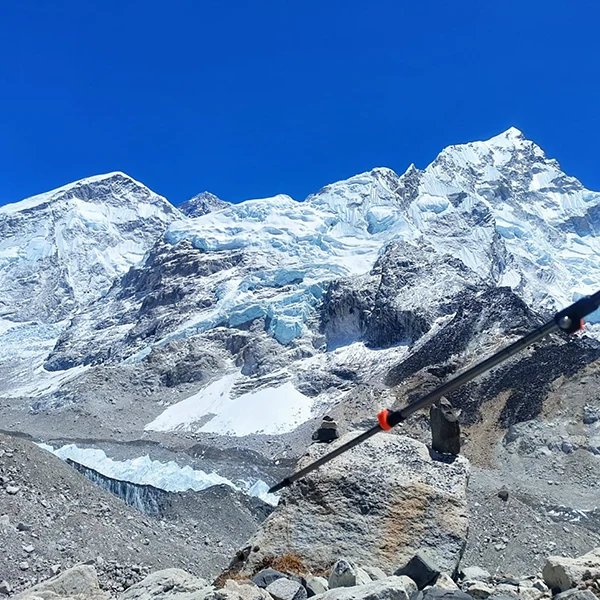
- Everest Region-use base camp trek:
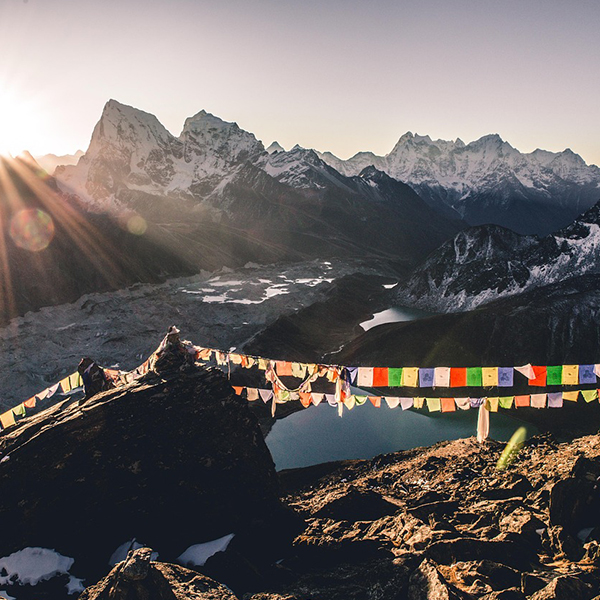
- Gokyo lake trek:
- Heli tour to Mount Everest:
- Langtang region – trekking and national parks:
- Bardia National Park:
- Koshi Tappu Wildlife Reserve:
- Manaslu region – trek: